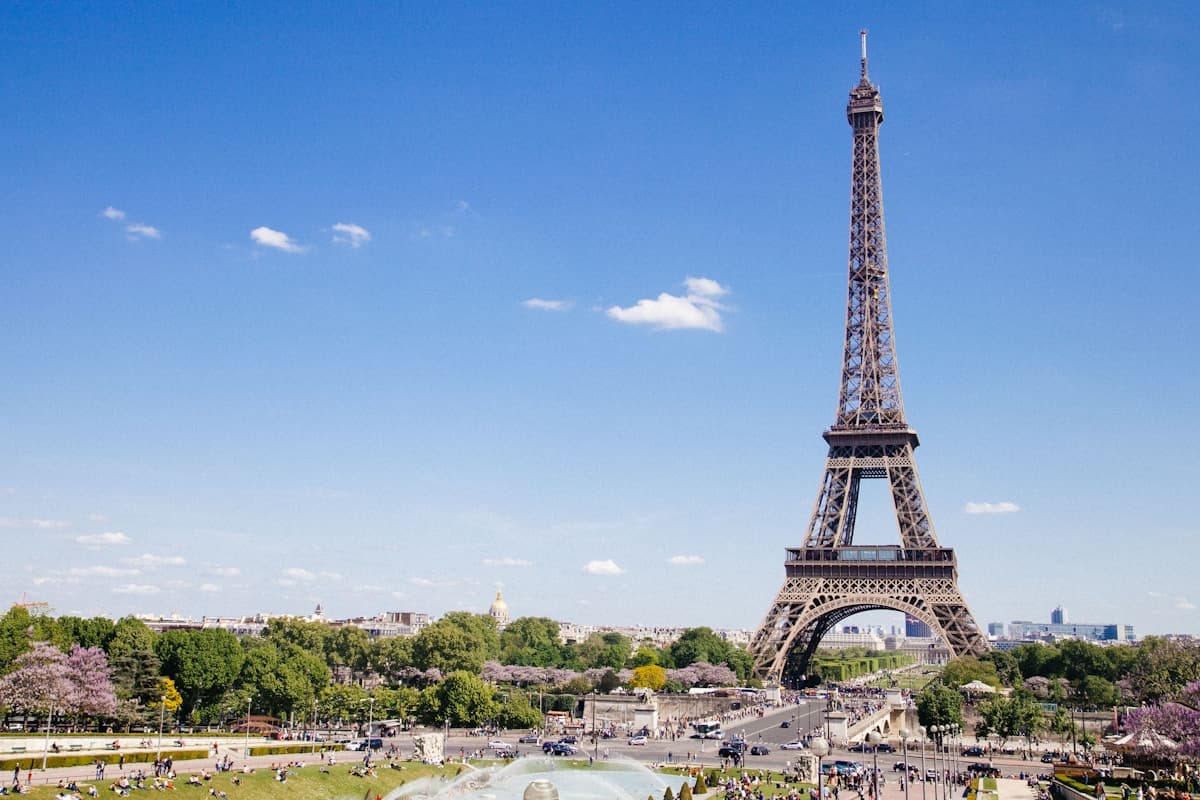
Paris is among the world's most complex security environments for UHNW principals: a city of 2.1 million residents with 12 million annual tourists, a political geography that places the Élysée Palace, the Matignon, and the Quai d'Orsay within a one-kilometre triangle, a protest culture that routinely deploys 200,000 people onto the Grands Boulevards with minimal notice, and a luxury hospitality ecosystem that concentrates the world's wealthiest individuals in predictable hotels and restaurants throughout the year. For Fortune 500 CEOs, royalty, government ministers, and other high-profile principals, ground transportation in Paris is never a purely logistical question. FFGR Paris operates an executive protection programme that integrates armoured vehicles, Close Protection Officers, advance route work, and counter-surveillance capability into a seamless service that the principal experiences as a high-quality chauffeur service.
Close Protection Officer protocols: the CPO role in the vehicle programme
A Close Protection Officer (CPO) is a trained security professional whose primary function is the physical protection of a designated principal. In a vehicle-based EP programme, the CPO typically rides in the vehicle with the principal, in the front passenger seat in a two-vehicle formation, or alongside the principal in a single-vehicle configuration. The CPO's responsibilities in the vehicle context include: door management (exiting first, scanning the immediate environment, managing the principal's exit), route monitoring (real-time assessment of route conditions, traffic anomalies, and surveillance indicators), communication (maintaining radio contact with the advance team and operations desk), and immediate action drills (clear protocols for vehicle incidents, threats, and medical emergencies).
At FFGR Paris, our CPO complement comprises former Groupe d'Intervention de la Gendarmerie Nationale (GIGN) officers, Police Nationale Close Protection specialists, and internationally certified CP operators holding BTEC Level 3 or equivalent qualifications. All CPOs operating in the Paris environment maintain current awareness of the local threat landscape, including active protest notifications from the Préfecture de Police, diplomatic movement schedules that affect route availability, and the specific access restrictions around the Élysée, Matignon, and foreign embassy clusters on the 8th arrondissement.
For single-principal mandates in Paris, a CEO visiting for two days of board meetings and dinners, a standard deployment is: one CPO in the vehicle with the principal, one driver (who is also EP-trained), and an operations desk providing real-time route intelligence and 24-hour incident support. For higher-risk principals or those requiring a larger detail, we configure two-vehicle formations with an advance car and a follow car, or supplement with a static security presence at the hotel suite.
The Paris threat landscape: protest routes, diplomatic zones, and predictability
Paris presents a distinctive threat matrix for executive protection operations. The principal risk factors are not equivalent to those in Nairobi, Bogotá, or Karachi, Paris is not a kidnap-for-ransom environment in the same category. The relevant threat picture for UHNW principals in Paris comprises: opportunistic crime (pickpocketing and bag-snatching at predictable tourist concentration points, Montmartre, the Champs-Élysées, the Opéra quarter), public order events (political demonstrations, labour action, and sporting events that create unpredictable road closures and crowd dynamics), and the specific threats associated with the principal's profile (business rivals, activist targeting, media intrusion).
The B7L zones, the arrondissements immediately surrounding the core political triangle of the 7th and 8th, require specific route planning. The Élysée Palace (55 Rue du Faubourg Saint-Honoré) maintains permanent security cordons on the Faubourg Saint-Honoré and the Avenue de Marigny that restrict vehicle approach. The Matignon (57 Rue de Varenne) and the Quai d'Orsay (37 Quai d'Orsay) similarly affect routing in the 7th arrondissement. When presidential or ministerial movements are scheduled, coordinated by the Groupe de Sécurité de la Présidence de la République, large sections of the Right Bank and Left Bank arterial routes are closed with minimal public notice. Our operations desk monitors GSPR movement notifications and adjusts client routes in real time.
Protest routes in Paris follow predictable corridors: the traditional labour demonstration route runs from Place de la République to Place de la Nation; political demonstrations typically stage at Place de la Bastille or Place de la République. During Gilets Jaunes-type sustained protest cycles, the Arc de Triomphe and Champs-Élysées axis becomes a routine exclusion zone on weekends. Our drivers hold advance knowledge of scheduled demonstrations and reroute through the Left Bank or via the Périphérique accordingly.
Armoured vehicles: specifications, ratings, and the Paris context
Armoured vehicle selection for Paris operations differs from higher-threat environments. Paris does not require the Level 7 (fragmentation grenade and military-grade rifle) protection that characterises vehicles used in Mexico City, Lagos, or Bogotá, and the weight and handling penalty of Level 7 vehicles (adding 1,200-1,800 kg to the vehicle's kerb weight) makes them operationally inappropriate on Paris streets. The appropriate specification for most Paris principals is B6 protection (ballistic protection against 7.62x51 NATO FMJ at 10 metres, blast protection to DM51 hand grenade), delivered in a vehicle that maintains near-standard exterior appearance and driving dynamics.
The BMW 760i xDrive Guard (B6+) is the preferred platform for Paris executive protection. The 760i Guard maintains the standard 760i exterior exactly, with no visible armour indication: the ballistic glass, though substantially thicker than standard, is optically clear and indistinguishable from standard glass at normal viewing distances. The vehicle's M760i engine maintains adequate performance despite the armour load. The Mercedes S580 Guard (B6) offers an alternative with a larger interior volume. For principals requiring Level 7 protection, the Chevrolet Suburban Level 7: weighing approximately 5,800 kg and requiring specialised driver training for its handling characteristics: is available on advance notice.
Non-armoured but high-performance vehicles, the standard Mercedes S580, BMW 7-series, or Range Rover, are appropriate for lower-risk profiles or for secondary vehicles in a multi-vehicle formation where the follow car provides an additional layer of deterrence without requiring full armour. FFGR Paris discusses the appropriate vehicle specification with each client's security director during the pre-mandate assessment.
Counter-surveillance driving and advance route work
Counter-surveillance driving (CSD) is the application of defensive driving techniques specifically designed to identify and defeat surveillance, the reconnaissance phase that precedes any planned attack on a principal. CSD training distinguishes EP driving from standard chauffeuring: where a chauffeur driver optimises for passenger comfort and punctuality, an EP driver optimises for threat detection, tactical positioning, and immediate action capability.
Core CSD techniques applied in the Paris urban environment include: varying route selection between identical origin and destination points on different days (the most fundamental anti-surveillance discipline, predictability is the primary vulnerability), identifying and using multiple access routes for each regular venue (hotels, offices, restaurants), maintaining appropriate following distance for observation windows, recognising surveillance indicators (recurring vehicles, pedestrian patterns inconsistent with the environment, photography), and the immediate action sequences for ambush, blocking, and vehicle-borne threat scenarios.
Advance route work, conducted by a CPO or advance officer before the principal moves, involves the physical assessment of each route segment and venue approach for threat indicators, access vulnerabilities, and medical emergency resources. For a principal arriving at the Hôtel de Crillon (10 Place de la Concorde) for a three-day stay, advance work includes: assessment of all vehicle approaches to the hotel, identification of the nearest emergency medical facility (Hôpital Lariboisière, 2 Rue Ambroise Paré, 12 minutes in normal traffic), confirmation of hotel security protocols at the suite level, and a walk-through of each venue on the principal's programme schedule.
Palace hotel suite security: Bristol, Ritz, Le Meurice, and George V
The palace hotels of Paris, the Hôtel Le Bristol at 112 Rue du Faubourg Saint-Honoré, the Ritz at 15 Place Vendôme, Le Meurice at 228 Rue de Rivoli, and the Four Seasons George V at 31 Avenue George V, each present distinct security environments that require different approaches to residential security integration.
The Hôtel Le Bristol, classified as a Palace de France since 2011, is among the most discreet of the Paris palaces. Its garden-facing suites on the upper floors offer minimal street-level exposure. The hotel's security team is experienced in UHNW principal protocols and works efficiently with external close protection teams. The Ritz at Place Vendôme, reopened in 2016 following a four-year renovation, has a single primary vehicle entrance on the Rue Cambon side, an operational constraint that limits vehicle approach flexibility and requires advance coordination with the hotel security team for high-profile arrivals.
Residential security integration at the palace level involves: coordination with the hotel's head of security for suite-level access protocols (who has access to the floor, keycard configuration, room service delivery procedures), static guard positioning on the principal's floor if threat level warrants, and integration of the hotel's own CCTV and incident response capability with the external EP team. For extended stays of more than five days, we recommend a formal security briefing between the FFGR Paris EP team leader and the hotel's security director to establish clear protocols for the duration of the stay.
Бронирование
Executive protection in Paris demands an operator who understands both the city's specific threat landscape and the standards expected by principals who have worked with the world's leading security providers. FFGR Paris delivers EP programmes that are operationally rigorous and experientially seamless: the principal experiences a luxury chauffeur service; the security architecture operates entirely in the background. Contact reservation@ffgrparis.com or WhatsApp +33 7 43 46 14 91 for a confidential pre-mandate assessment.
ЗабронироватьПохожие статьи
 security
Paris Diplomatic Transport | Chauffeur & Protocol Ground Services for Embassies
How FFGR Paris provides diplomatic and protocol ground transport: embassy transfers in the 7th and 16th arrondissements, ministerial and heads-of-state visits, official function ground coordination, armoured vehicle options, and the protocol standards that French diplomatic transport demands.
9 min
 security
Paris Diplomatic Quarter Chauffeur | UNESCO, Embassies and the 7th Arrondissement Circuit
Ground transport for Paris diplomatic and institutional appointments: the UNESCO headquarters at Place de Fontenoy, the embassy circuit in the 7th and 8th arrondissements, the OECD at the Château de la Muette, and the specific vehicle management protocols for addresses under permanent security surveillance.
9 min
securityParis Institutional Circuit Chauffeur | Élysée Palace, Matignon, National Assembly and the Political Transport Protocol
Ground transport for the Paris political and institutional circuit: the Élysée Palace (Rue du Faubourg Saint-Honoré), the Hôtel Matignon (Rue de Varenne), the Palais Bourbon (Quai d'Orsay), the Sénat at the Palais du Luxembourg, the Quai d'Orsay (Ministère des Affaires Étrangères), and FFGR's approach to protocol-compliant transport for diplomatic delegations, heads of state, government counterparts, and international organisations visiting the French capital's institutional complex.
10 min