Paris is one of the foremost diplomatic capitals in the world. The French capital hosts over 170 embassies and permanent missions, the OECD, UNESCO, and the OECD secretariat, and receives visiting heads of state, foreign ministers, and senior international delegations throughout the year. The ground transport requirements of a diplomatic visit to Paris are defined by protocol standards that go beyond standard luxury transport: the vehicle order, the vehicle specification, the driver protocol, and the timing of arrival at the Élysée, the Quai d'Orsay, or an embassy residence are all governed by rules that a professional diplomatic transport provider must understand and apply consistently.
The diplomatic geography of Paris: embassies, residences, and protocol venues
The Paris diplomatic community is concentrated in the 7th arrondissement (along the Rue de Grenelle, the Rue de Varenne, and the Boulevard Saint-Germain: including the US Embassy on the Avenue Gabriel until its planned relocation) and the 16th arrondissement (along the Avenue Foch, the Avenue Hoche, and the Avenue Iéna). The official French protocol venues: the Élysée Palace on the Avenue de Marigny, the Quai d'Orsay (Ministère des Affaires Étrangères) on the Quai Anatole-France, and the Hôtel Matignon (Prime Minister's residence) on the Rue de Varenne: are in the 7th and 8th arrondissements.
FFGR Paris drivers are briefed on the vehicle approach and access protocols for each of these venues. The Élysée vehicle access operates via the Rue de l'Élysée side entrance for visiting delegations; the Quai d'Orsay has a dedicated vehicle access gate on the Rue de l'Université for confirmed diplomatic appointments.
Ministerial and heads-of-state visits: the protocol transfer programme
A head-of-state visit to Paris involves a defined vehicle convoy and a lead vehicle assignment governed by the French Sécrétariat général de la Présidence and the receiving ministry's protocol office. For visiting leaders who arrive at CDG or Le Bourget and proceed to meetings at the Élysée or the Quai d'Orsay, the ground transport is coordinated between the French protocol team and the visiting delegation's security and protocol officers.
FFGR Paris provides ancillary vehicles for official delegations, the additional vehicles for the delegation's ministerial staff, advisors, and senior officials who are not in the principal convoy vehicle. These vehicles travel in coordination with the principal convoy but in a supporting position, and their drivers are briefed on the convoy protocol: maintaining distance, not overtaking, and clearing position immediately on arrival at the official venue.
Embassy residence transfers: the quotidian diplomatic movement
Beyond formal state visits, the daily movement of senior diplomatic personnel, ambassadors, deputy chiefs of mission, defence attachés, requires ground transport that understands the specific security and discretion requirements of embassy life. An ambassador attending a bilateral lunch at a ministerial residence or a cultural event at the Institut du Monde Arabe requires a vehicle and driver who understands that the movement is not publicised and that the arrival time is defined by diplomatic courtesy, not traffic convenience.
FFGR provides standing vehicle programmes for embassy accounts in Paris: daily transfers for the ambassador and deputy chief of mission, ad hoc transfers for visiting delegations, and vehicle-at-disposition for senior officials attending multilateral meetings at the OECD, UNESCO, or the UN European headquarters in Geneva (day-trip transfer). Embassy accounts are managed with a dedicated account coordinator who maintains the programme schedule and handles last-minute changes without requiring a new booking.
Armoured vehicle provision: B6 and B7 for senior officials
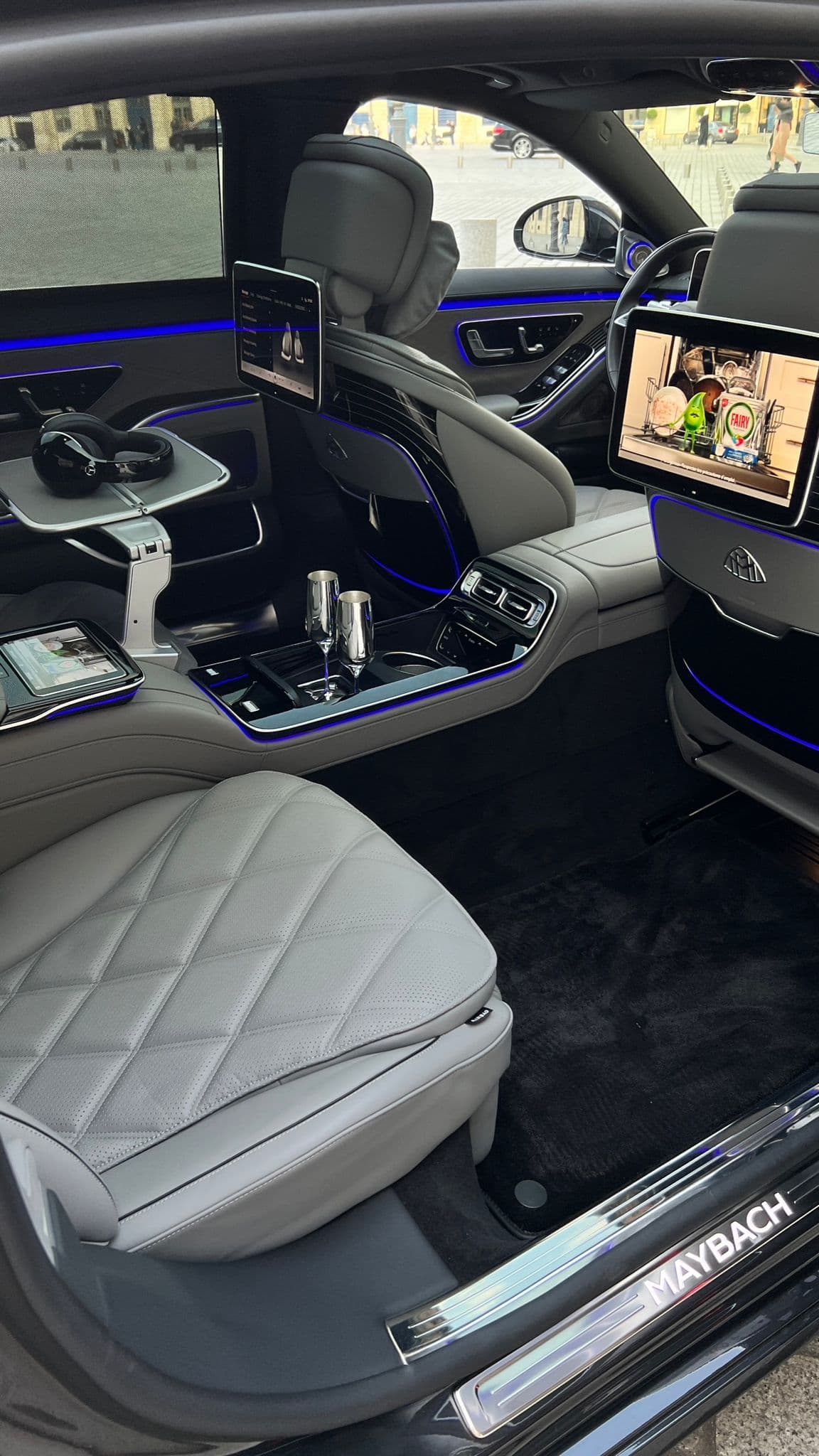
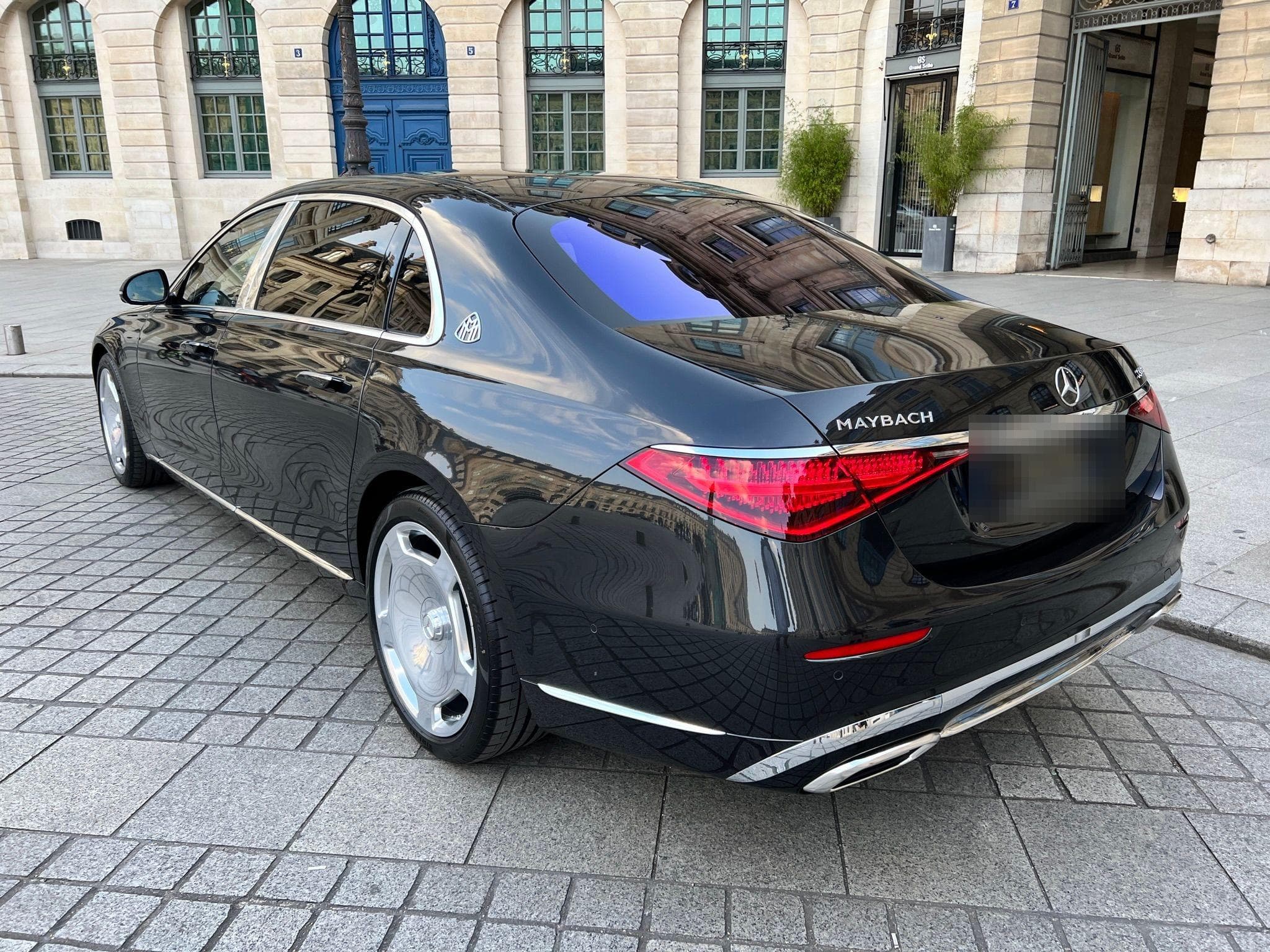
Diplomatic principals travelling to Paris from high-risk environments, or senior officials for whom security assessment identifies an elevated risk profile, may require armoured vehicle transfer. FFGR Paris operates armoured Mercedes-Benz S-Class and Maybach S680 vehicles in B6 and B7 ballistic protection configurations.
For diplomatic armoured transfers, FFGR coordinates with the principal's close protection team to establish the vehicle position in the security formation, the driver's protocol with the CPO team, and the route pre-clearance procedure. Armoured vehicle deployment for diplomatic clients requires advance notification of a minimum seventy-two hours and confirmation of the security formation structure. FFGR does not deploy armoured vehicles without coordination with the principal's security team.
Official function ground coordination: reception and gala evening transfers
The Paris diplomatic calendar includes a dense programme of official receptions, national day celebrations, and gala dinners hosted at embassy residences, the Grand Palais, the Château de la Muette (OECD), and heritage venues across the city. These events draw fifty to two hundred diplomatic guests from across the Paris mission community, each arriving by private vehicle.
For embassies and international organisations hosting official receptions, FFGR provides multi-vehicle ground coordination programmes: a consistent fleet of vehicles for the hosting embassy's principal guests, a vehicle management arrangement for invited ambassadors and ministers who request transport, and a departure coordination programme that avoids the vehicle queue that typically follows a large official reception. For national day receptions at embassy residences in the 16th arrondissement, FFGR deploys vehicles from a staged position on the Avenue Foch or the Rue de la Faisanderie to avoid concentration at the embassy gate.
Engaging FFGR Paris for diplomatic transport
Diplomatic transport requirements, whether for a single ministerial transfer or a full embassy account programme, are handled under a dedicated commercial framework that includes confidentiality provisions, protocol-trained driver assignment, and a dedicated account coordinator. Standing embassy accounts are invoiced monthly with full programme documentation.
Contact us at reservation@ffgrparis.com or WhatsApp +33 7 43 46 14 91. For diplomatic enquiries, note: the embassy or organisation name, the nature of the requirement (single transfer, standing programme, or official function ground coordination), and whether armoured vehicle provision or close protection coordination is required.
Бронирование
Diplomatic ground transport in Paris is a precise discipline, one that requires knowledge of protocol, venue access, and the discretion that official movement demands. FFGR Paris provides the full diplomatic transport programme, from embassy residence to Élysée and back. Contact us: reservation@ffgrparis.com · WhatsApp +33 7 43 46 14 91.
ЗабронироватьПохожие статьи
 security
Paris Diplomatic Quarter Chauffeur | UNESCO, Embassies and the 7th Arrondissement Circuit
Ground transport for Paris diplomatic and institutional appointments: the UNESCO headquarters at Place de Fontenoy, the embassy circuit in the 7th and 8th arrondissements, the OECD at the Château de la Muette, and the specific vehicle management protocols for addresses under permanent security surveillance.
9 min
securityParis Institutional Circuit Chauffeur | Élysée Palace, Matignon, National Assembly and the Political Transport Protocol
Ground transport for the Paris political and institutional circuit: the Élysée Palace (Rue du Faubourg Saint-Honoré), the Hôtel Matignon (Rue de Varenne), the Palais Bourbon (Quai d'Orsay), the Sénat at the Palais du Luxembourg, the Quai d'Orsay (Ministère des Affaires Étrangères), and FFGR's approach to protocol-compliant transport for diplomatic delegations, heads of state, government counterparts, and international organisations visiting the French capital's institutional complex.
10 min
 security
Paris Executive Protection and Private Security Chauffeur | UHNW Close Protection, Secure Transport and the VIP Security Circuit
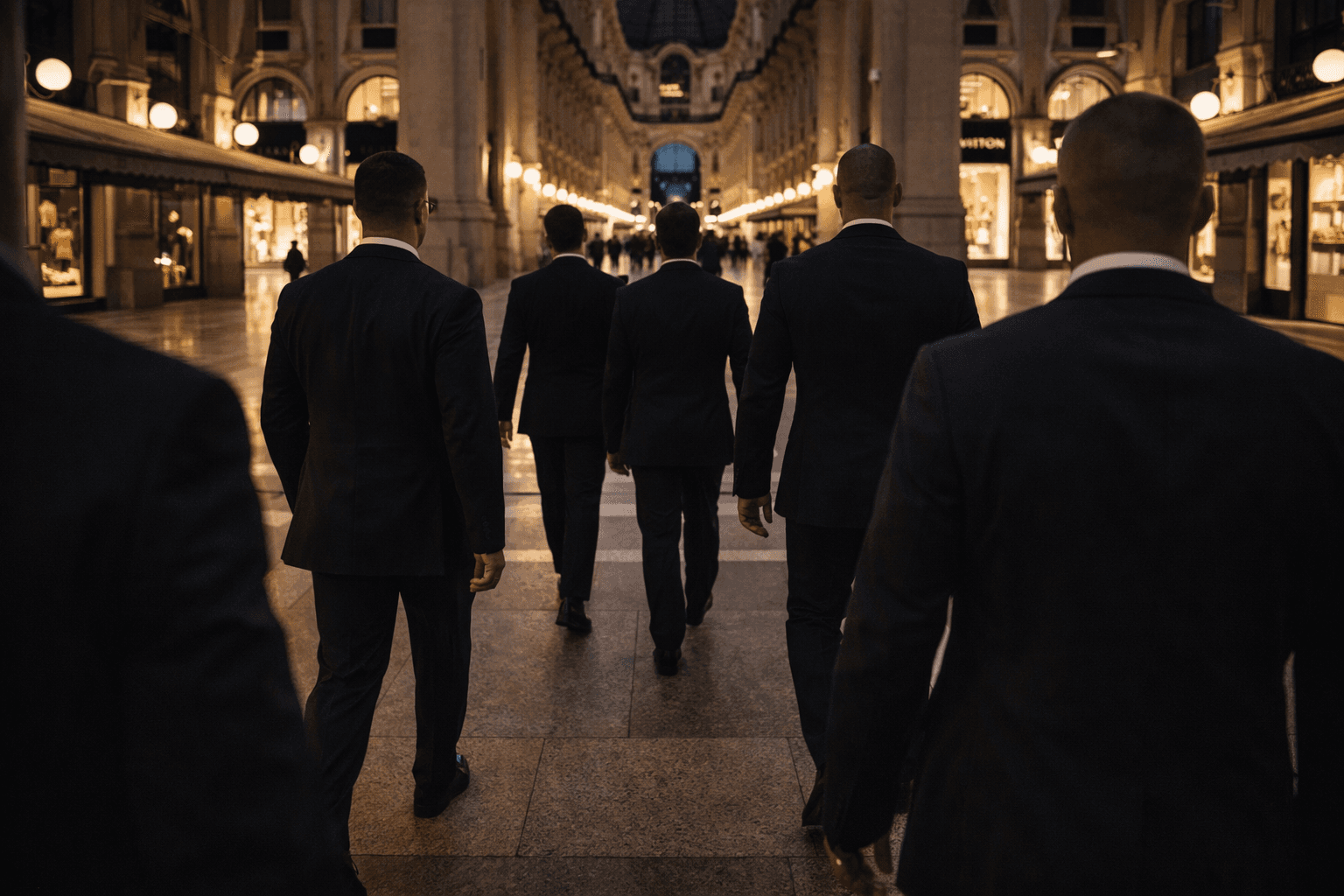
FFGR secure transport and executive protection service for Paris: armoured Mercedes S-Class and Range Rover vehicles, CP-trained drivers (former GIGN, RAID, and Légion Étrangère officers), advance route security assessment, liaison with Prefecture of Police protective services, and the complete secure transport protocol for UHNW principals, heads of state, royal families, and Fortune 500 executives requiring discreet close protection in Paris and the Île-de-France region.
14 min