Paris is the most diplomatically dense capital in the world after Washington: with 162 embassies and permanent missions, 35 international organisations with Paris headquarters or major offices (including UNESCO, the OECD, the IEA, Interpol, and the International Chamber of Commerce), and the Élysée Palace as the seat of the French presidency, the Paris diplomatic calendar generates a continuous cycle of receptions, state visits, bilateral meetings, and multilateral conferences that require transport of the highest protocol standard. FFGR provides diplomatic protocol transport to the ambassadorial and ministerial level: vehicles with diplomatic flag provisions, drivers briefed on protocol salutation procedures, and the route knowledge required for approach circuits to restricted diplomatic addresses. The FFGR diplomatic service operates 24/7, with vehicles available at 30-minute notice for emergency protocol movements.
The Faubourg Saint-Honoré diplomatic corridor
The Rue du Faubourg Saint-Honoré and the parallel streets of the 8ème arrondissement form the primary diplomatic corridor of Paris, a concentration of chancery buildings, ambassadorial residences, and official reception venues that has been the diplomatic heart of the French capital since the Second Empire :
**The British Embassy (35 Rue du Faubourg Saint-Honoré 75008, immediately adjacent to the Élysée Palace at number 55):** the British Embassy occupies the Hôtel de Charost, a private mansion built in 1722 and purchased by the Duke of Wellington after the Napoleonic Wars, one of the few embassy buildings in Paris to have preserved its original 18th-century interior intact. The Embassy's residence (the official London Protocol-designated residence of the British Ambassador to France) hosts the King's Birthday reception each June, one of the most attended diplomatic events in the Paris calendar (approximately 1,500 guests). FFGR approach protocol: the vehicle enters from the Rue du Faubourg Saint-Honoré and presents at the Gendarmerie gate; the driver holds the guest list confirmation from the Embassy protocol office.
**The American Embassy (2 Avenue Gabriel 75008, on the north side of the Place de la Concorde, with the official approach via the Avenue Gabriel bordering the Tuileries gardens):** the current American Embassy building was designed by architect Eero Saarinen and completed in 1961, one of the most significant modernist buildings in Paris. The American Ambassador's residence (41 Rue du Faubourg Saint-Honoré, a private mansion acquired by the United States government in 1948) hosts the July 4th Independence Day reception (the largest single national day reception in Paris, 2,000+ guests from the French political, business, cultural, and diplomatic establishment). FFGR approach circuit: arrival on the Avenue Gabriel from the Rue Royale end; security checkpoint access for guests.
**The German Embassy (13-15 Avenue Franklin D. Roosevelt 75008):** the German Embassy occupies a building constructed specifically as a diplomatic facility in the 1960s, the primary bilateral diplomatic relationship in Europe is conducted from this address. The German National Day reception (3 October, Tag der deutschen Einheit) at the Embassy is the reference event for the Franco-German political and business community in Paris.
**Additional diplomatic addresses in the corridor:** Japanese Embassy (7 Avenue Hoche 75008), Italian Embassy (47 Rue de Varenne 75007, in the 7ème, adjacent to the Rodin Museum and the National Assembly), Spanish Embassy (22 Avenue Marceau 75008), Saudi Embassy (5 Avenue Hoche 75008).
The Élysée Palace approach circuit
The Élysée Palace (55 Rue du Faubourg Saint-Honoré 75008, the official residence of the President of the French Republic since 1848, constructed 1718-1722 by the architect Armand-Claude Mollet for the Count of Évreux) :
**Protocol approach for head-of-state visits:** state visits to the Élysée Palace are managed by the Direction du Protocole of the French Ministry for Europe and Foreign Affairs in coordination with the Présidence de la République. The official approach route for arriving heads of state is along the Rue du Faubourg Saint-Honoré from the east (from the Rue Royale direction), entering through the Grilles du Coq (the main gate) on the south face of the building. FFGR vehicles designated for head-of-state accompaniment (as part of a motorcade or advance team) are briefed by the Présidence du Protocole on approach times and staging positions.
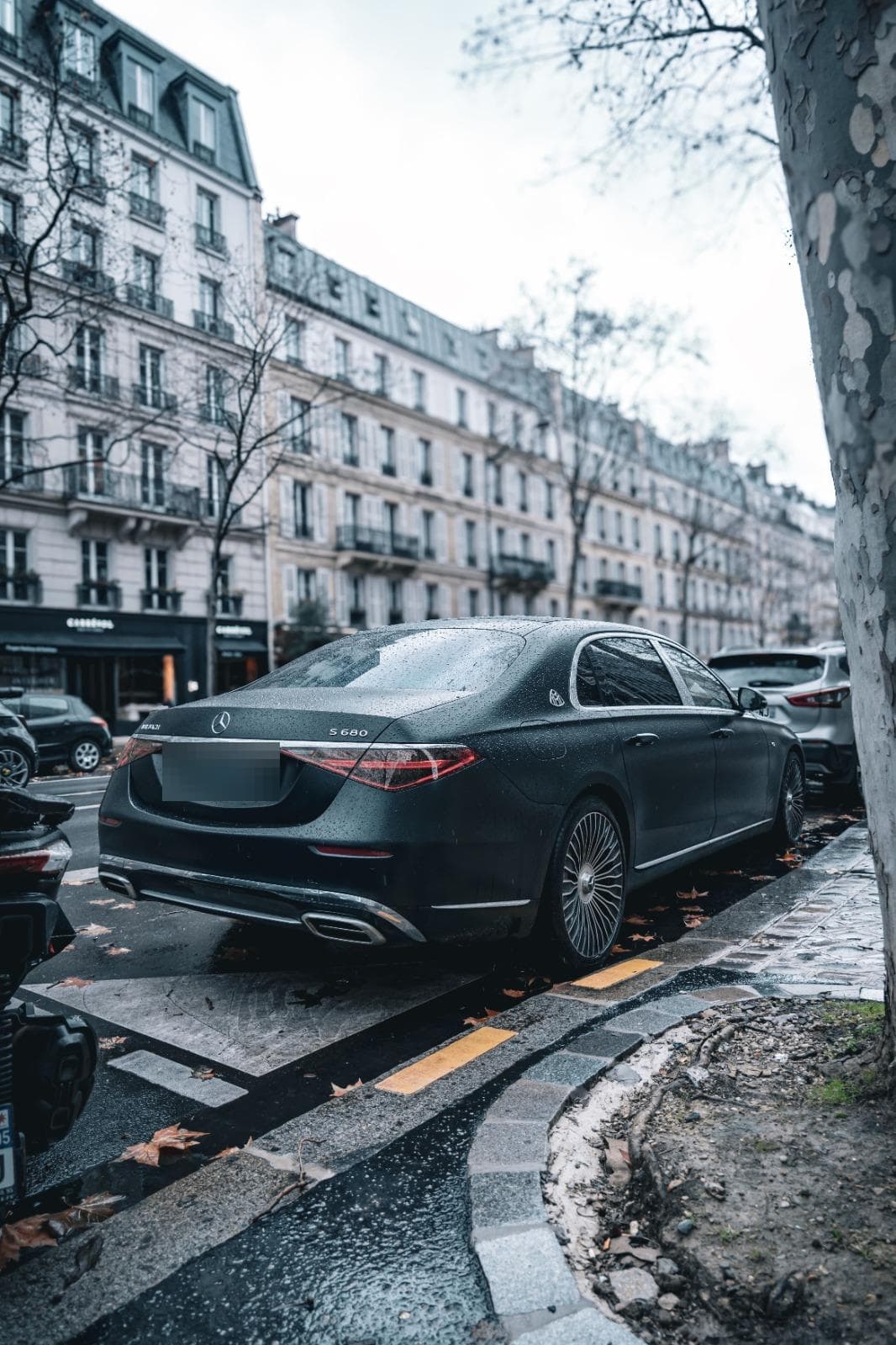
**Presidential motorcade participation:** for visiting heads of state or senior ministers arriving from Paris airports (CDG, Le Bourget, or Orly) and requiring ground transport to the Élysée Palace, FFGR provides motorcade-compatible vehicles (the S-Class in the armoured S 680 Guard configuration, ballistic protection to VPAM VR9 standard, run-flat tyres, emergency air system) as part of the extended motorcade formation. FFGR drivers are trained in protective driving protocols (convoy spacing, counter-surveillance, emergency routing).
**Working visits and ministerial appointments:** for senior ministers, ambassadors, and senior officials conducting working visits to the Élysée (the category of meetings below full state visits, bilateral working lunches, bilateral consultations, Conseil des ministres participation for invited observers), FFGR provides the vehicle for the Élysée approach and the waiting service during the meeting. The vehicle stages in the Rue de l'Élysée or the adjacent Rue d'Anjou (the secondary diplomatic staging street) during the appointment.
The international organisation circuit
Paris hosts the headquarters or major European offices of the principal international organisations in the diplomatic, economic, and scientific domains :
**UNESCO (7 Place de Fontenoy 75007, in the 7ème, between the Champ de Mars and the Invalides, 300m from the École Militaire):** UNESCO (the United Nations Educational, Scientific and Cultural Organization, 193 member states, headquarters established in Paris in 1945) hosts an annual cycle of General Conference meetings (odd-numbered years, 36 sessions to date, the 41st session in November 2021 the first post-Covid), Executive Board sessions (twice annually, spring and autumn), and specialised committee meetings year-round. The UNESCO complex (designed by Marcel Breuer, Pier Luigi Nervi, and Bernard Zehrfuss, completed 1958, a Monument Historique) includes three interconnected buildings: Building I (the Y-shaped Secretariat), Building II (the Conference Hall, 1,200 seats), and Building III (the Annex building). FFGR provides delegations with airport-to-UNESCO and hotel-to-UNESCO transfers, with driver access to the UNESCO Place de Fontenoy arrivals sequence.
**OECD (2 Rue André Pascal 75016, in the 16ème, in the Château de la Muette complex, a Rothschild family residence acquired by the OEEC precursor organisation in 1948):** the OECD (Organisation for Economic Co-operation and Development, 38 member states) holds its Ministerial Council Meeting annually in May or June (the highest-level OECD event, finance and economy ministers from all member states), and the Paris Forum annually in June. FFGR provides ministerial delegation transport for the Ministerial Council Meeting, including the approach to the Château de la Muette compound through the Bois de Boulogne edge access.
**International Chamber of Commerce (33-43 Avenue du Président Wilson 75116, in the 16ème, in the Palais du Trocadéro area):** the ICC World Chambers Congress and ICC Court arbitration proceedings at the Paris ICC headquarters generate a constant circuit of legal and commercial delegations requiring airport-to-ICC transport. The ICC Court of Arbitration (with over 700 cases filed annually, Paris being the world's leading international arbitration seat) operates continuously, FFGR provides law firm and corporate counsel transport to ICC hearings at the Avenue du Président Wilson premises and at the hearing centres of the major Paris international arbitration hotels (the Intercontinental Paris le Grand, the Westin Paris, the Marriott Champs-Élysées).
National Day receptions and the Paris diplomatic calendar
The Paris diplomatic calendar has a predictable annual structure of national day receptions that generates concentrated transport demand on specific dates :
**The July 14th Bastille Day circuit:** the French National Day on 14 July is the most diplomatically active day in the Paris calendar, the morning military parade on the Champs-Élysées (with the Presidential tribune at the Arc de Triomphe, invited guests include the entire diplomatic corps, approximately 700 ambassadors and senior officials, arriving from 07h30 for an 10h00 start) is followed by the Élysée Palace garden reception for the diplomatic corps and the French political-cultural establishment (approximately 5,000 guests, 14h00-17h00). FFGR provides the transfer for diplomatic clients attending both events, with the vehicle routing managed around the Champs-Élysées road closures (the entire central section from the Place de la Concorde to the Étoile is closed from the previous evening).
**Key national day receptions in the Paris calendar:** - **American Independence Day (July 4)**, Ambassador's residence 41 Rue du Faubourg Saint-Honoré, 2,000 guests - **British King's Birthday Reception (June)**, Hôtel de Charost 35 Rue du Faubourg Saint-Honoré, 1,500 guests - **German National Day (October 3)**, German Embassy 13-15 Avenue Franklin D. Roosevelt, 1,200 guests - **Russian National Day (June 12)**, Russian Ambassador's residence Boulevard Lannes, by invitation - **Chinese National Day (October 1)**, Grand Palais or Carlton Intercontinental, 2,500 guests (among the largest national day receptions in Paris) - **Japanese Emperor's Birthday (February)**, Japanese Ambassador's residence
FOR ALL NATIONAL DAY RECEPTIONS: FFGR manages the approach routing around embassy security perimeters, coordinates arrival times with invitation slot allocations, and provides waiting service with vehicle positioned within protocol-approved staging areas.
The Paris conference circuit: G7, G20, and multilateral summits
Paris periodically hosts the full range of multilateral summit meetings, and serves as the seat of the French Presidency of the European Council every few years :
**The Grand Palais and Champs-Élysées summit venues:** major multilateral events (the G7 Finance Ministers' meeting, the Paris Peace Forum held annually in November at the Palais des congrès, the Our Ocean Conference) are held at purpose-configured venues with specific approach and staging protocols. For delegate transport, FFGR operates within the French Interior Ministry's approved ground transport provider framework, vehicles and drivers are pre-cleared for summit perimeter access, and staging positions are allocated by the Prefecture de Police event coordination team.
**The Paris Peace Forum (Palais des congrès de Paris, 2 Place de la Porte Maillot 75017, held annually in November, since 2018, founded by President Macron as an annual multilateral governance forum, 100+ heads of state and government invited, 3,500 participants):** the Peace Forum generates the largest single annual concentration of protocol-level transport requirements in the Paris calendar, FFGR participates in the contracted ground transport pool for the Forum, providing vehicles for delegations booked through the Forum's official transport coordination office.
**The European Union institutional circuit:** for EU member state permanent representations (the 27 Permanent Representations to the EU are in Brussels, but the COREPER ambassadors and senior officials frequently visit Paris for bilateral meetings at the Quai d'Orsay and the Matignon), FFGR provides transport combining the Quai d'Orsay (French Ministry for Foreign Affairs, 37 Quai d'Orsay 75007) and the Hôtel Matignon (Prime Minister's official residence, 57 Rue de Varenne 75007) approach circuits.
Booking FFGR diplomatic protocol transport
FFGR structures the diplomatic transport service around the specific requirements of the protocol context :
**The diplomatic vehicle briefing:** before each assignment, the FFGR driver receives a full briefing on the client's diplomatic rank (ambassador, minister, senior official, or corporate delegate), the approach protocol for the specific venue (entry gate, security check sequence, staging position, internal routing), and the host protocol requirements (salutation procedure, flag protocol if applicable, vehicle livery requirements). All diplomatic assignments are managed directly by the FFGR senior dispatch team rather than through the standard booking platform.
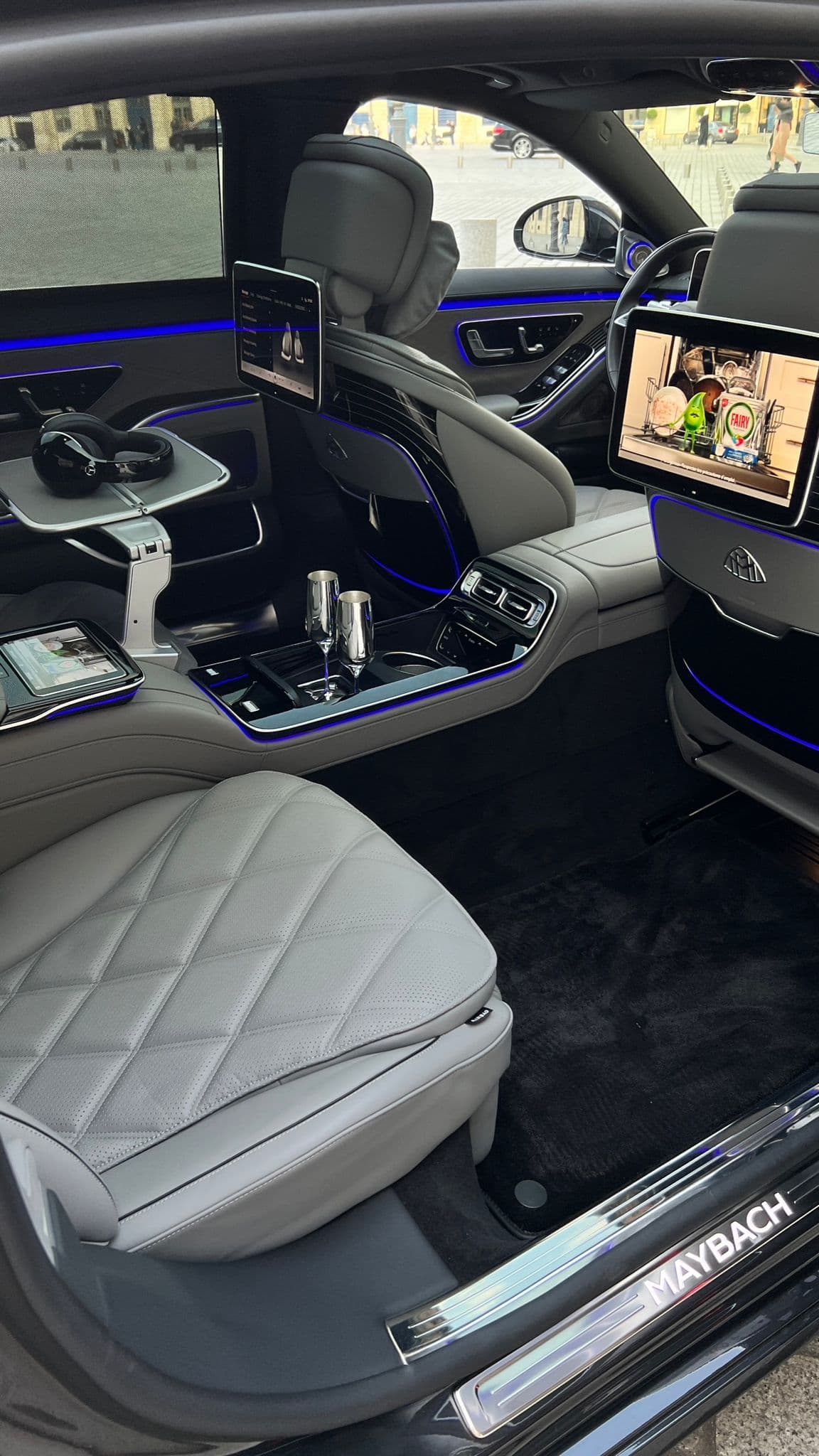
**Discretion and security protocol:** all diplomatic assignments are conducted under enhanced confidentiality protocol, client identity, meeting location, and appointment timing are not communicated to any FFGR staff member other than the designated driver and the senior dispatch officer. The S-Class privacy partition and tinted rear windows are standard for all diplomatic assignments. The driver's communication during the journey (radio, phone) is suspended unless initiated by the client.
**24-hour availability:** the diplomatic calendar generates emergency transport requirements at any hour, early-morning bilateral meetings, late-evening receptions that extend beyond scheduled times, emergency movements following breaking news events. FFGR maintains a 24-hour diplomatic transport desk with prompt response for clients on the standing diplomatic programme.
Contact us at reservation@ffgrparis.com or WhatsApp +33 7 43 46 14 91.
Reserva
The Paris diplomatic transport circuit, from the Faubourg Saint-Honoré embassy corridor to the Élysée Palace approach, from the UNESCO General Conference to the Paris Peace Forum, requires a level of protocol knowledge and operational precision that goes beyond standard executive transport. FFGR provides the vehicle, the driver briefing, and the protocol coordination that diplomats, ambassadors, and senior officials require. Contact us: reservation@ffgrparis.com · WhatsApp +33 7 43 46 14 91.
Reservar agoraArtigos relacionados
 prestige
Paris Private Chauffeur | The Complete Insider Guide
Everything a UHNW traveler needs to know about private chauffeur services in Paris: CDG protocols, the ZTL arrondissement rules, how to navigate the Périphérique during Fashion Week, and what FFGR Paris delivers that a taxi app cannot.
9 min
 prestige
CDG Airport Transfer Paris | The FFGR Private Arrival Protocol
How FFGR Paris orchestrates private transfers from Charles de Gaulle: apron access, La Première protocols, ZFE compliance, and the exact sequence that gets a principal to the 8th arrondissement in under sixty minutes.
8 min
 prestige
Paris New Year\'s Eve | Private Chauffeur & VIP Midnight Transfer
How FFGR Paris operates New Year's Eve: Champs-Élysées midnight access protocols, pre-booked vehicle positioning, private dinner transfers, and why NYE is the one night in Paris when ground transport planning is not optional.
8 min