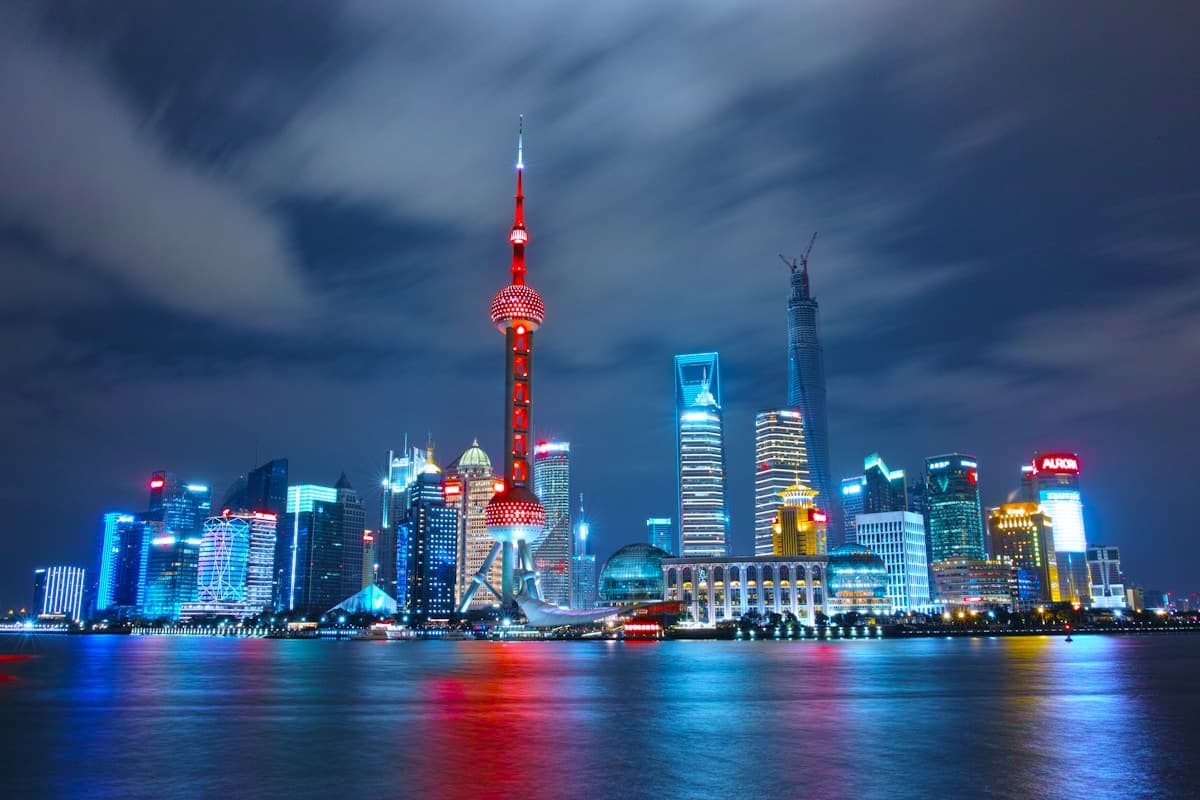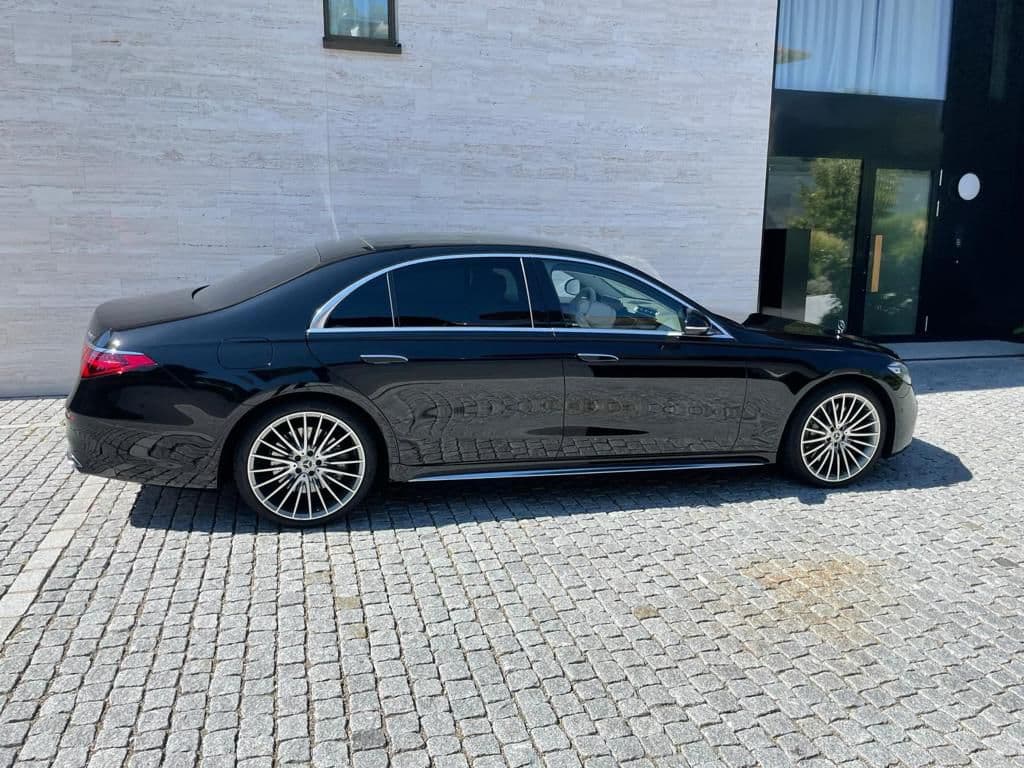
Paris has the largest Chinese diaspora community in Western Europe, an estimated 600,000 Chinese residents across the Île-de-France (the 13ème Chinatown, the Belleville community in the 10ème-11ème-19ème-20ème corridor, and the Aubervilliers and Saint-Denis industrial suburbs), complemented by the largest collection of Chinese art outside China and Asia in the European museum system (the Musée Guimet's China collection, the Cernuschi collection in the 8ème, the Louvre's China and Central Asia galleries). For Chinese UHNW clients visiting Paris, whether for art acquisition, business delegation, family education, or cultural tourism, FFGR provides the complete circuit: from Charles de Gaulle Terminal 2F (Air China, China Eastern, China Southern direct services) or Le Bourget FBO, through the cultural and commercial addresses of the Chinese Paris, with full Mandarin communication capability through the FFGR dispatch team.
Musée Guimet: the Chinese art collection
Musée National des Arts Asiatiques, Guimet (6 Place d'Iéna 75016, in the 16ème arrondissement, at the corner of the Avenue du Président Wilson and the Avenue d'Iéna, 400m from the Trocadéro and 200m from the Palais de Chaillot) :
**The institution:** the Musée Guimet was founded by the Lyonnais industrialist Émile Guimet in 1879, originally based in Lyon as a museum of world religions, it was moved to Paris by Guimet in 1888 and donated to the French state in 1895. The museum has been progressively transformed into the principal French institution for Asian art, with the Asian art collections from the Louvre transferred to the Guimet in 1945, including the Pelliot collection of Central Asian manuscripts (excavated from Dunhuang by Paul Pelliot in 1908), the Daret collection of Chinese bronzes, and the Stein collection of Silk Road objects.
**The Chinese galleries:** the Guimet's Chinese collection (levels 2 and 3 of the central rotunda building) covers 7,000 years of Chinese artistic production, from the Neolithic painted ceramics of the Yangshao culture (5th-3rd millennium BCE), through the bronze ritual vessels of the Shang and Zhou dynasties, the Han dynasty ceramic tomb figures (the Guimet Han collection is one of the three largest outside China), the Tang dynasty tri-glazed (sancai) horses and celestial musicians (the most complete sancai collection in Europe), the Song dynasty celadons and Ru ware, and the Ming and Qing porcelain sequence. The Buddhist sculpture garden (the Panthéon Bouddhique, in a separate building at 19 Avenue d'Iéna, the former Guimet private mansion) contains the most important collection of Japanese and Chinese Buddhist sculpture in Europe.
**Private viewing access:** the Guimet offers after-hours private viewing for groups of 4-20 by arrangement with the museum's cultural programming office, FFGR can coordinate private evening access for collector clients with a particular interest in the Tang or Han collections. The museum's conservation department can arrange direct access to study objects from the reserve collection (not on permanent display) for serious collector-researchers.
The Cernuschi Museum: the private collector\'s Chinese art collection
Musée Cernuschi (7 Avenue Vélasquez 75008, in the 8ème, on the edge of the Parc Monceau, 300m from the Boulevard Haussmann department stores) :
**The collection:** the Cernuschi Museum is the legacy of the Milanese banker and art collector Henri Cernuschi (1821-1896), who assembled one of the first major Western private collections of East Asian art during his 1871-1873 journey through Asia (Japan, China, Cambodia, and Java). The collection of 12,000 objects, donated by Cernuschi to the City of Paris, is particularly strong in Chinese bronzes (the Cernuschi collection includes a Western Zhou ceremonial vessel acquired from the Qing imperial collection) and in Japanese netsuke and screens.
**Distinction from the Guimet:** the Cernuschi collection represents the taste of a single 19th-century collector, it is a more personal and idiosyncratic accumulation than the Guimet's encyclopaedic institutional collection. The museum building (a private mansion in the Haussmanian style, built by Cernuschi himself in 1873 and opened as a museum in 1898) maintains the atmosphere of a private residence rather than a public institution, for Chinese collector clients who wish to understand the history of Western collecting of Chinese art, the Cernuschi provides a more intimate context than the Guimet.
**Combination circuit:** FFGR recommends combining the Cernuschi (1.5 hours) with a walk through the Parc Monceau (immediately adjacent, the park was designed by the landscape architect Louis Carrogis Carmontelle for the Duke of Chartres in 1778 and contains follies including an Egyptian pyramid and a Venetian canal) and lunch at a restaurant on the Avenue Haussmann or the Rue de Monceau, before proceeding to the Guimet in the afternoon.
The 13ème Chinatown and the Paris Chinese community
The 13ème arrondissement Chinatown (Avenue de Choisy, Avenue d'Ivry, Boulevard Masséna, in the southern 13ème, around the intersection of the Avenue de Choisy and the Boulevard Masséna, 30 minutes from central Paris by FFGR vehicle) :
**The history:** the Chinese community in the 13ème established itself in the 1970s around the high-rise housing towers built in the Zone d'Aménagement Concerté (ZAC) of the 13ème, a 1970s urban renovation programme that created the Olympiades complex (the towers on the Boulevard Masséna and the Avenue de Choisy, including the famous elevated pedestrian walkway). The community was initially formed by refugees from South-East Asia (ethnic Chinese from Vietnam, Cambodia, and Laos fleeing the post-1975 communist governments) and subsequently reinforced by waves of mainland Chinese immigration from Wenzhou and Fujian provinces in the 1990s and 2000s.
**The commercial circuit:** the Chinatown commercial circuit of the Avenue de Choisy and the Avenue d'Ivry concentrates the principal Chinese grocers (Tang Frères, 48 Avenue d'Ivry, the largest Asian supermarket in France, stocking 40,000 Asian food products; Paris Store, 44 Avenue d'Ivry, the competitor Asian supermarket), the Pho Bo restaurant strip (particularly the Pho 14 at 129 Avenue de Choisy, the most famous pho restaurant in Paris, opened 1985 by a Vietnamese refugee family, serving approximately 1,000 bowls per day), and the gold and jade jewellery shops of the Avenue de Choisy.
**Chinese New Year in Paris:** the Paris Chinese New Year celebration in the 13ème (held on the Sunday closest to the Lunar New Year, late January or February) is the largest Chinese New Year parade in Europe, the procession runs along the Avenue d'Ivry from the Place d'Italie to the Olympiades complex, with approximately 150,000 spectators and a traditional lion dance performance. FFGR provides transport to and from the event, with vehicle positioning managed around the street closures.
The Paris Chinese art auction circuit
Paris is the third-largest Chinese art auction market in the world after Hong Kong and Beijing, with Christie's, Sotheby's, and the French auction houses (Artcurial, Bonhams Paris, Cornette de Saint Cyr) offering significant sales of Chinese ceramics, bronzes, jade, and contemporary Chinese art :
**Christie's Paris (9 Avenue Matignon 75008, in the 8ème, adjacent to the Rue du Faubourg Saint-Honoré gallery district):** Christie's Paris holds two principal Chinese art sales annually, the May and November "Arts of Asia" sales, which typically include significant holdings of Qing dynasty imperial porcelain (famille rose and famille verte), Song and Yuan dynasty ceramics, and the occasional Han or Tang dynasty archaeological object. The pre-sale exhibitions at the Christie's Paris saleroom are open to collector clients by appointment, FFGR coordinates the transport and the appointment access for Chinese collector clients with the Christie's specialist department.
**Sotheby's Paris (76 Rue du Faubourg Saint-Honoré 75008, in the 8ème, in the former Hôtel Dassault, a private mansion acquired by Sotheby's in 2001):** Sotheby's Paris Chinese art sales are concentrated in the October sale week (corresponding to the major Paris contemporary art week), with the Chinese ceramics and works of art catalogue typically preceding the contemporary and modern art evening sales. The Sotheby's Paris Asian art specialist team has particular expertise in Qing imperial porcelain and in the 20th-century Chinese painting market (Zhang Daqian, Qi Baishi, Fu Baoshi).
**Artcurial (7 Rond-Point des Champs-Élysées 75008, in the former Hôtel Marcel Dassault on the Champs-Élysées):** Artcurial holds the most significant French specialist auction of Chinese art from European private collections, the "Art Asie" sale held three times annually (March, June, and December) frequently includes objects from 19th and early 20th-century French collections assembled during the colonial and diplomatic period (objects from French diplomatic missions to China, from the Musée de l'Armée deaccessioning, from the estates of French sinologists).
The Franco-Chinese business reception circuit
Paris is the European hub for Franco-Chinese business relations, the CCIFP (Chamber of Commerce and Industry France-China, 32 Rue Guersant 75017), the Confucius Institute at the Sorbonne (6 Rue d'Amboise 75002, one of 10 Confucius Institutes in France, the most prominent in terms of cultural programming), and the official bilateral institutions (France-Chine/Comité France-Chine, operating from the Quai d'Orsay) generate a regular calendar of business receptions, cultural events, and bilateral meetings :
**The CCIFC reception circuit:** the CCIFC (Chambre de Commerce et d'Industrie France-Chine) holds its annual Gala Dinner in December at a prestigious Paris venue (in recent years: the Musée du Quai Branly, the Grand Palais, the Hôtel de la Marine on the Place de la Concorde), the Gala brings together approximately 500 representatives of French and Chinese businesses and diplomatic missions. FFGR provides transport for Gala guests, with vehicle management around the venue's approach protocol.
**Chinese delegations from BRI partner cities:** Paris receives a regular flow of official and commercial delegations from Chinese provincial governments, state enterprises, and private companies as part of the Belt and Road Initiative and bilateral France-China business relationships. FFGR provides the full delegation transport programme: CDG Terminal 2F arrival pickup → hotel (typically in the 8ème or the 16ème, the Mandarin Oriental, the Four Seasons George V, the Hôtel de Crillon) → meeting circuit (Quai d'Orsay bilateral meetings, MEDEF business association, private equity and investment meetings) → cultural programme (Musée Guimet, Versailles, Louvre) → CDG return.
**Chinese student and family visits:** Paris receives approximately 35,000 Chinese students annually (the largest international student group in France), with the highest concentrations at Sciences Po (27 Rue Saint-Guillaume 75007), the École Polytechnique (Route de Saclay 91120 Palaiseau, 25 km south of Paris), and HEC Paris (1 Rue de la Libération 78351 Jouy-en-Josas, 20 km southwest of Paris). FFGR provides family transport for Chinese students' visiting parents, the airport-to-campus circuit, the Paris cultural day programme, and the shopping circuit (Louis Vuitton Boulevard des Capucines, Hermès Rue du Faubourg Saint-Honoré, Chanel Place Vendôme) that accompanies family visits.
Booking the Paris Chinese cultural circuit
FFGR structures the Paris Chinese cultural programme as a complete managed circuit :
**The collector's circuit (2 days):** day 1, CDG Terminal 2F arrival → hotel → Musée Guimet private viewing (by appointment, 14h00-17h00) → Christie's or Sotheby's pre-sale exhibition (by appointment) → dinner at Taillevent or Le Grand Véfour. Day 2, Musée Cernuschi (10h00-12h00) → lunch at a restaurant in the 8ème → Artcurial viewing → return to airport or hotel.
**The family cultural day programme:** hotel → Louvre (Asian collection, the Richelieu wing Chinese objects) → lunch on the Île de la Cité → Centre Pompidou (contemporary Chinese art in the modern collection, Huang Yong Ping, Yan Lei) → 13ème Chinatown (Tang Frères, dinner at Pho 14 or a Sichuan restaurant on the Avenue de Choisy) → hotel return.
**The business delegation circuit:** CDG Terminal 2F → hotel → Quai d'Orsay bilateral meeting → CCIFC offices → business lunch at a Paris brasserie → Versailles (Palace and gardens, 45 minutes from central Paris) → hotel return. All transfers in the S-Class fleet with Mandarin communication capability via FFGR dispatch.
Contact us at reservation@ffgrparis.com or WhatsApp +33 7 43 46 14 91.
Reserva
The Paris Chinese cultural circuit, from the Tang horses of the Musée Guimet to the Pho Bo of the Avenue de Choisy, from the Christie's Chinese ceramics sale to the Franco-Chinese business reception at the Grand Palais, provides a complete navigation of the Chinese Paris for UHNW Chinese visitors and for international collectors approaching the French market. FFGR provides the vehicle and the operational coordination for every element of the programme. Contact us: reservation@ffgrparis.com · WhatsApp +33 7 43 46 14 91.
Reservar agoraArtigos relacionados
 destinations
Côte d\'Azur Private Yacht | The FFGR Guide to the French Riviera by Sea
How to charter a superyacht or private boat on the Côte d'Azur: Monaco to Saint-Tropez, Cannes Film Festival logistics, anchorage selection, and what separates a true yacht charter from an online booking form.
8 min
 destinations
Versailles | The Private Access Guide for UHNW Visitors
How to experience the Château de Versailles as it was intended: before the crowds, after closing, with an art historian, in a Rolls-Royce. The FFGR Paris guide to private Versailles access.
8 min
 destinations
Paris to Courchevel | Private Chauffeur for the Ski Season
The definitive guide to Paris-Courchevel private chauffeur transfers: route options, vehicle selection for alpine conditions, timing the ski season, and how FFGR Paris runs the winter mountain corridor.
9 min