The Jura (the plateau and foothills between Burgundy and Switzerland, roughly 200 km by 50 km, from Dole in the north to Saint-Claude in the south, at altitudes between 250m and 1,700m) produces the most distinctive and least-known fine wines of France. Vin Jaune, the 'yellow wine' aged for a minimum of 6 years and 3 months under a layer of flor yeast in a specialist tonneau of 62 litres, is a wine without international equivalent: oxidative, nutty, aged, with flavours of walnut, curry, and preserved lemon that persist in the glass for hours after pouring. The Jura also produces Comté, the most consumed appellation cheese in France by volume (70,000 tonnes per year), and one of the finest raw-milk cheeses in the world. FFGR operates the Paris-Jura circuit as a 1-day or 2-day private chauffeur programme, approximately 450 km from Paris, 4h30 by the A6/A39, reaching a region that the wine world knows but that UHNW tourism has scarcely discovered.
Arbois: Louis Pasteur and the capital of Jura wines
Arbois (39600 Arbois, Jura, 450 km from Paris via A6/A39, exit Poligny; 40 km from Besançon; population 3,600) :
**Maison de Louis Pasteur (83 Rue de Courcelles 39600 Arbois) :** Louis Pasteur was born in Dole (39100) but grew up in Arbois, and the house where his family settled in 1827 remained his residence for the rest of his life, he returned every summer until his death in 1895. The house has been preserved by the Institut Pasteur as a museum and research reference. Pasteur's laboratory is intact: the microscopes, fermentation flasks, notebooks, and the wine samples he studied in developing the theory of fermentation are displayed in the original positions. Pasteur's work on wine began in Arbois, the question of why some wines spoiled during transport led to the experiments on microbial fermentation that formed the basis of germ theory. The vineyard attached to the house (a small plot of Savagnin) is still harvested annually.
**Vin Jaune, the appellation:** Vin Jaune (Yellow Wine, AOC Arbois and the four Jura appellations) is produced exclusively from the *Savagnin* grape (also known as *Traminer* in Alsace, and the parent grape of Gewürztraminer). The wine is aged for a minimum of 6 years and 3 months in an unsealed *ouillé* tonneau of 62 litres under a *voile* (veil) of *flor* yeast, the same mechanism that produces Fino Sherry in Jerez. Unlike Sherry, Vin Jaune is not fortified, the alcohol develops naturally to 14.5-16% abv. The standard Vin Jaune bottle is the *clavelin* (62 cl, the quantity remaining after the mandatory evaporation from a 75cl charge over the minimum ageing period). The walnut, curry, and miso character of mature Vin Jaune (8-12 years) is unlike any other wine in the world.
**Principal Arbois producers:** - **Henri Maire** (2 Rue de Faramand 39600 Arbois, the largest négociant in the Jura, producing 5 million bottles per year across all appellations. Cellar tours available, tasting rooms open daily) - **Domaine de la Pinte** (Route de Lyon 39600 Arbois, the leading estate for biodynamic Vin Jaune, owned by Roger Martin since 1995. The Vin Jaune de la Pinte (6-10 year ageing) is one of the benchmark expressions of the appellation) - **Jacques Puffeney** (now retired, cellar sold to Bénédicte and Stéphane Tissot, 39600 Arbois, the estate that established the modern reference for Ouillé wines in the Jura; now producing under the Tissot label)
Château-Chalon: the fortress village and the premier cru of Vin Jaune
Château-Chalon (39210 Château-Chalon, Jura, 20 km south of Arbois via the D469/D5, the village perched at 400m on a limestone promontory above the Seille valley) :
**The appellation:** Château-Chalon is the only Jura wine to carry its own commune-level AOC, granted in 1936, predating the general Côtes du Jura and Arbois appellations. The AOC covers approximately 50 hectares of steeply terraced *en corniche* vineyards on the limestone cliffs surrounding the village. The regulations are more restrictive than for Vin Jaune generally: the yield is limited to 30 hl/ha (compared to 45 for general Arbois), and the wine must be submitted to a tasting committee before it is bottled, lots that do not pass are declassified to Côtes du Jura. In poor vintages (1980, 1984, 2001), the committee has declassified the entire crop.
**The village:** Château-Chalon is one of the *Plus Beaux Villages de France* (the association of 157 classified villages of exceptional architectural and natural heritage). The village has a population of 175 and is accessible only by a single road from Voiteur (39210). The former Benedictine priory (now private), the 12th-century ramparts, and the panorama over the Seille valley from the edge of the plateau constitute one of the most extraordinary rural settings in France.
**Jean Macle (39210 Château-Chalon) :** the reference estate for Château-Chalon, now managed by Laurent Macle (son of Jean Macle, who built the estate's reputation from the 1960s). The cellars are carved into the limestone under the village. The Château-Chalon (100% Savagnin, minimum 6.5 years in cask) is produced in 3,000-5,000 bottles per vintage. Allocation-based, FFGR maintains a relationship with the estate for UHNW client acquisition.
**Domaine Berthet-Bondet (39210 Château-Chalon) :** a second estate within the Château-Chalon AOC, producing from 7 hectares in a more immediately accessible style. The *Tradition* (Savagnin ouillé) and the *Château-Chalon* are both available for cellar visits with advance arrangement.
Comté: the cheese cellars of Poligny and the Haut-Doubs affineurs
Poligny (39800 Poligny, Jura, 10 km north of Arbois via the D469, population 4,000, the commercial capital of Comté production) :
**Comté AOC:** Comté is the most-consumed AOC cheese in France by volume, 70,000 tonnes per year, from 2,700 farms in the Franche-Comté region (the plateau of the Jura massif, roughly the departments of Doubs, Jura, and Ain). The AOC was granted in 1958. The cheese is produced from raw whole milk of *Montbéliarde* or *Simmental française* cows (minimum 400 litres of milk per 40 kg wheel), coagulated with natural rennet, pressed in wooden moulds, and salted with Salins-les-Bains brine. The minimum ageing is 4 months, but serious Comté is aged 12-36 months.
**La Maison du Comté (Avenue de la Résistance 39800 Poligny) :** the official exhibition and tasting centre of the Comté AOC, with a permanent display of the production process and a tasting room where wheels at 4, 12, 18, 24, 30, and 36 months of affinage are compared. The 36-month wheel (the *Extra* or *Réserve* category) has an intensity of flavour, crystalline texture, a richness of caramel, hazelnut, and butter, that distances it entirely from industrially-produced emmental.
**Fort des Rousses (La Boissière 39220 Les Rousses, 1,100m altitude in the Haut-Doubs, 40 km from Poligny) :** the most dramatic Comté affineur in France. The Fort des Rousses is a 19th-century military fortification (built 1840-1860) with 12 km of underground galleries carved into the mountain. Since 1966, the Société SODIAAL has used the constant 12°C temperature of the galleries to age Comté wheels, 100,000 wheels stacked in the galleries at any time. Private visits to the galleries (by arrangement with the affineur) are one of the most memorable sensory experiences in French gastronomy: the scale (rows of 40 kg wheels stretching for 200 metres), the smell (ammonia, lactic acid, the specific funk of raw-milk cheese at altitude), and the taste (wheels at every stage from 4 to 36 months, tasted directly from the wheel with a *sonde*, a cheese iron that extracts a cylindrical sample without cutting the wheel).
Salins-les-Bains and the Saline Royale: salt, Ledoux and the UNESCO heritage
Salins-les-Bains (39110 Salins-les-Bains, Jura, 25 km northeast of Arbois, in the valley of the Furieuse river) and Arc-et-Senans (25610 Arc-et-Senans, Doubs, 60 km northwest of Salins-les-Bains) :
**The salt circuit:** the Jura and the Doubs were the salt-producing heartland of France until the 20th century, the brine springs of Salins-les-Bains have been exploited since the Gallo-Roman period (2nd-3rd century CE), and the salt produced here was the basis of the *gabelle* (the royal salt tax) that financed the French monarchy and fuelled the Revolution. In 2009, UNESCO inscribed the Salins-les-Bains saltworks and the Saline Royale de Arc-et-Senans as a joint World Heritage Site.
**Saline Royale de Arc-et-Senans (25610 Arc-et-Senans, designed by Claude-Nicolas Ledoux, 1775) :** Ledoux was commissioned by Louis XVI to design a new saltworks capable of processing the brine transported from Salins-les-Bains by a wooden pipe 21 km long. The resulting complex, completed between 1775 and 1779, is one of the masterpieces of French Enlightenment architecture: a semicircle of production buildings, workers' housing, guards' quarters, and the director's house (a neoclassical pavilion with rusticated stonework and a peristyle of columnar drip-stone), all arranged around a central axis. Ledoux designed the complex as a model city, a utopian industrial community in which the social hierarchy was expressed in the architectural proximity to the director's house. The Saline Royale is now a museum and a listed Monument Historique; the director's house contains the original Ledoux drawings and models.
**Grande Saline de Salins-les-Bains (39110 Salins-les-Bains) :** the original saltworks at Salins, which fed the brine to Arc-et-Senans, are also open as a museum. The Roman-era galleries (carved into the salt-bearing strata), the medieval fortifications above the valley, and the thermal spa (Bains de Salins, the thermal waters of Salins-les-Bains have been used for rheumatological treatment since the 19th century) constitute a complete programme of half a day.
The Jura wine table: restaurants and wine bars of Arbois
Arbois and the immediate Jura plateau offer a gastronomic offer that is modest in scale but remarkable in quality and specificity :
**La Balance, Mets et Vins (47 Rue de Courcelles 39600 Arbois, 150 metres from the Maison Pasteur) :** the principal wine-bar and restaurant of Arbois, with one of the deepest cellars of Jura wines in any restaurant, verticals of Macle Château-Chalon (back to 1998), Tissot Ouillé, and rare-domaine Vin Jaune from estates not normally available through retail. The food is Jura-centric: *gaufres à la comté*, *poulet au vin jaune* (the classic Jura dish, chicken braised in Vin Jaune with morel mushrooms and crème fraîche de Bresse), *croûte au Comté* (the Jura version of croque-madame, made with 24-month Comté and the bread from the Arbois boulangerie).
**Château du Mont-Joly (Route de Mesnay 39600 Arbois, 2 km from the town, a 19th-century château with vineyard and guest accommodation) :** the most comfortable base for an overnight Jura programme. The château produces its own Arbois wines (Savagnin, Chardonnay, Pinot Noir) and offers cellar visits and private tastings. The restaurant (open to non-residents by reservation) serves a tasting menu built around Jura wines and regional produce.
**The Jura cheese-and-wine pairing:** the classic local pairing is 18-month Comté with 5-year Vin Jaune, the walnut and curry of the wine mirror the crystalline caramel of the cheese. FFGR can arrange a private tasting of this pairing at the Maison du Comté (in the tasting room, after hours) or at the Château du Mont-Joly cellar, a programme of 1h30 that constitutes one of the finest single-product pairings in French gastronomy.
Booking the Paris-Jura chauffeur programme
The Paris-Jura programme is offered in two formats :
**One-day intensive programme (10h from Paris):** departure Paris at 06h00 → arrive Arbois at 10h30 → Maison Pasteur (45 min) → Domaine de la Pinte cellar visit and Vin Jaune tasting (1h) → lunch at La Balance, Mets et Vins (Arbois) → Château-Chalon village and Jean Macle cellar (1h30) → La Maison du Comté Poligny (1h) → departure Poligny 17h00 → Paris arrival 21h30.
**Two-day programme with overnight at Château du Mont-Joly:** Day 1: as above but afternoon at leisure in Arbois; dinner at Château du Mont-Joly; overnight. Day 2: Fort des Rousses affineur visit (2h) → Saline Royale de Arc-et-Senans (2h) → Salins-les-Bains (thermal visit, optional, 1h) → return to Paris, arriving approximately 20h00.
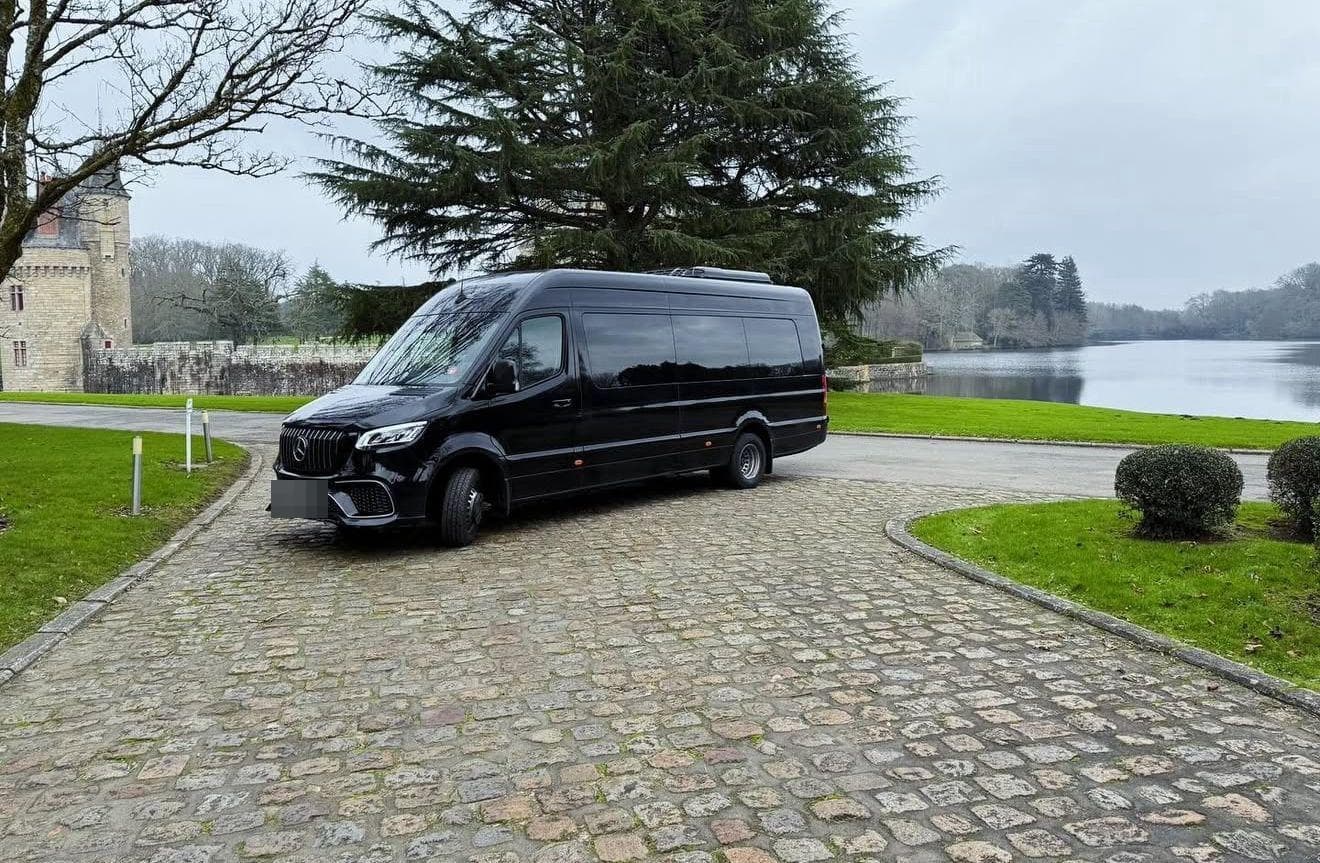
FFGR vehicle for the Jura programme: Mercedes S-Class or V-Class depending on group size. The A6/A39 route (Paris → Beaune → Poligny) passes through Burgundy and allows a stop at a Beaune négociant or the Hospices de Beaune for clients combining the Jura with a Burgundy visit.
For wine acquisition from Macle, Puffeney-Tissot, or Berthet-Bondet (limited allocation wines not available through retail), FFGR can facilitate contact with the estates directly.
Contact us at reservation@ffgrparis.com or WhatsApp +33 7 43 46 14 91.
Reservering
The Jura is one of the great underestimated wine and gastronomy destinations of France, a plateau of limestone, forests, and terrace vineyards that produces wines of absolute uniqueness and cheeses of world-class quality. FFGR provides a private chauffeur programme that combines the wine estates, the Comté cellars, the Pasteur heritage, and the architectural masterpiece of the Saline Royale into a seamless one or two-day circuit from Paris. Contact us: reservation@ffgrparis.com · WhatsApp +33 7 43 46 14 91.
Nu boekenGerelateerde artikelen
 wine-art
Private Access to the Louvre | VIP Chauffeur & Cultural Concierge Paris
Beyond the public queue: how FFGR Paris arranges private pre-opening access, guided tours with chief curators, and seamless door-to-collection transfers for art collectors and cultural patrons.
8 min
wine-artParis Auction Season | Christie's, Sotheby's & Private Chauffeur
The logistics of Paris's two annual auction seasons: Christie's and Sotheby's week scheduling, private viewing access, confidential acquisition transfers, and how FFGR Paris runs the art market calendar.
9 min
 wine-art
Bordeaux Wine Tour | Private Chauffeur from Paris
The definitive guide to a private chauffeur wine tour from Paris to Bordeaux: Médoc châteaux circuit, Saint-Émilion access, en primeur week logistics, and how FFGR Paris runs the Bordeaux wine corridor for collectors and négociants.
10 min