The Scandinavian community in Paris is one of the most culturally productive of the European diaspora communities: the Swedish, Danish, Norwegian, and Finnish presence in Paris stretches back to the 18th century (the Swedish sculptor Johan Tobias Sergel was a foundational figure in Paris neoclassical sculpture; the Danish architect Nikolai Eigtved worked in Paris before designing the Frederiksstaden quarter of Copenhagen), and the relationship between French and Nordic art and design traditions has been one of the most productive bilateral exchanges of the 20th century. The Nouvelle Vague filmmaker Ingmar Bergman and the designer Arne Jacobsen (whose Egg Chair and Ant Chair, both for Fritz Hansen, are among the most reproduced design objects in France) are the most immediately recognisable names in a deep tradition of Franco-Scandinavian cultural exchange. FFGR offers a Nordic culture and design circuit of Paris: from the Institut Suédois in the Marais to the Maison du Danemark on the Champs-Élysées: for clients with a professional or personal connection to Scandinavian culture.
Institut Suédois: the Swedish Cultural Institute in the Hôtel de Marle
Institut Suédois (11 Rue Payenne 75003, in the Marais quarter, 3rd arrondissement, adjacent to the Rue de Bretagne and the Musée Carnavalet) :
**The building:** the Institut Suédois occupies the Hôtel de Marle, a 17th-century aristocratic mansion (*hôtel particulier*) built circa 1620 in the Marais quarter. The building was acquired by the Swedish state in 1931 and adapted as the cultural institute, maintaining the original courtyard, the 17th-century staircase, and the historic interiors of the principal reception rooms while adding gallery and event spaces. The courtyard of the Hôtel de Marle (entered from the Rue Payenne through the original carriage gate) is one of the most beautiful private courtyards in the Marais, the stone facades, the formal garden, and the proportions of the 1620 architecture are unchanged.
**The programme:** the Institut Suédois runs the most active programme of contemporary Scandinavian art exhibitions in France, approximately 10-12 exhibitions per year covering Swedish, Norwegian, Danish, and Finnish contemporary visual art, photography, design, and architecture. Past exhibitions have included retrospectives of Carl Larsson (the Swedish illustrator and decorator whose work defined the concept of the Swedish home in the late 19th and early 20th centuries), major presentations of contemporary Swedish fashion design, and exhibitions on Nordic architectural models and urban planning.
**The library and media archive:** the Institut Suédois maintains a library of Scandinavian language publications (the largest collection of Swedish, Norwegian, Danish, and Finnish books in France), a cinema programme (Swedish and Nordic films with subtitles, weekly screenings), and a language school (Swedish language courses for French speakers, the most attended Scandinavian language programme in France).
**FFGR access:** vehicle drop on the Rue Payenne (the street has limited access for vehicles, FFGR parks on the adjacent Rue de Bretagne or the Rue des Francs-Bourgeois). The Institut is 5 minutes on foot from the Musée Carnavalet (the history museum of Paris, 16 Rue des Francs-Bourgeois, 75003) and 10 minutes from the Musée Picasso (5 Rue de Thorigny 75003), natural combination for a full Marais morning.
Maison du Danemark: the Copenhague restaurant and the Danish cultural centre
Maison du Danemark (142 Avenue des Champs-Élysées 75008, on the upper Champs-Élysées, between the Rue de Berri and the Rue Pierre-Charron, adjacent to the flagship stores of Louis Vuitton and Virgin Megastore, now closed) :
**The institution:** the Maison du Danemark was established in 1956 as the Danish cultural centre and diplomatic cultural mission in France. The building on the Champs-Élysées occupies three floors, the ground floor is a Danish design and lifestyle boutique, the upper floors contain the cultural centre offices and the Copenhague restaurant.
**Copenhague restaurant:** the Copenhague restaurant (on the first floor of the Maison du Danemark, with a terrace overlooking the Champs-Élysées) is one of the rare Paris restaurants dedicated to Nordic seasonal cuisine at a high level, the menu changes weekly in response to the available Scandinavian and Nordic ingredients (smoked fish from Norway, Faroese salmon, Danish aged cheese, Nordic game and forest produce). The wine list includes natural wines from Denmark, Sweden, and Norway (a category of minimal intervention wine-making that has produced interesting results from the warming Scandinavian climate over the past decade) alongside the classic French selections. The restaurant is used by the Danish royal family and diplomatic community for official lunches and dinners and is not listed in standard Paris dining guides.
**The design boutique:** the ground floor boutique of the Maison du Danemark stocks a curated selection of Danish design objects (Royal Copenhagen porcelain, Georg Jensen silver, Hay furniture, Ferm Living textiles) and a rotating selection of emerging Danish designers, one of the few places in Paris where serious Danish design can be purchased.
**The Scandinavian churches of Paris:** the Scandinavian communities in Paris maintain a set of national churches that serve as cultural and social centres for their respective diaspora communities, the Église Suédoise (9 Rue Médéric 75017, Swedish Lutheran church, established 1626), the Église Danoise (17 Rue Lord Byron 75008, Danish Lutheran church), and the Église Norvégienne (2 Rue Lalo 75016, Norwegian Lutheran church, established 1882) are each architecturally significant and maintain archives of the Scandinavian communities in France.
Nordic design in Paris: Fritz Hansen, Carl Hansen and the showroom circuit
The Paris Nordic design circuit covers the primary Scandinavian design houses with permanent Paris presence :
**Fritz Hansen (the Danish design house established 1872, Paris showroom at 27 Rue du Bac 75007, 7ème arrondissement, left bank) :** Fritz Hansen is the oldest and most internationally significant Danish furniture manufacturer, the company produced the Arne Jacobsen series (the Ant Chair, 1952; the Series 7 Chair, 1955; the Egg Chair, 1958; the Swan Chair, 1958, all designed for the SAS Royal Hotel in Copenhagen and subsequently produced for the mass market) that constitutes the most recognisable body of work in 20th-century Danish design. The Paris showroom at 27 Rue du Bac (in the antiques and design quarter of the 7ème) is the primary retail location for Fritz Hansen in France and carries the full range of the Jacobsen series alongside works by Piet Hein (*Superellipse* table), Poul Kjærholm (*PK Series* lounge chairs and tables, the steel and leather series that represents the Danish riposte to Mies van der Rohe's modernism), and contemporary Danish designers.
**Carl Hansen & Søn (Danish furniture house established 1908, best known for the Hans Wegner Wishbone Chair, Paris showroom at 19 Rue du Mail 75002, 2ème arrondissement) :** Carl Hansen & Søn produces the furniture of Hans J. Wegner (1914-2007, the most prolific designer in Danish design history, with over 500 chair designs, the most famous of which is the Wishbone Chair, or CH24, a chair in solid beech and paper cord that has been in continuous production since 1950). The Paris showroom is in the 2ème, in the design and architecture publishing quarter near the Palais-Royal.
**Vitra (Swiss, Weil am Rhein, but representing many Scandinavian designers in France, Paris showroom at 29 Rue de Bourgogne 75007) :** the Vitra showroom represents the work of Alvar Aalto (Finnish, the bentwood furniture of the 1930s: the Paimio chair, the Stool 60, the Aalto vase), Charles and Ray Eames, and the Swiss-Nordic design tradition in France.
**HAY (Danish design house established 2002, Paris concept store at 11 Rue des Gravilliers 75003, in the Marais, adjacent to the Arts et Métiers) :** HAY is the most commercially successful Danish design house of the contemporary period, producing furniture, textiles, and accessories at price points between IKEA and the traditional high-end Danish design houses. The Marais concept store is a full-range retail and exhibition space.
The Franco-Nordic artistic legacy: from Vigeland to the Prix Nobel
The artistic relationship between France and the Nordic countries has produced a series of specific figures and exchanges :
**August Strindberg in Paris (1894-1896, the Swedish playwright lived at the Hôtel Orfila, 60 Rue d'Assas 75006, in the Montparnasse quarter, during his *Inferno* crisis period) :** Strindberg's Paris period (documented in his autobiographical novel *Inferno*, 1897) is one of the most significant encounters between Scandinavian literature and the French avant-garde, during his period at the Hôtel Orfila, Strindberg conducted his alchemical experiments, developed his interest in occultism, and wrote the works that would directly influence Expressionism in Germany and Scandinavia. The Hôtel Orfila building is now a hotel and can be seen from the Rue d'Assas.
**Edvard Munch in Paris (1889-1908, the Norwegian painter visited Paris repeatedly, studied at the École des Beaux-Arts, exhibited at the 1889 Exposition Universelle and the 1900 Exposition) :** Munch's Paris connections, particularly his relationship with Symbolist painting (Gauguin, Toulouse-Lautrec, and the Nabis) and his exhibition at the galleries of the Boulevard des Italiens, directly informed the development of the expressionist figure style that produced *The Scream* (1893, painted in Oslo/Aker but conceptually formed in Paris). The Musée d'Orsay holds a significant Munch collection (including the *Portrait of Strindberg*, 1892).
**The Nobel Prize for Literature connection:** the Nobel Prize for Literature, awarded annually in Stockholm, has a particular connection to French and Paris-based writers, Samuel Beckett (Paris 1969, received the prize while in Tunis, refused the ceremony), Claude Simon (Paris 1985, the only Nobel laureate in French literature born after 1900 who lived in Paris), J.M.G. Le Clézio (received in Stockholm 2008, French-Mauritian writer based in Paris). The Swedish Academy's Paris connection (through the Institut Suédois and the French-Swedish cultural exchange programme) has made the Academy's prize committee particularly attentive to French literary production.
Nordic cuisine in Paris: the natural wine and New Nordic influence
The influence of the New Nordic cuisine movement (Noma, Copenhagen, established 2003; three Michelin stars 2010-2021) on Paris restaurant culture has been significant :
**The New Nordic influence in Paris restaurants:** the key principles of New Nordic cuisine (foraging, fermentation, seasonal local ingredients, elimination of imported tropical produce, the treatment of wild and uncultivated species as culinary material) have been adopted by a generation of Paris chefs who were trained in or influenced by the Copenhagen school. The most directly Nordic-influenced restaurants in Paris include: - **Sébastien Bras, Les Labours (Hôtel Lutetia, 45 Boulevard Raspail 75006, the brasserie of the renovated Lutetia palace hotel) :** Nordic-influenced seasonal menu with fermented and foraged elements in the modern Parisian brasserie format - **Haï Kaï (108 Quai de Jemmapes 75010, on the Canal Saint-Martin) :** one of the clearest direct applications of New Nordic principles in Paris, fermented vegetables, foraged herbs, coastal French seafood treated with Scandinavian technique - **Septime (80 Rue de Charonne 75011, the most influential natural wine and contemporary French bistrot of the past decade, with clear New Nordic influence in its vegetable-forward, seasonally absolute menu)**
**Natural wine bars with Nordic lists:** the natural wine movement in Paris, Septime Cave (3 Rue Basfroi 75011), Le Verre Volé (67 Rue de Lancry 75010), La Cave de Belleville (51 Rue de Belleville 75019), includes selections from Scandinavian producers (particularly Danish wine from the warming climate of Bornholm island, and Norwegian wines from the Hardangerfjord) alongside the Jura, Loire, and Beaujolais natural wine producers.
Booking the Paris Nordic cultural and design circuit
FFGR structures the Nordic programme in two formats :
**The Nordic design and culture half-day (10h00-14h00 or 14h00-18h00):** Institut Suédois (11 Rue Payenne, 1h, current exhibition + courtyard) → Fritz Hansen showroom (27 Rue du Bac, 45 min, design consultation or purchase) → HAY concept store (11 Rue des Gravilliers, 30 min) → lunch at the Copenhague restaurant (Maison du Danemark, 142 Champs-Élysées, 1h30, Nordic seasonal menu). Vehicle available throughout.
**The full Nordic day programme:** morning at the Institut Suédois (Marais, 1h) → Carl Hansen showroom (19 Rue du Mail, 30 min) → Musée des Arts Décoratifs (107 Rue de Rivoli 75001, the decorative arts museum holds a significant Scandinavian design collection, including Aalto glass, Royal Copenhagen porcelain, and Danish silverware from the Georg Jensen archive, 1h30) → lunch at Septime (80 Rue de Charonne 75011, New Nordic-influenced contemporary French tasting menu, reservation arranged by FFGR) → afternoon at the Copenhague restaurant terrace for coffee and design shopping at the Maison du Danemark boutique.
Contact us at reservation@ffgrparis.com or WhatsApp +33 7 43 46 14 91.
Reservering
The Nordic Paris circuit, from the 17th-century courtyard of the Institut Suédois in the Marais to the Copenhague restaurant on the Champs-Élysées, from the Fritz Hansen showroom on the Rue du Bac to the New Nordic-influenced restaurants of the 11ème, traces one of the most productive cultural exchanges between France and Scandinavia. FFGR provides the vehicle and programme management for clients with a professional, personal, or collecting connection to Nordic culture and design. Contact us: reservation@ffgrparis.com · WhatsApp +33 7 43 46 14 91.
Nu boekenGerelateerde artikelen
 destinations
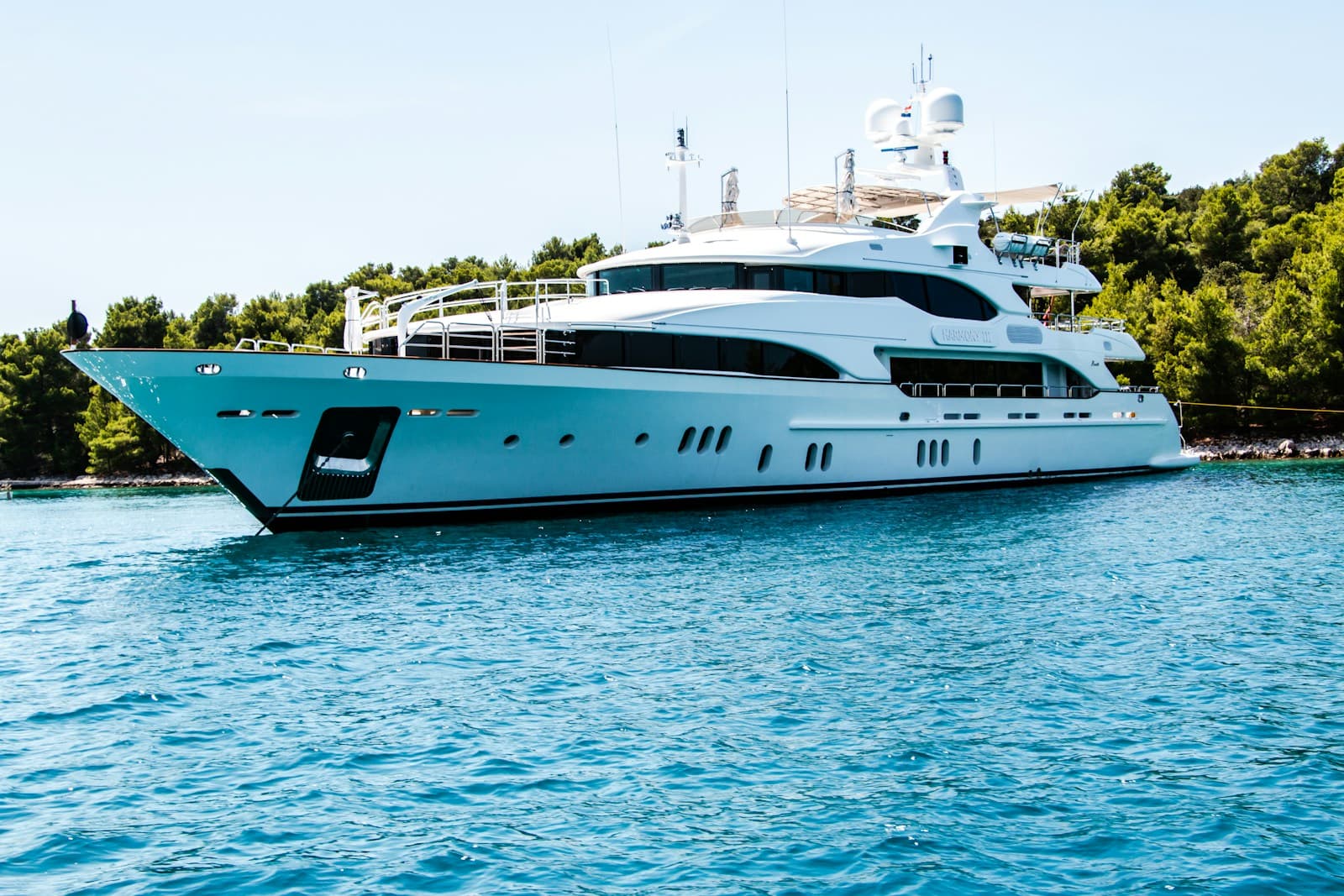
Côte d\'Azur Private Yacht | The FFGR Guide to the French Riviera by Sea
How to charter a superyacht or private boat on the Côte d'Azur: Monaco to Saint-Tropez, Cannes Film Festival logistics, anchorage selection, and what separates a true yacht charter from an online booking form.
8 min
 destinations
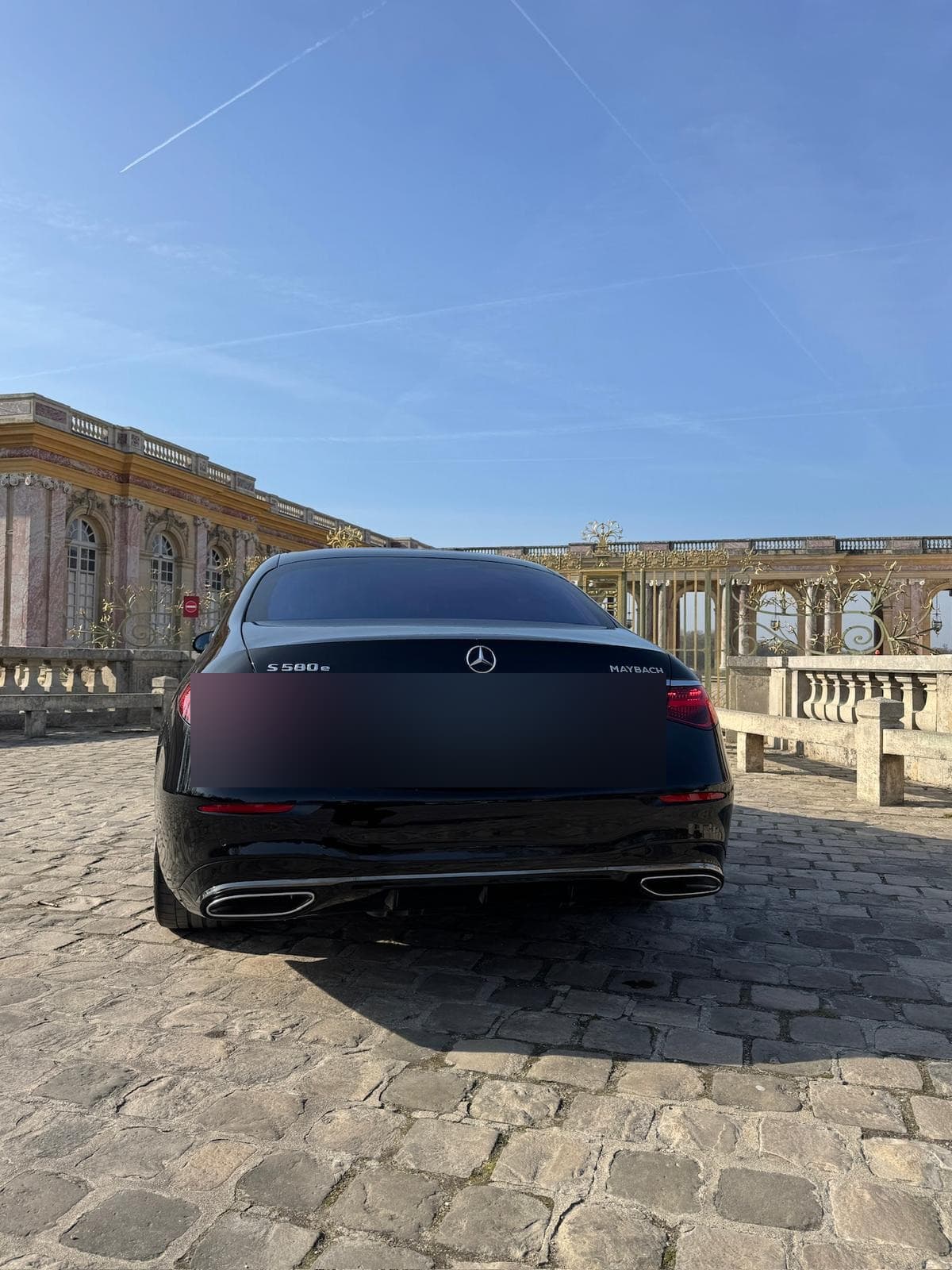
Versailles | The Private Access Guide for UHNW Visitors
How to experience the Château de Versailles as it was intended: before the crowds, after closing, with an art historian, in a Rolls-Royce. The FFGR Paris guide to private Versailles access.
8 min
 destinations
Paris to Courchevel | Private Chauffeur for the Ski Season
The definitive guide to Paris-Courchevel private chauffeur transfers: route options, vehicle selection for alpine conditions, timing the ski season, and how FFGR Paris runs the winter mountain corridor.
9 min