Paris holds the largest Muslim population of any Western European capital, and the city's Islamic cultural infrastructure is correspondingly significant: the Grande Mosquée de Paris, built 1922-1926 as a gift from the French Republic to the Muslim soldiers of the French colonial armies who died in the First World War, is the oldest grand mosque in France, an architectural jewel of Moorish-Andalusian craftsmanship, and a functioning religious, social, and gastronomic institution. The Institut du Monde Arabe, designed by Jean Nouvel in collaboration with the Arab League and opened in 1987 on the Seine bank facing the Île Saint-Louis, constitutes the most important institution of Arab civilisation and contemporary Arab culture in Europe. Together with the Louvre's extraordinary Department of Islamic Art (opened 2012), the Musée du Quai Branly's African and North African collection, and the commercial and culinary Arab quarter of the Goutte d'Or, Paris provides a circuit of Islamic culture and heritage of a depth unequalled outside the Arab world itself. FFGR structures this programme for Arab, Gulf, and Muslim heritage clients, as well as for museum specialists, art collectors, and architectural researchers, whose interests extend beyond the standard Paris tourist circuit.
Grande Mosquée de Paris: the historic Moorish mosque of the 5ème
The Grande Mosquée de Paris (2bis Place du Puits de l'Ermite, 75005 Paris, the 5ème arrondissement, adjacent to the Jardin des Plantes and the Muséum National d'Histoire Naturelle): the oldest and most architecturally significant grand mosque in France, constructed 1922-1926 by French architects Robert Fournez, Maurice Tranchant de Lunel, and Charles Heubès under the direction of the Moroccan Ministry of Habous et des Affaires Islamiques:
**History and significance:** built by vote of the French Parliament in 1920 as a tribute to the 100,000 Muslim soldiers from the French colonial empire who died fighting for France in the First World War. The mosque was inaugurated on 15 July 1926 by President Gaston Doumergue and Sultan Youssef ibn Hassan of Morocco. During the German Occupation of Paris (1940-1944), the Grande Mosquée sheltered Jewish families and resistance members by providing forged Muslim identity papers, a documented episode of institutional solidarity.
**Architecture:** the mosque complex is built in the Hispano-Moorish style (also called Mudéjar or Andalusian-Moorish), drawing on the architectural traditions of the Alhambra of Granada and the mosques of Fez and Marrakech. The principal features: - **The minaret** (26 metres, the tallest in Paris, octagonal shaft with faïence tile panels and a muqarnas cresting) - **The great courtyard** (the rectangular arcaded courtyard with a central ablutions fountain and orange trees, the private heart of the complex, accessible on guided visits) - **The prayer hall** (the large prayer hall with Turkish carpet, zellige tile dadoes, carved plaster arabesques, and cedar wood ceiling, accessible to non-Muslims during designated visit periods) - **The hammam** (the Hammam de la Grande Mosquée, 39 Rue Geoffroy-Saint-Hilaire 75005, the public Moorish bath, open Tuesday-Sunday; one of the most authentic hammam experiences in Europe) - **The salon de thé** (the tea salon under the covered gallery of the courtyard, serving mint tea, msemen, pastilla, and North African pastries, open to the public daily; no reservation required) - **The restaurant** (the full-service restaurant at the mosque serving Moroccan cuisine, couscous, and tajine; reservation recommended).
**Visit access:** the Grande Mosquée is open daily to non-Muslim visitors (excluding prayer times) via the Rue Geoffroy-Saint-Hilaire entrance. Guided tours of the prayer hall and great courtyard are available. FFGR drops at the Rue Geoffroy-Saint-Hilaire entrance, the mosque's non-prayer visitor entry.
Institut du Monde Arabe: Jean Nouvel\'s monument to Arab civilisation
The Institut du Monde Arabe (IMA, 1 Rue des Fossés Saint-Bernard, 75005 Paris, the quai de la Seine bank of the 5ème, facing the Île Saint-Louis and the cathedral of Notre-Dame de Paris): the most important institution of Arab culture in Europe, created in 1980 by French President Valéry Giscard d'Estaing and a founding group of 20 Arab states (subsequently extended to 22 member states), and designed by Jean Nouvel, Pierre Soria, Gilbert Lézénès, and Architecture Studio:
**The building:** one of the most celebrated works of French architecture of the 20th century. The IMA's south facade consists of 240 metallic diaphragm panels, mechanical apertures modelled on the moucharabieh (the carved lattice screens of traditional Arab architecture) that open and close automatically in response to light levels, creating a kinetic facade that regulates the interior light. The north facade is a curved glass mirror surface reflecting the Seine and the Île Saint-Louis. The 9th floor terrace offers the most technically exceptional view of Notre-Dame de Paris from any building in the city.
**The collections, Musée de l'IMA (levels 7-9):** the permanent collection of approximately 35,000 objects spanning: - **Pre-Islamic and early Islamic period** (7th-9th centuries CE): the Kufic manuscripts, early bronze and ceramic objects, and the foundational material culture of the Islamic world - **The medieval golden age** (9th-13th centuries, the Abbasid, Fatimid, and Andalusian periods): the astronomical instruments (the astrolabes of al-Andalus, including a 10th-century Córdoba astrolabe, the oldest surviving instrument of its type), the brass celestial globes, the illustrated manuscripts (Ibn Rushd's medical texts, al-Biruni's Book of Constellations) - **The Ottoman and Safavid period** (16th-18th centuries): the Iznik pottery, the Ottoman miniature paintings, the Mamluk metalwork, and the Persian carpet collection - **North Africa and the Saharan tradition:** the Moroccan zellige work, the Tuareg silverwork, and the Saharan textile collection - **Contemporary Arab art** (20th-21st centuries, upper level): the collection of modern and contemporary works from Arab artists across the diaspora
**The roof terrace restaurant** (9th floor, L'Zyriab, named for the musician Ziryab who introduced Andalusian culture to the Maghreb in the 9th century): the restaurant serving Levantine and Andalusian-inspired cuisine with the panoramic Seine view.
The Louvre Islamic Art Department: the most significant collection outside the Arab world
The Louvre Department of Islamic Art (Salle 186-190, Richelieu wing, ground floor, inaugurated September 2012, the largest recent addition to the Louvre's permanent collection, designed by Mario Bellini and Rudy Ricciotti with a floating golden mesh roof): the most comprehensive collection of Islamic art in a Western institution, comprising 18,000 objects spanning 13 centuries and three continents:
**Key works:** - **The Baptistère de Saint Louis** (early 14th century, attributed to the workshop of Muhammad ibn Zayn, a silver-inlaid brass basin of exceptional quality, the most refined piece of medieval metalwork surviving from the Mamluk period, used as a baptismal font for French royal children including Louis XIII; diameter 50.2 cm, weight 9.5 kg) - **The Pyxis of Almanzor** (968 CE, an ivory cylindrical box carved for al-Mansur, the Umayyad regent of Córdoba; the finest surviving example of Andalusian ivory carving, with scenes of falconry and courtly entertainment within interlaced arabesque fields) - **The Mantes carpet** (early 17th century, Safavid Persia, a monumental prayer carpet of silk and wool pile, 5.6 × 8.1 metres, one of the largest and most complex Persian carpets in any European collection) - **The Bouclier de Charles IX** (a magnificent Ottoman metalwork shield presented to the French crown, a document of the Turco-French diplomatic relationship of the 16th century) - **The Kufic Qur'an manuscripts** (late 8th-early 9th century, the earliest Qur'anic manuscripts in the collection, with the angular Kufic script on vellum that preceded the development of the naskh script)
**The floating roof:** the lightweight golden mesh canopy designed by Bellini and Ricciotti covers the two courtyards of the Visconti courtyard in the Richelieu wing, a structure of 2,350 panels of glass and stainless steel mesh that creates a dappled light effect on the collection below.
The Goutte d\'Or: the Arab and African quarter of the 18ème
The Goutte d'Or (18ème arrondissement, the quartier bounded by the Boulevard de la Chapelle to the north, the Rue Ordener to the south, the Boulevard Barbès to the west, and the Rue de Jessaint to the east): the historic centre of Arab and West African immigration in Paris, the most commercially and culturally authentic Arab neighbourhood in the city:
**Character:** the Goutte d'Or is a working commercial district, not a heritage site, its significance is in the density and authenticity of its North African and sub-Saharan African commerce: the halal butchers, the épiceries algériennes and marocaines selling preserved lemons, argan oil, ras el hanout and imported Tunisian harissa, the fabric merchants (the Marché Dejean, 18ème, the fabric market that sells the wax prints, bazin riche, and African textile traditions used by the Senegalese, Malian, and Cameroonian dressmakers of the quartier), the telephone-and-money-transfer shops, the Algerian jewellers on the Rue Labat.
**Culinary highlights:** - **Le Dix-Huit (18ème):** the Algerian restaurants of the Rue de Suez and the Rue Dejean serving couscous royal (the full lamb, chicken, and merguez couscous with harissa and broth), brick pastry, and North African pastries - **The msemen sellers:** the griddle-bread stalls operating from early morning on the Rue de la Charbonnière and Rue des Poissonniers - **The pâtisseries orientales:** the Tunisian and Algerian pastry shops selling baklava, makroud (date and semolina cake), and kaak warka (anise-flavoured cookies) by the kilo
**Marché de la rue Dejean:** the outdoor market on the Rue Dejean (daily, 08h00-19h30), fresh produce, halal butchers, and the fish market that serves the African community's preference for freshwater and ocean fish species not found in conventional Paris markets.
**Access:** FFGR drops in the Rue Ordener or Rue de la Chapelle, the Goutte d'Or streets are narrow and pedestrian-heavy. The vehicle waits on the boulevard perimeter while the client explores on foot.
Private visits to Islamic art at the Musée du Quai Branly and the Cluny
The Musée du Quai Branly, Jacques Chirac (37 Quai Branly 75007, Jean Nouvel's 2006 building on the Seine bank between the Eiffel Tower and the Pont de l'Alma): the national museum of non-European cultures, with significant Islamic and North African holdings:
**The North Africa and Islam collections at Quai Branly:** - **The Saharan and Maghrebi collections:** Tuareg silverwork and leather (the finest institutional collection of Tuareg material culture in France), Berber textiles and jewellery (the amazigh silver bracelets, fibulae, and diadems of the Moroccan High Atlas and the Aures of Algeria), and the Saharan rock art documentation - **The sub-Saharan Islamic collection:** the mosque textiles, the Qur'an manuscripts in West African scripts (Bambara, Ajami), and the West African Muslim material culture from Mali and Senegal - **The North African archaeological collection:** the Roman-period Berber objects from the Maghreb, including the exceptional mosaic panels from the Tunisian and Algerian sites
**The Musée de Cluny, Musée National du Moyen Âge** (28 Rue du Sommerard, 75005, recently reopened 2022 after 5 years of renovation): the medieval art museum in the 5ème, with a concentrated collection of Islamic-period objects acquired alongside the Christian medieval material: - The Hispano-Moresque ceramics and lustreware (the 14th-16th century Valencian lustre pottery that influenced European faïence) - The Andalusian ivory pyxides and caskets - The medieval Islamic textiles incorporated into Christian church treasuries, the most revealing documentation of cross-cultural medieval trade in any European collection
**Combined IMA + Cluny programme:** both institutions are in the 5ème, 700 metres apart. FFGR structures a half-day programme: IMA (10h00-13h00, roof terrace lunch) → Cluny (14h30-17h00) → Grande Mosquée salon de thé (17h30-18h30) → hotel return.
Booking the FFGR Paris Islamic heritage programme
The FFGR Paris Islamic and Arab cultural programme is offered in three formats:
**Full Islamic heritage day programme:** hotel departure 10h00 → Institut du Monde Arabe (10h30-13h00, with roof terrace lunch at L'Zyriab) → Musée du Louvre Islamic Art Department (14h30-16h30, focused visit with highlights) → Grande Mosquée de Paris (17h00-18h30, salon de thé and exterior visit) → return hotel 19h00.
**Hammam and gastronomy programme:** Grande Mosquée hammam (10h00-12h30, reservation required separately, the hammam operates on a gender-segregated schedule: women Tuesday, Thursday, Saturday morning; men Friday, Saturday afternoon, Sunday) → salon de thé lunch (12h30-13h30) → Goutte d'Or afternoon market visit → return hotel 16h00.
**Islamic art scholarly programme (full day with two major museum collections):** IMA (10h00-12h30) → Quai Branly (14h00-16h30, North Africa and Islamic collections focus) → Cluny medieval Islamic objects (17h00-18h00) → return hotel 18h30.
For visits to the restricted prayer areas of the Grande Mosquée and the private collections of Arab art held by Paris dealers (several significant galleries in the 6ème and 7ème specialise in Islamic and Arab antiquities and contemporary art, Galerie Tanit, Galerie La Forest Divonne), FFGR coordinates the access protocol.
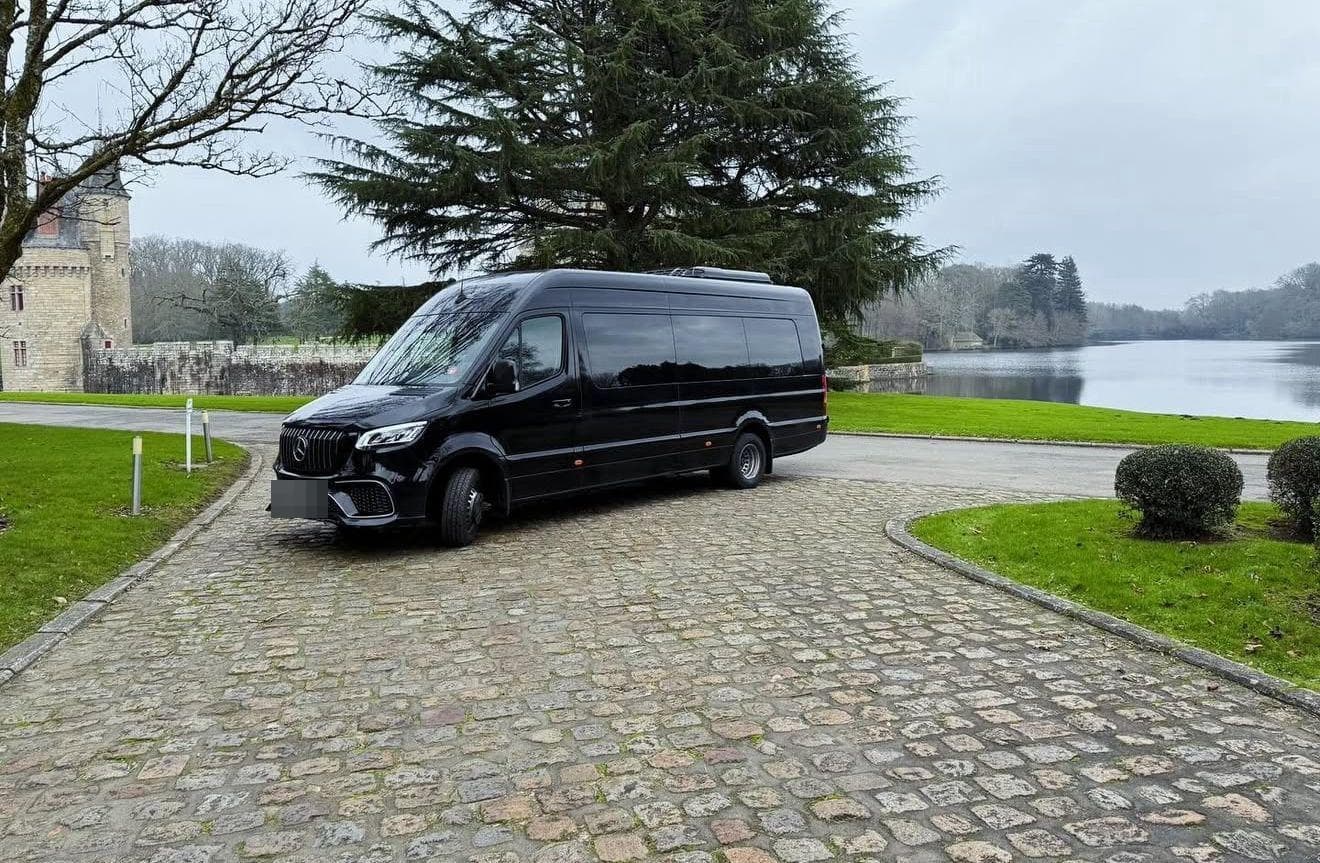
For Gulf and Arab UHNW clients requiring Arabic-speaking staff or specific religious accommodation, FFGR can arrange appropriate vehicle configuration and programme adaptation.
Contact us at reservation@ffgrparis.com or WhatsApp +33 7 43 46 14 91.
Бронирование
The Paris Islamic and Arab cultural circuit, the Grande Mosquée de Paris with its hammam and salon de thé in the 5ème, Jean Nouvel's Institut du Monde Arabe on the Seine quay, the Louvre's extraordinary Department of Islamic Art, the Musée du Quai Branly's North African and Saharan collections, and the commercial authenticity of the Goutte d'Or, constitutes the most complete Islamic heritage circuit in Western Europe. FFGR provides the vehicle for the complete Paris Islamic and Arab cultural programme. Contact us: reservation@ffgrparis.com · WhatsApp +33 7 43 46 14 91.
ЗабронироватьПохожие статьи
 destinations
Côte d\'Azur Private Yacht | The FFGR Guide to the French Riviera by Sea
How to charter a superyacht or private boat on the Côte d'Azur: Monaco to Saint-Tropez, Cannes Film Festival logistics, anchorage selection, and what separates a true yacht charter from an online booking form.
8 min
 destinations
Versailles | The Private Access Guide for UHNW Visitors
How to experience the Château de Versailles as it was intended: before the crowds, after closing, with an art historian, in a Rolls-Royce. The FFGR Paris guide to private Versailles access.
8 min
 destinations
Paris to Courchevel | Private Chauffeur for the Ski Season
The definitive guide to Paris-Courchevel private chauffeur transfers: route options, vehicle selection for alpine conditions, timing the ski season, and how FFGR Paris runs the winter mountain corridor.
9 min