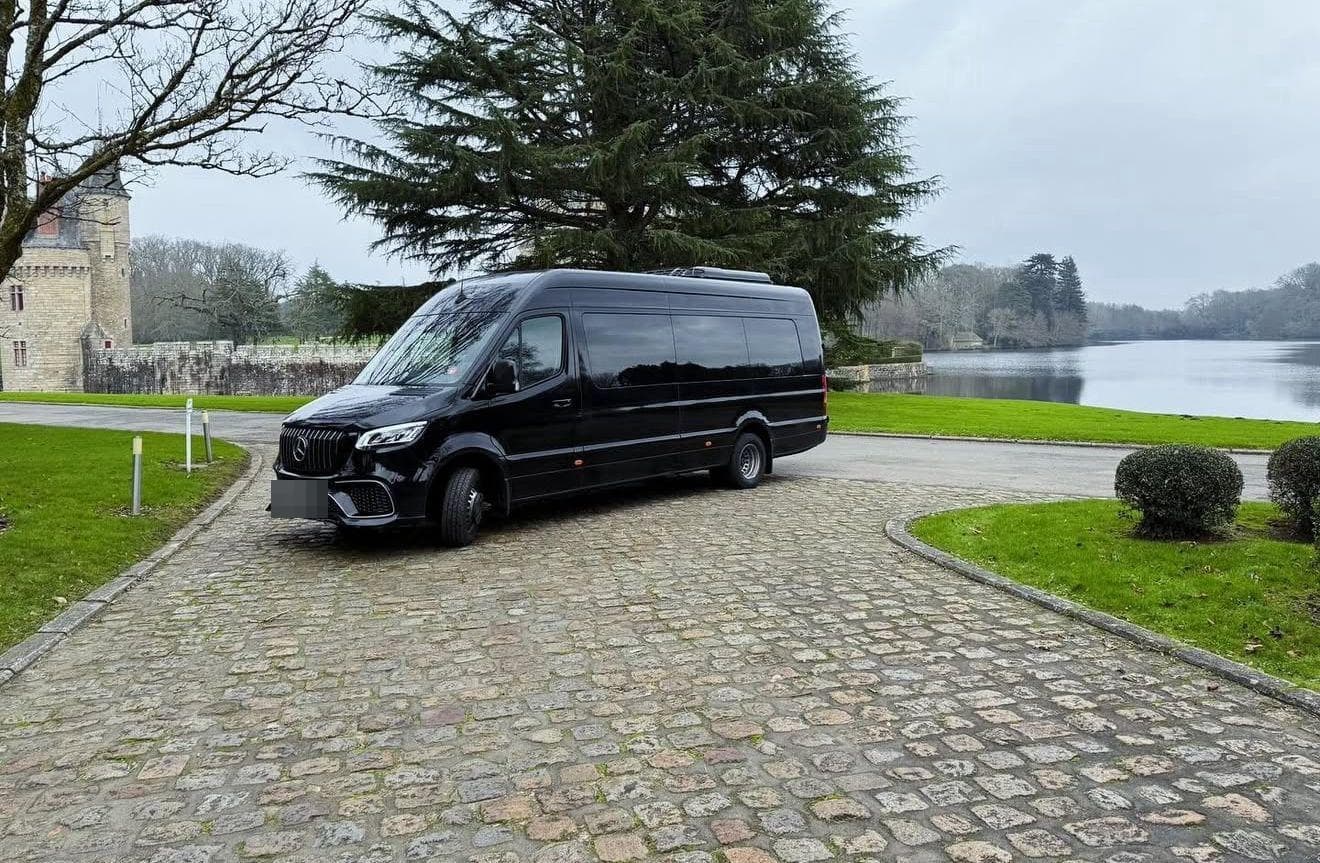
Montmartre (the 18th arrondissement hill, from the Anvers Métro to the Place du Tertre at the summit, elevation 130 metres, the highest point in Paris) is the one neighbourhood where the art-historical imagination and the physical geography of the city coincide completely. From 1870 to 1940, the hill attracted every significant artist working in Paris, Renoir, Toulouse-Lautrec, Degas, van Gogh, Picasso, Modigliani, Utrillo, Satie, Apollinaire, drawn by the low rents, the open-air cabarets, the vineyards, and the extraordinary light of the highest ground in the city. The physical traces remain: the studios where the paintings were made, the cafés where the movements were argued, the streets unchanged by Haussmann (the Baron's modernisation never reached the summit). FFGR provides a chauffeur service for Montmartre that manages the approach logistics, the hill is inaccessible to normal vehicles at its summit, with vehicle drop at the best approach point and collection from an agreed rendezvous after the circuit.
Sacré-Cœur: the basilica and the hill
Sacré-Cœur (Basilique du Sacré-Cœur de Montmartre, 35 Rue du Chevalier de la Barre 75018, accessible from the Rue Lamarck-Caulaincourt (north entrance, less crowded, the preferred approach for FFGR clients) or from the Place Saint-Pierre and the funicular (south) :
**The history:** the construction of the Sacré-Cœur was decreed by the French National Assembly in 1873 as an act of national penance following the defeat of the Franco-Prussian War (1870) and the Commune de Paris (1871, the revolutionary government that held Paris for 72 days and was suppressed with approximately 10,000-30,000 deaths in the Semaine Sanglante). The choice of Montmartre as the site was deliberate, the hill had been one of the last strongholds of the Commune, and the basilica was intended to consecrate the ground as a symbol of the restored Republic and Catholic order.
**Architecture:** Paul Abadie designed the basilica in a Romano-Byzantine style inspired by the Romanesque churches of Périgueux (notably the Saint-Front Cathedral, 24000 Périgueux, also designed by Abadie in 1852). The white travertine stone of the exterior (from the Château-Landon quarries in Seine-et-Marne) has the unusual property of secreting calcite when it rains, which bleaches the stone continuously, the reason the basilica has remained brilliantly white for 110 years.
**Interior:** the mosaic of Christ in Majesty in the apse (1922, executed by Luc-Olivier Merson) covers 480 square metres, one of the largest mosaics in the world. The crypt contains the relics of Saint-Denis and the heart of Alexandre Legentil, one of the vow-makers.
**The view:** from the parvis of the basilica, the panorama of Paris is the most complete in the city, 15-20 km on a clear day, from the Eiffel Tower and the Invalides dome in the southwest to the towers of La Défense in the northwest, the Bois de Vincennes in the east, and the plateau of Saclay in the south. The view is at its best at dawn and at dusk, FFGR can arrange a pre-dawn approach for clients seeking the sunrise panorama without the midday crowds.
**FFGR approach:** the chauffeur drops the client at the corner of the Rue Lamarck and the Rue Caulaincourt (the north flank of the hill, a 5-minute walk to the basilica through the quiet streets of the north Montmartre, the least-visited approach). Collection from the Rue Lamarck-Caulaincourt area or from the Place Emile-Goudeau after the full circuit.
Musée de Montmartre and the Impressionist ateliers
Musée de Montmartre (12-14 Rue Cortot 75018, on the northern flank of the summit, 3 minutes walk from the Sacré-Cœur, in the oldest surviving building on the Montmartre hill) :
**The building:** the Maison du Bel Air (the central building, 17th century) is the oldest surviving house on the Montmartre hill, built as a country house in the 1680s, it was converted into artists" studios in the 1870s. The building and its gardens overlook the Clos Montmartre vineyard (see below) and the rear gardens retain the terrace where Renoir painted.
**Renoir's studio (1875-1876):** Pierre-Auguste Renoir rented the first floor studio of 12 Rue Cortot from 1875 to 1876, the studio where he painted *La Balançoire* (The Swing, 1876, now in the Musée d'Orsay) and prepared the sketches for *Bal du Moulin de la Galette* (also 1876, see below). The studio has been reconstructed with period furniture and a display of the works painted in this space.
**Suzanne Valadon and Maurice Utrillo:** Suzanne Valadon (born Marie-Clémentine Valadon, 1865, acrobat, model for Toulouse-Lautrec and Renoir before becoming a painter in her own right, she is the mother of Maurice Utrillo) had a studio in the building from 1912 to 1926. Her son Maurice Utrillo, whose entire œuvre is a painted record of Montmartre streets, also worked here. The museum holds the most important collection of Valadon paintings outside the Musée d'Art Moderne de Paris.
**The Clos Montmartre vineyard:** the 1-hectare vineyard at the corner of the Rue des Saules and the Rue Saint-Vincent was planted in 1934 by the city of Paris to preserve the last vineyard on the Montmartre hill, Montmartre was wine country until the 19th century, when the expansion of Paris absorbed the rural slopes. The vineyard produces approximately 1,500 bottles per year of *Pinot Noir* and *Gamay* (the *Gamay* proportion varies by vintage). The annual Fête des Vendanges (first weekend of October) is the principal public harvest festival in Paris, the FFGR private harvest lunch programme allows UHNW clients to participate in the harvest and taste the new vintage before public release.
Bateau-Lavoir: the cradle of Cubism
Bateau-Lavoir (13 Place Émile-Goudeau 75018, on the south slope of the Montmartre hill, accessible from the Abbesses Métro or from the summit via the Rue Lepic) :
**The building:** the Bateau-Lavoir (literally "washing barge", the nickname given by the poet Max Jacob, who compared the ramshackle wooden structure to the laundry boats on the Seine) was a collective of wooden studios built around a water trough in the 1880s. The original building burned in 1970, the current concrete structure houses artists" studios, but the original courtyard and the plaque marking Picasso's studio are preserved.
**Picasso at the Bateau-Lavoir (1904-1909):** Pablo Picasso moved into a studio at the Bateau-Lavoir in 1904, at the age of 23, with his lover Fernande Olivier. The period 1904-1909 is one of the most explosive in the history of art: here Picasso transitioned from the Rose Period, through the study of African art at the Trocadéro, to the painting of *Les Demoiselles d'Avignon* in 1907 (the 244cm × 234cm canvas now at the Museum of Modern Art, New York, painted in this studio and never exhibited during Picasso's Montmartre years). The *Demoiselles* sketches, studies, and preparatory drawings occupied the studio walls for two years.
**The Bateau-Lavoir community:** the building was simultaneously occupied by: - **Georges Braque** (studio adjacent to Picasso, the collaboration between Picasso and Braque from 1908-1914 produced Analytical Cubism) - **Juan Gris** (studio from 1906, the most technically rigorous of the Cubists) - **Amedeo Modigliani** (occasional occupation, he lived primarily in Montparnasse but frequented the Bateau-Lavoir) - **Kees van Dongen** (Dutch Fauvist, studio 1905-1907) - **Max Jacob** (poet and critic, Picasso's closest literary friend, lived in the building) - **Guillaume Apollinaire** (poet and art critic, his studio on the Rue Lepic was the intellectual hub that connected the Bateau-Lavoir to the Paris literary world)
**The community dinners:** the Bateau-Lavoir is famous for the *banquet Rousseau* of 1908, the dinner organized by Picasso in honour of Henri Rousseau (the Douanier) at which 30 guests including Apollinaire, Marie Laurencin, and Gertrude Stein attended. Stein had acquired the *Demoiselles* sketches earlier that year. The dinner is reconstructed in Max Jacob's memoirs and Fernande Olivier's *Picasso et ses amis* (1933).
Place du Tertre and Moulin de la Galette: the surface of Montmartre
The surface of Montmartre as a living artistic environment :
**Place du Tertre (Place du Tertre 75018, the summit square, 200 metres from the Sacré-Cœur):** the Place du Tertre has functioned as an open-air painters' market since the late 19th century. Today, 200+ licensed artists work on the square from dawn to dusk, portraitists, caricaturists, landscape painters. The artistic quality ranges from mechanical to genuinely remarkable (several artists who exhibit on the Tertre have also exhibited at galleries in the Marais and at the FIAC). For UHNW clients, FFGR can arrange a private sitting with one of the designated portrait artists of the square, a 20-30 minute Pencil or pastel portrait on quality paper, framed and delivered to the hotel.
**Moulin de la Galette (83 Rue Lepic 75018, the principal windmill of Montmartre, one of two surviving of the 30 that stood on the hill until the 19th century) :** the Moulin de la Galette was built in the 17th century (the mill mechanism dates to 1622) and was converted into a guinguette (an outdoor dance hall) in the 1830s, the Sunday afternoon dances that Renoir captured in *Bal du Moulin de la Galette* (1876) continued until 1914. The mill itself is now private property (not open to visitors) but is visible from the Rue Lepic and the Rue Girardon. The restaurant "Le Moulin de la Galette" at the same address (83 Rue Lepic, the building at the foot of the mill) allows visitors to dine in the former ballroom, with reproductions of the Renoir painting and period photographs.
**Rue Lepic and the Abbesses neighbourhood:** the Rue Lepic (running from the Blanche Métro at the foot of the hill to the summit via a long spiral) is the principal market street of Montmartre, the Amélie film locations (notably the fish-and-chip shop and the café scenes), the apartment of Vincent van Gogh at 54 Rue Lepic (1886-1888, where he lived with his brother Theo), and the Moulin Rouge at the foot of the hill (82 Boulevard de Clichy 75018, the cabaret opened 1889, the Lautrec posters commissioned 1891-1896, the can-can tradition continuous since the opening).
The Montmartre art market and gallery circuit
Montmartre today hosts a secondary but serious market in Post-Impressionist, Fauvist, and School of Paris works through a cluster of galleries on the south slope of the hill:
**Galerie Arnoux (11 Rue Lepic 75018):** specialising in original Montmartre school works, Utrillo, Valadon, Dufy, Vlaminck, with an emphasis on authenticated works with documented Montmartre provenance. The gallery also handles the occasional Toulouse-Lautrec print or Steinlen poster from the Belle Époque period.
**Galerie Piltzer (108 Rue du Cherche-Midi 75006, left bank, but with a Montmartre specialisation):** one of the principal galleries for Post-Impressionist and Fauvist works in Paris. The inventory includes Vlaminck, Derain, Dufy, Marquet, and the less-known Fauvist circle. The gallery produces scholarly catalogues and offers authentication research for prospective acquisitions.
**Atelier Renoir reconstruction (Musée de Montmartre):** the Musée de Montmartre has reconstructed the Renoir studio with period furniture, preparatory sketches, and the garden terrace where the painter set up his easel for the *Balançoire* and related open-air works. The reconstruction is based on the studio photographs taken in 1875-1876 by the photographer Nadar.
**Private collection tours:** FFGR can arrange private visits to the studios of working artists on the Montmartre hill, not the commercial square painters of the Place du Tertre, but established artists represented by serious galleries who maintain working ateliers in the neighbourhood. These arrangements are made through FFGR's network of art advisory contacts and require a minimum of 1 week advance notice.
The complete Montmartre programme and FFGR logistics
FFGR structures the Montmartre circuit in two formats :
**The half-day Montmartre programme (10h00-14h00 or 15h00-19h00):** vehicle drop at the corner of Rue Lamarck-Caulaincourt (north approach, avoiding the tourist crush of the south funicular). Circuit: Sacré-Cœur (45 minutes, interior + panorama) → Musée de Montmartre and Clos Montmartre (45 minutes) → Bateau-Lavoir (Place Émile-Goudeau, exterior visit + plaque, 15 minutes) → Rue Lepic market walk → Place du Tertre (portrait sitting, 30 minutes, optional) → Moulin de la Galette viewing → lunch at the Moulin de la Galette restaurant or at La Bonne Franquette (2 Rue Saint-Rustique 75018, the traditional guinguette of Montmartre, established 1880). Vehicle collection at 14h00 or 19h00 from the Rue Lamarck-Caulaincourt area.
**The full-day Montmartre and Belle Époque programme (10h00-18h00):** morning circuit as above → afternoon at the Moulin Rouge (private backstage visit and costume exhibition, by arrangement) → early evening at the Pigalle cocktail bars (the Pigalle neighbourhood immediately below the hill has been home to the city's most sophisticated cocktail bars since 2012: La Pigalle bar at Hôtel Pigalle, Glass Montmartre at 7 Rue Frochot 75009) → dinner at a brasserie in the 9ème (the Brasserie Barbès at 2 Boulevard Barbès, the Hôtel des Grands Boulevards at 17 Boulevard Poissonnière).
**The October Vendanges programme:** first weekend of October, FFGR positions a vehicle for the Fête des Vendanges de Montmartre, the city's official harvest festival, with a parade, wine tasting, and the public auction of the new vintage. UHNW clients can participate in the private harvest lunch at the Musée de Montmartre (by arrangement with the museum) and receive a case of the new vintage.
Contact us at reservation@ffgrparis.com or WhatsApp +33 7 43 46 14 91.
Prenotazione
Montmartre is Paris before Haussmann, Paris before the automobile, Paris at the moment when the concentration of artistic talent was so great that the entire history of modern painting was effectively determined on one hill. FFGR provides the logistics for a Montmartre programme that respects the scale of the neighbourhood, on foot at the summit, with the vehicle managing the approach and collection from the lower streets. Contact us: reservation@ffgrparis.com · WhatsApp +33 7 43 46 14 91.
Prenota oraArticoli correlati
 destinations
Côte d\'Azur Private Yacht | The FFGR Guide to the French Riviera by Sea
How to charter a superyacht or private boat on the Côte d'Azur: Monaco to Saint-Tropez, Cannes Film Festival logistics, anchorage selection, and what separates a true yacht charter from an online booking form.
8 min
 destinations
Versailles | The Private Access Guide for UHNW Visitors
How to experience the Château de Versailles as it was intended: before the crowds, after closing, with an art historian, in a Rolls-Royce. The FFGR Paris guide to private Versailles access.
8 min
 destinations
Paris to Courchevel | Private Chauffeur for the Ski Season
The definitive guide to Paris-Courchevel private chauffeur transfers: route options, vehicle selection for alpine conditions, timing the ski season, and how FFGR Paris runs the winter mountain corridor.
9 min