The Paris haute horlogerie circuit operates on two levels: the visible retail layer of the Place Vendôme and the Rue de la Paix (where the grands ateliers, Patek Philippe, Vacheron Constantin, Breguet, Jaeger-LeCoultre, A. Lange & Söhne, maintain salon-showrooms that function as private client reception spaces rather than conventional retail) and the invisible professional layer of independent movement specialists, watch restorers, and complications ateliers that serve the collector community through personal introduction only. Paris, as the commercial and cultural capital of Europe, maintains a significant independent watchmaking community alongside its retail function, most notably the ateliers on the Île Saint-Louis and in the Marais that specialize in the restoration and servicing of antique pocket watches, ébauche sourcing, and bespoke movement commissioning. FFGR structures the Paris horology programme to cover both layers: the formal Place Vendôme salon appointments (where FFGR's discretion and standing entrance protocol are required) and the workshop visits in the 3ème-4ème that are appointment-only and logistically distinct.
The Place Vendôme horology circuit: grand ateliers and private client salons
The Place Vendôme (75001 Paris, the 18th-century octagonal royal square designed by Jules Hardouin-Mansart, constructed 1699-1720) concentrates the highest density of haute horlogerie establishments in the world within a 300-metre radius:
**Breguet** (6 Place Vendôme, 75001, the historic maison, now owned by Swatch Group, occupying the building that was Abraham-Louis Breguet's original workshop and salesroom from 1775; the Breguet Museum on the first floor contains 25 original Breguet movements including the Marie-Antoinette pocket watch No. 160, the most complicated pocket watch of the 18th century, commissioned anonymously in 1783 and completed 34 years after Breguet's death in 1827). The Breguet Museum visits are by appointment (maximum 8 persons, 1h30 duration, arranged via the maison's private client team).
**Patek Philippe Paris** (15 Place Vendôme, 75001, the Patek Philippe Paris salon, occupying the first floor of the building directly facing the Vendôme Column; private client viewing of the current collection and Sealed Archive pieces by appointment).
**A. Lange & Söhne** (11 Place Vendôme, the German-Saxon maison's Paris salon, one of the most architecturally refined watch salons in Europe, with the exhibition vitrines and the Glashütte movement demonstration table).
**Vacheron Constantin** (Place Vendôme adjacent, the Vacheron salon maintains a private client room for presentation of Les Cabinotiers bespoke commissions: one-of-a-kind timepieces commissioned individually with a 24-36 month production lead time).
**Jaeger-LeCoultre** (7 Place Vendôme, the JLC Paris boutique and atelier, with the Le Sentier Atelier demonstration space showing the watchmaker bench and movement assembly).
Vehicle protocol for Place Vendôme: the square is pedestrianised on the interior with vehicular access permitted on the perimeter. FFGR drops clients at the Rue de la Paix northern entrance (the standard approach from the Hôtel de Crillon or the 8ème luxury hotel cluster) or at the Rue Castiglione southern entrance (from the Tuileries direction). Client extraction from the same perimeter points after the appointment.
The Breguet museum and the Marie-Antoinette watch
The Musée Breguet (6 Place Vendôme, first floor, private appointment, maximum 8 persons, 1h30): the most significant private watch museum accessible to collectors in Paris, displaying the original workshop equipment and a curated selection of Breguet's most technically significant historical pieces:
**Pocket watch No. 160 ("Marie-Antoinette"):** commissioned anonymously in 1783 (believed to be an admirer of Marie-Antoinette, possibly Axel von Fersen) with the instruction to use every complication known to watchmaking without consideration of cost or time. Abraham-Louis Breguet began the watch in 1783 and died in 1823 without completing it; his son Louis-Antoine completed it in 1827. The watch contains 823 components: a perpetual calendar with secular correction, a minute repeater striking on a gong, an equation of time indicator, a power reserve display, an independent seconds, a thermometer, a metallic parachute shock absorber, a bimetallic temperature compensation balance, and keyless winding. The current watch in the museum is the reconstruction completed in 1977 after the original was stolen from the L.A. Mayer Museum in Jerusalem in 1983 (the original was recovered in 2007 and returned to Jerusalem).
**Pocket watch No. 2667 (the "Sympathique clock"):** a clock-watch combination in which the clock winds and sets the pocket watch when the watch is placed in the clock's cradle, the most intrinsically complex device in the Breguet collection.
**Marie-Antoinette's personal tourbillon:** the simple tourbillon (Abraham-Louis Breguet's 1801 invention, the rotating cage that eliminates the effect of gravity on the balance wheel) presented to Marie-Antoinette at Versailles in 1783.
The Christie\'s and Sotheby\'s Paris vintage watch sale seasons
The Christie's Paris and Sotheby's Wine (both 8ème, see the wine auction article for venue geography) run dedicated vintage and modern watch sale seasons in addition to their art and wine calendars:
**Christie's Paris watch sales** (November and May): focusing on independent watchmakers (Patek Philippe complicated pieces, F.P. Journe, George Daniels, Philippe Dufour), vintage pocket watches from the grandes complications category (repeaters, perpetual calendars, tourbillons), and "white gold and enamel dial" miniature painting pocket watches of the 18th-19th centuries that are the rarest category in Paris horology auctions.
**Sotheby's Watches Paris**: a standalone programme of 2-4 dedicated watch sales annually, with particular expertise in the vintage Patek Philippe Reference 2499 (the four-generation perpetual calendar chronograph, the most pursued vintage Patek reference), vintage Rolex sports models in original condition, and Cartier decorative pocket watches of the Art Deco period.
For FFGR collector clients attending both Paris watch auction previews in a single day: Christie's (Avenue Matignon, 8ème) → Sotheby's (Faubourg Saint-Honoré, 8ème) → return to Place Vendôme for afternoon maison appointment, a 4-hour programme within a 1 km radius in the 8ème.
Independent Paris watchmakers and restoration ateliers
The independent watchmaking community of Paris operates largely outside the luxury retail circuit:
**The Marais restoration ateliers** (3ème-4ème arrondissements): approximately 15-20 independent watchmakers operating from workshops in the upper floors of Marais buildings, specialising in the restoration of antique pocket watches (18th and 19th century French and Swiss movements), ébauche sourcing (the supply of raw or partially finished movement blanks for watchmaker training and restoration), and the servicing of complications (repeaters, perpetual calendars, split-seconds chronographs) requiring the level of specialist skill unavailable in the authorised service centres of the brand-owned ateliers. These workshops are accessible by personal introduction, not walk-in.
**L'École de Paris des Métiers d'Art, watchmaking programme** (186 Rue du Temple, 75003, the Paris craft school with an advanced watchmaking programme, producing the graduates who supply the independent restoration ateliers of the Marais): visits to the school's working watchmaker studios are arranged via the school's director for collector and museum clients.
**Besançon** (25000 Besançon, Doubs, the historic French watchmaking capital, 390 km from Paris via the A6/A39, 3h30): the Besançon watchmaking circuit, the Musée du Temps (the time museum in the Palais Granvelle, 25000), the Observatoire de Besançon (the state timekeeping laboratory, still certifying Swiss chronometer movements), and the ateliers of the independent Franc-Comtois watchmakers who continue the tradition of the region that was the principal French watchmaking territory from the 18th century.
Paris to Geneva: the Watches & Wonders transport programme
Watches & Wonders Geneva (the annual haute horlogerie trade and public fair, formerly the Salon International de la Haute Horlogerie, SIHH, held at Palexpo Geneva, 1218 Grand-Saconnex, Switzerland, April, 8 days): the most important annual event in the haute horlogerie calendar, presenting new collections from all major Swiss manufactures and independent watchmakers to the international press, retail buyers, and VIP collector invitees. Paris to Geneva: 540 km via the A6/A40 or A6/A400 (4h30-5h) or 3h30 by TGV Lyria from Paris Gare de Lyon to Geneva Cornavin.
For FFGR UHNW collector clients attending Watches & Wonders Geneva from Paris: - Vehicle programme Paris to Geneva: Paris departure 05h30 → arrive Geneva 10h00-10h30 → Palexpo entrance for the opening hours (10h00-19h00 collector days) - Multi-day Geneva programme: FFGR coordinates the Palexpo attendance with the private manufacture visits in the Vallée de Joux (35 km southwest of Geneva, the valley of the major independent Swiss manufactures: Audemars Piguet in Le Brassus, Blancpain in Le Brassus, Jaeger-LeCoultre in Le Sentier), the most exclusive circuit in Swiss watchmaking, accessible only by prior manufacturer arrangement - Return Paris: same-day 20h00 Geneva departure, arrive Paris 00h30, or overnight Geneva (Hôtel d'Angleterre, Quai du Mont-Blanc, 1201 Geneva, the reference watch-week hotel)
For clients combining Watches & Wonders with the Breguet Museum or Christie's Paris watch auction in the same week: FFGR structures the Paris appointments on Monday-Tuesday before the Geneva travel Thursday-Saturday.
Booking the FFGR Paris horology programme
The FFGR Paris horology vehicle programme is offered in three formats:
**Place Vendôme salon day programme:** hotel departure 10h00 (for the 10h30 salon appointments that are the standard Paris maison morning slot) → Breguet Museum first (if arranged, 1h30) → Patek Philippe or A. Lange salon → lunch Place Vendôme or Rue de la Paix → afternoon Vacheron or Jaeger-LeCoultre appointment → return hotel 17h00.
**Auction preview + maison combined programme:** Christie's preview (09h30, Avenue Matignon) → Sotheby's preview (11h00, Faubourg Saint-Honoré) → lunch 8ème → Place Vendôme afternoon salon appointments → return hotel 18h00.
**Paris to Besançon watchmaker circuit (two days):** Day 1 Paris 07h00 → Besançon 10h30 (Musée du Temps appointment 11h00, independent watchmaker workshop afternoon) → overnight Besançon (Hôtel Castan, 6 Square Castan, 25000, the Belle Époque hotel in the historic centre). Day 2 Observatoire de Besançon (morning tour by arrangement) → return Paris 14h00, arrive 17h30.
For all maison and workshop appointments, FFGR operates a standing protocol with the private client reception teams of the Place Vendôme maisons: vehicle arrival at the designated entrance with client information transmitted 24h in advance.
Contact us at reservation@ffgrparis.com or WhatsApp +33 7 43 46 14 91.
Prenotazione
The Paris haute horlogerie circuit, the Breguet Museum and the Marie-Antoinette pocket watch at Place Vendôme, the private client salons of Patek Philippe and A. Lange & Söhne, the Christie's and Sotheby's vintage watch previews in the 8ème, the independent restoration ateliers of the Marais, and the Paris-Geneva Watches & Wonders transport programme, constitutes the most complete collector circuit in horology outside the Vallée de Joux itself. FFGR provides the vehicle for the full Paris horology programme. Contact us: reservation@ffgrparis.com · WhatsApp +33 7 43 46 14 91.
Prenota oraArticoli correlati
 prestige
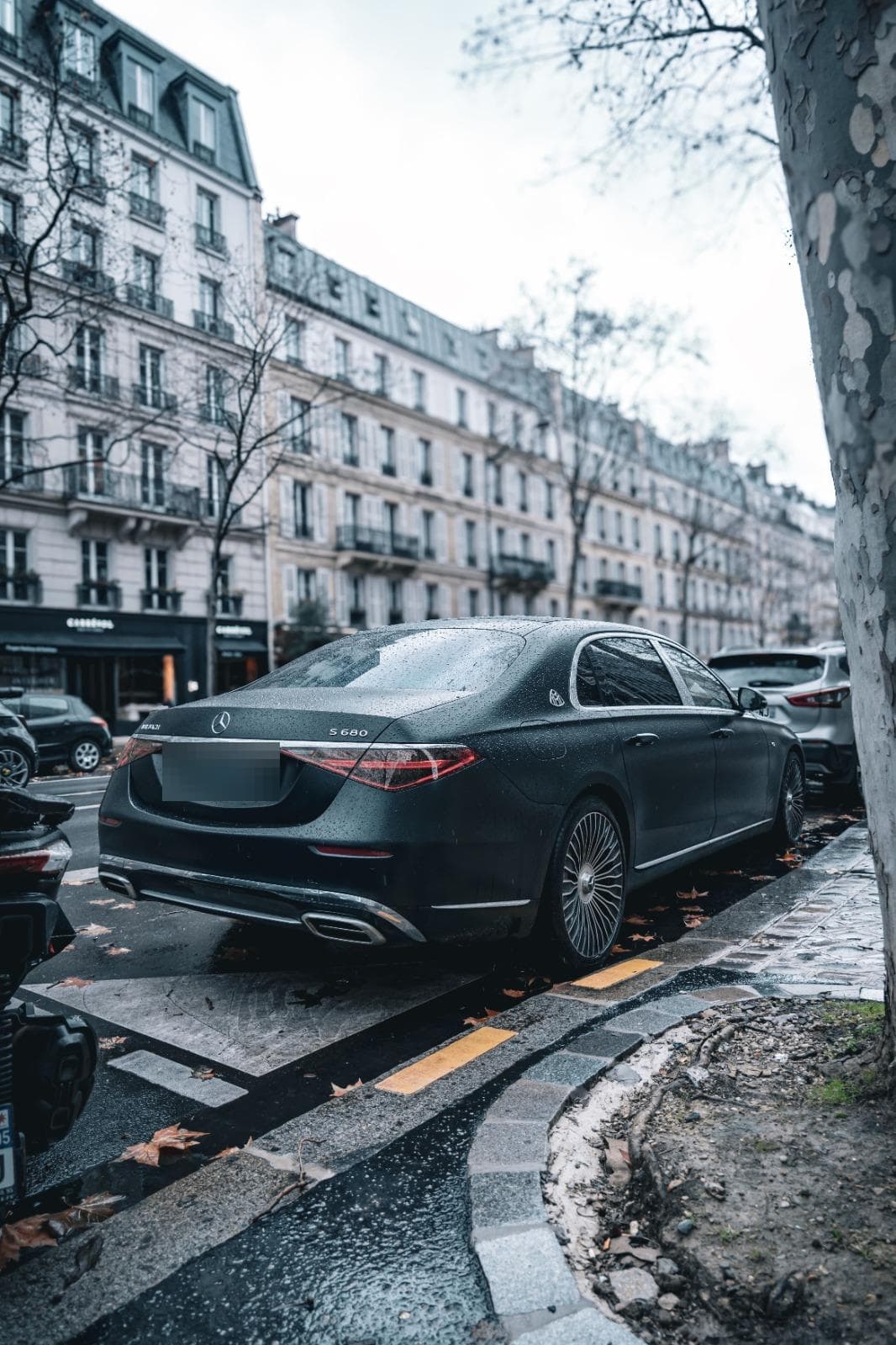
Paris Private Chauffeur | The Complete Insider Guide
Everything a UHNW traveler needs to know about private chauffeur services in Paris: CDG protocols, the ZTL arrondissement rules, how to navigate the Périphérique during Fashion Week, and what FFGR Paris delivers that a taxi app cannot.
9 min
 prestige
CDG Airport Transfer Paris | The FFGR Private Arrival Protocol
How FFGR Paris orchestrates private transfers from Charles de Gaulle: apron access, La Première protocols, ZFE compliance, and the exact sequence that gets a principal to the 8th arrondissement in under sixty minutes.
8 min
 prestige
Paris New Year\'s Eve | Private Chauffeur & VIP Midnight Transfer
How FFGR Paris operates New Year's Eve: Champs-Élysées midnight access protocols, pre-booked vehicle positioning, private dinner transfers, and why NYE is the one night in Paris when ground transport planning is not optional.
8 min