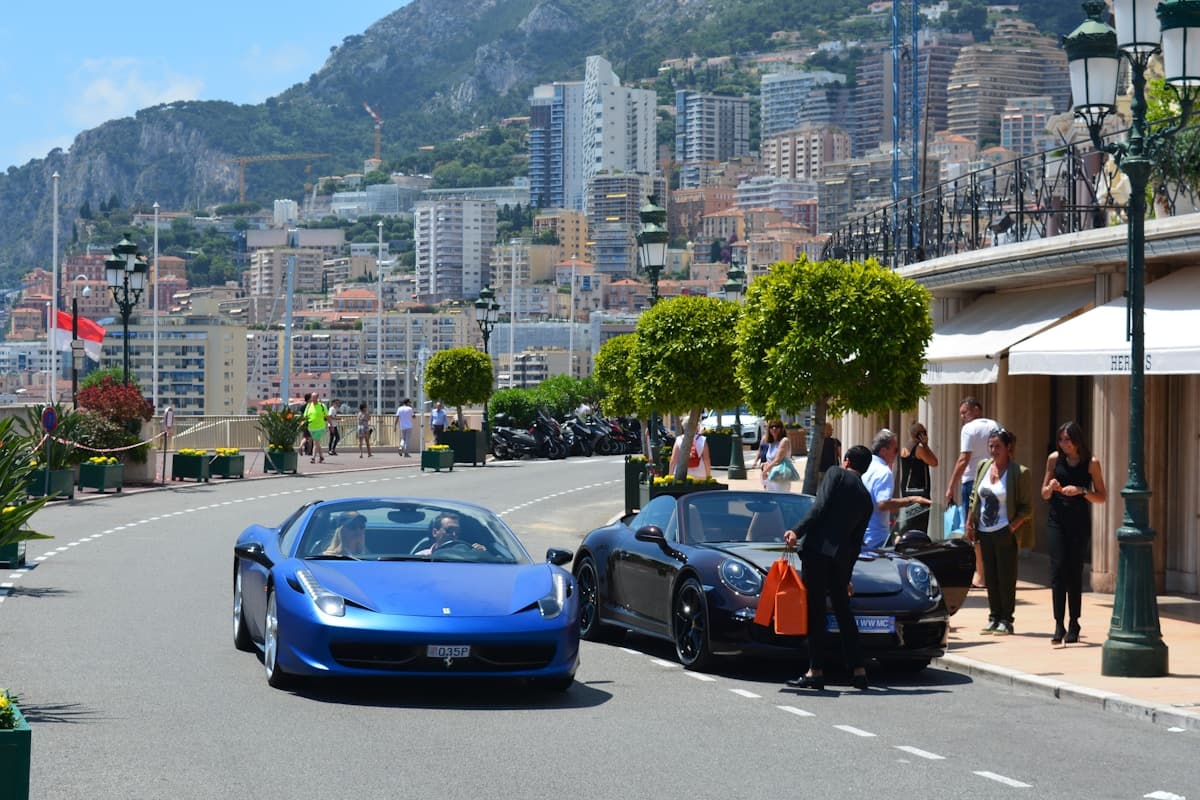

The Monaco Grand Prix — Formula 1 Grand Prix de Monaco, Circuit de Monaco, run every May since 1929 with the exception of the war years — is not merely a motor race. It is the most socially dense weekend in the European UHNW calendar: 200,000 people in a principality of 2.08 square kilometres, with the circuit threading through the streets of Monte-Carlo at speeds that remain extraordinary given the constraints. FFGR provides the Paris-to-Monaco transfer pipeline — private aviation from Le Bourget, ground logistics in the Principality, and return — coordinated with the race schedule, Paddock Club credentials, and yacht positioning in Port Hercule.
Paris to Monaco — transfer options and private aviation routing
The Paris–Monaco distance (975 km by road) makes private aviation the only rational transfer option for race week. FFGR coordinates two routes:
**Le Bourget to Nice Côte d'Azur (NCE) — private jet, 1 hour 10 minutes:** the standard option for groups travelling by mid-size or large-cabin aircraft (Gulfstream G450, Global 6000, Falcon 7X). Nice Côte d'Azur Airport has a dedicated FBO terminal (Signature Aviation Nice, Terminal 1 West, access from Boulevard René Cassin) with a separate arrivals lounge for business aviation. From Nice FBO, FFGR provides ground transfer to Monaco: the A8 autoroute (Monaco approach via Beausoleil and the Fontvieille tunnel — 25–35 minutes in normal conditions; up to 90 minutes during Grand Prix race weekend peak arrivals, particularly Thursday through Saturday morning).
**Le Bourget to Monaco Héliport — helicopter, 1 hour 30 minutes direct:** the Monaco Héliport (Fontvieille, Quai des Sanbarbani — operated by Monacair and Heli Air Monaco) is 300 metres from Port Hercule and the Casino Square. A direct helicopter transfer eliminates the Nice ground congestion entirely. Heli Air Monaco operates an EC145 and EC155 fleet from Nice to Monaco in 7 minutes — FFGR coordinates the Nice–Monaco leg for clients landing at Nice by private jet.
**Le Bourget to Monaco by FFGR chauffeur (975 km, approximately 9 hours via A6–A7–A8):** for clients with specific ground transport preferences or for advance logistics vehicles carrying equipment, the road transfer departs Paris the day before race weekend.
The Monaco circuit — geography, corners, and VIP positions
The **Circuit de Monaco** (3.337 km, 78 laps = 260.286 km total race distance) is the only Formula 1 circuit that has remained fundamentally unchanged since the first Grand Prix in 1929. The circuit uses public streets of Monte-Carlo, threading through:
**Sainte Dévote (Turn 1):** the first corner, a tight right-hander at the base of the hill from the Boulevard Albert Ier start. The fastest crash location on the circuit — the run-off area is minimal and the barriers immediate. Tribune seats here are some of the cheapest on the circuit because the view is limited.
**Casino Square (Turn 3):** the circuit passes directly through the Place du Casino, past the Hôtel de Paris entrance. The Casino Square is the natural gathering point for race-week social activity; Café de Paris (directly opposite the Casino) is the most visible outdoor terrace during race week.
**The Tunnel (Turns 7–8):** the most distinctive section of the circuit — from the open harbour approach into a 170-metre tunnel at speeds exceeding 130 km/h, before emerging at the chicane. The Fairmont Hairpin is immediately after the tunnel exit.
**Fairmont Hairpin / Loews Corner (Turn 8):** the slowest corner in Formula 1 — approximately 50 km/h — where overtaking attempts occasionally succeed. The Fairmont Monte-Carlo Hotel (12 Avenue des Spélugues) sits directly above the hairpin, with Grand Prix balcony suites commanding views down into the corner.
**Rascasse (Turn 17) and Anthony Noghes (Turn 19):** the final chicane section before the start/finish straight. The Rascasse bar (a permanent fixture on the circuit wall) is the most intimate section for trackside watching.
Paddock Club, hospitality, and Port Hercule yacht positioning
Monaco Grand Prix VIP access operates on a hierarchy of credential levels:
**The Paddock Club** (Formula 1 premium hospitality package — entry to the Paddock Club building above the pit lane, pit lane walk on Saturday and Sunday, garage access passes for some tiers, catering by the official F1 catering partner): the Paddock Club is the most expensive hospitality product in Formula 1 and is sold out for Monaco two to three years in advance at full allocation. Individual daily passes are occasionally available through F1's secondary market brokers. FFGR coordinates client drop-off at the Paddock Club entrance on the Circuit des Stands (the harbour-side service road).
**Team principal and constructor hospitality:** most major teams — Red Bull, Mercedes, Ferrari, McLaren — operate private hospitality units in the paddock during Monaco Grand Prix week. Access to these units is exclusively by team invitation; FFGR coordinates transfers for team sponsors and VIP guests holding team hospitality credentials.
**Port Hercule yacht positioning:** the Port Hercule is the most desirable viewing position for the Grand Prix, with yachts positioned along the harbour wall providing direct views of the circuit section between the Nouvelle Chicane (Turns 10–11) and the exit of the Tabac corner. Grand Prix week boat bookings at Port Hercule are managed by SBM Offshore (the port concession holder) and specialist Monaco yacht brokers. Berths for 50–100 metre superyachts during race week are booked 12–18 months in advance; side deck passes (access to a yacht's deck for circuit viewing) are sold separately. FFGR coordinates tender transfers from shore to berthed superyachts.
Monaco race week hotel logistics
Monaco's three principal luxury hotels become the social epicentres of Grand Prix week, with occupancy booked 12–18 months in advance:
**Hôtel de Paris Monte-Carlo** (Place du Casino, Monte-Carlo — Société des Bains de Mer group, the oldest hotel in Monaco, founded 1864, Palace designation): the Hôtel de Paris directly overlooks Casino Square and the Casino entrance. The hotel's Bar Américain and the restaurant Le Louis XV — Alain Ducasse (three Michelin stars, opened 1987 — the first hotel restaurant to achieve three stars) — are the reference social venues of race week. Fully committed for Grand Prix week 18 months in advance.
**Hôtel Hermitage Monte-Carlo** (Square Beaumarchais, Monte-Carlo — SBM group, Belle Époque palace, opened 1896, winter garden designed by Gustave Eiffel): quieter than the Hôtel de Paris, with direct access to the SBM Thermes Marins spa. The Hermitage is preferred by clients seeking lower public visibility during the social intensity of race week.
**Fairmont Monte-Carlo** (12 Avenue des Spélugues, Monte-Carlo — directly above the Fairmont Hairpin, Turn 8): the only hotel with circuit-side rooms overlooking an actual corner of the Circuit de Monaco. Grand Prix balcony suites are among the most sought-after race week accommodations globally.
For Nice-based logistics (when Monaco hotels are fully committed), FFGR coordinates hotels and transfers from Nice: Hôtel Negresco (37 Promenade des Anglais), Le Beau Rivage (24 Rue Saint-François de Paule), and Le Méridien Nice.
Post-race circuit and Monaco social infrastructure
The Monaco Grand Prix social programme extends well beyond the race itself. The week structure:
**Thursday:** first practice session — the casino and harbour terraces operate at near-race intensity.
**Saturday:** qualifying — the highest-intensity session of the week for circuit proximity. Casino Square fills by early afternoon.
**Sunday:** race (typically 15h00 local start) — the podium ceremony takes place on the pit straight in front of the Palace, with the Monaco royal family present. Post-race crowds move immediately to the harbour and the Casino area.
**Post-race VIP circuit:**
**Sass Café** (11 Avenue Princesse Grace — the iconic Monte-Carlo post-race venue, two minutes from the circuit): the most concentrated glamour destination in post-race Monaco, packed with paddock personnel, drivers, and team owners from Sunday evening through Monday morning.
**Jimmy'z** (Av. Princesse Grace — the SBM group nightclub, outdoor garden on the harbour): the late-night destination for Grand Prix weekend, with a guest list managed by SBM.
**Nikki Beach Monte-Carlo** (Av. Princesse Grace — beach club with direct harbour views): daytime Saturday and Sunday Grand Prix hospitality, with terrace tables overlooking Port Hercule.
FFGR coordinates return transfers — Monaco to Nice for private jet departure, or Monaco to Le Bourget via road and Paris connection — with timing adapted to the post-race traffic pattern (the Monte-Carlo road network is essentially gridlocked for 90 minutes after the chequered flag).
Contact FFGR for Monaco Grand Prix logistics: reservation@ffgrparis.com · WhatsApp +33 7 43 46 14 91.
Reserva
The Monaco Grand Prix is the most complex single-event logistics challenge in the European UHNW calendar. FFGR coordinates the complete pipeline from Le Bourget to the Paddock Club to Port Hercule — and the return. Contact us: reservation@ffgrparis.com · WhatsApp +33 7 43 46 14 91.
Reservar ahoraArtículos relacionados
 prestige
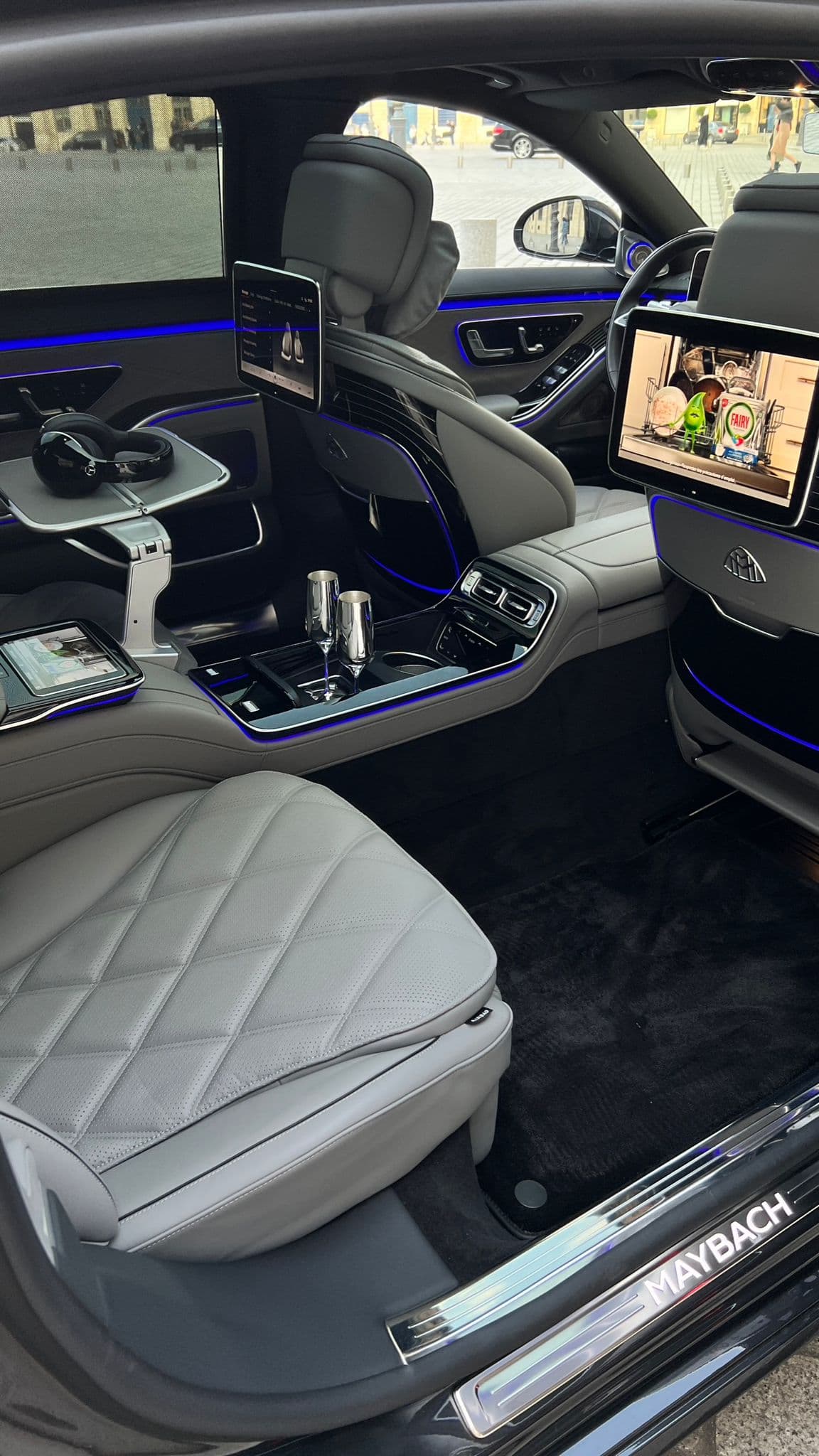
Paris Private Chauffeur — The Complete Insider Guide
Everything a UHNW traveler needs to know about private chauffeur services in Paris: CDG protocols, the ZTL arrondissement rules, how to navigate the Périphérique during Fashion Week, and what FFGR Paris delivers that a taxi app cannot.
9 min
 prestige
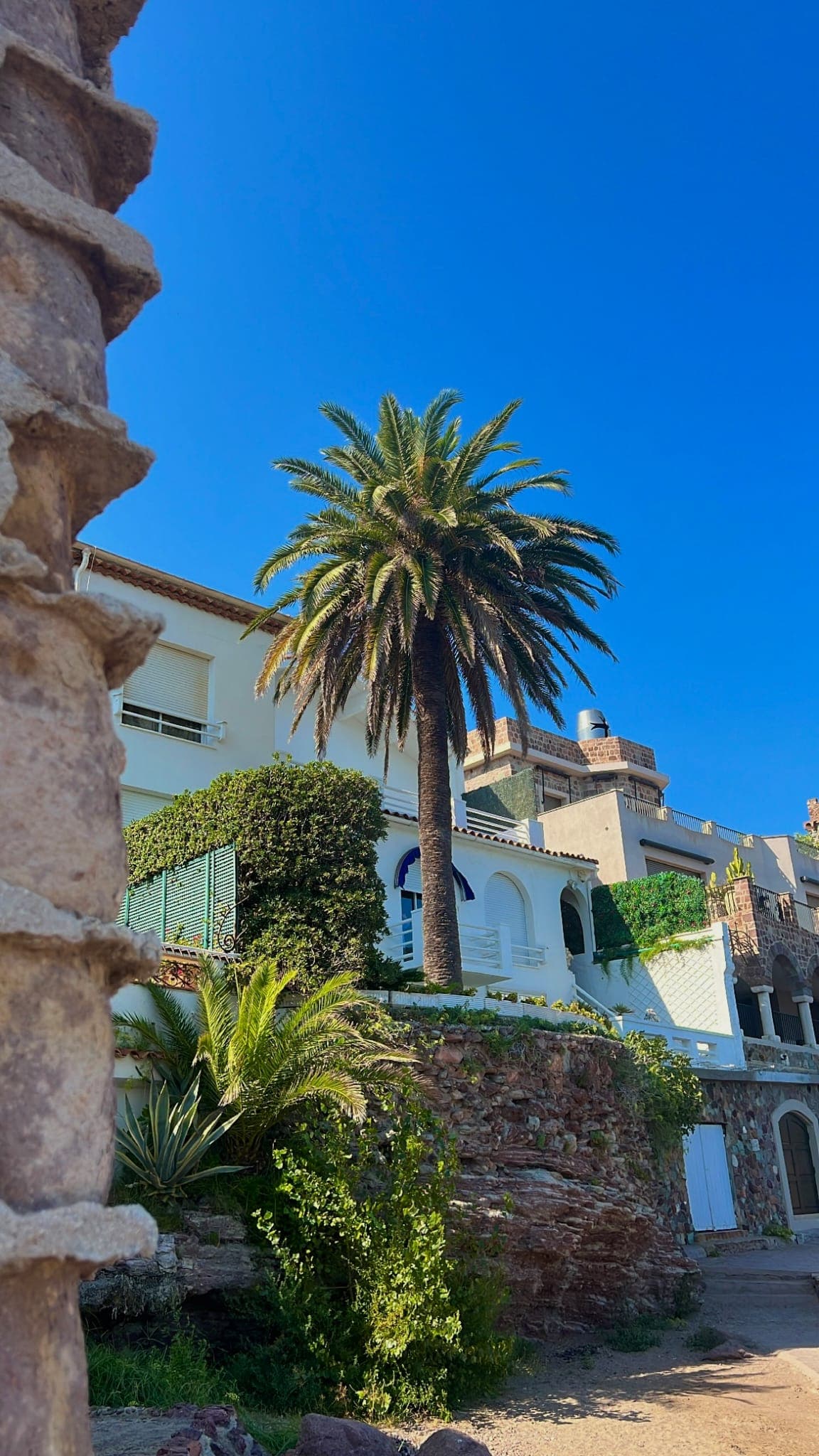
CDG Airport Transfer Paris — The FFGR Private Arrival Protocol
How FFGR Paris orchestrates private transfers from Charles de Gaulle: apron access, La Première protocols, ZFE compliance, and the exact sequence that gets a principal to the 8th arrondissement in under sixty minutes.
8 min
 prestige
Monaco Grand Prix — Luxury Chauffeur & VIP Transport
Ground transport for the Monaco Grand Prix: from Paris by road, Nice NCE arrivals, yacht-to-track transfers, and the hospitality circuit that runs alongside the world's most prestigious motor race.
10 min