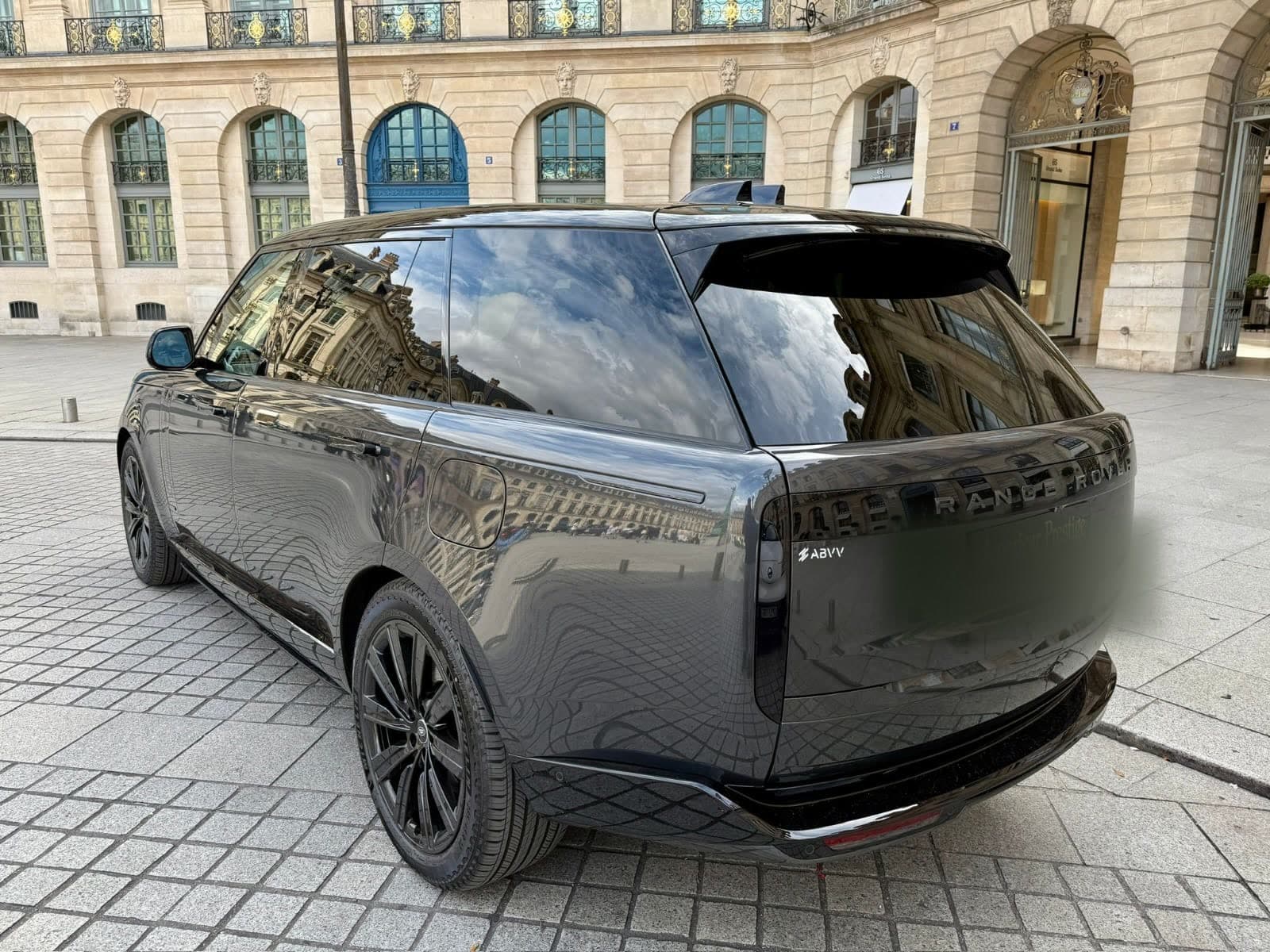
The Paris palace hotels, the eight establishments holding the "Palace" classification of the French Ministry of Tourism (Le Bristol, The Ritz, The Crillon, Four Seasons George V, Plaza Athénée, Le Meurice, Shangri-La Paris, and the Prince de Galles), represent the highest category of luxury hospitality in France, and among the finest in the world. Each palace hotel maintains its own fleet of house cars and driver services, but the FFGR service provides what the house car cannot: the flexibility to move continuously through the city, to manage complex multi-stop itineraries, to handle the airport transfers that house car services are not structured to provide without advance booking, and to offer a consistent standard of luxury ground transport across the entire Paris stay regardless of which hotel or venue is the reference point. FFGR works in coordination with the concierges of each palace hotel, the concierge is the most important single point of contact for UHNW guests in Paris, and the FFGR service is designed to complement rather than compete with the palace hotel concierge relationship.
Le Bristol Paris: the last family-owned palace
Le Bristol Paris (112 Rue du Faubourg Saint-Honoré 75008, in the 8ème arrondissement, on the Faubourg Saint-Honoré between the Palais de l'Élysée at number 55 and the boutiques of Hermès at number 24, Prada, and Valentino) :
**The hotel:** Le Bristol was founded in 1925 by Hippolyte Jammet, a former hotel director, on the site of the Hôtel particulier of the Counts of Bristol (a title held by the Hervey family of England, bishops and aristocrats who travelled extensively in 18th-century France, giving the name to the Bristol hotels of Paris, Vienna, and Florence). Le Bristol is the only Paris palace hotel that remains family-owned, since 1978 as part of the Oetker Collection (the portfolio of the Oetker family of Bielefeld, Germany, heirs of the baking powder and food business that generated the capital for a portfolio including Brenners Park-Hotel Baden-Baden, Eden Rock St Barths, Château Saint-Martin & Spa Vence, and the Lanesborough London).
**The restaurant:** Épicure (three Michelin stars, awarded the third star in 2009 under chef Éric Frechon, who has held the position since 1999) is the most celebrated hotel restaurant in Paris. Frechon's signature dishes, the macaroni with black truffle, artichoke, and duck foie gras gratiné (a dish that has been on the menu since 1999 and is ordered by an estimated 70% of tables during the season), and the langoustine with pea, almond, and Oscietra caviar, define the Faubourg register of French haute cuisine: technically precise, seasonally absolute, presented without molecular affectation.
**The suites:** Le Bristol's most celebrated suite is the Suite Royale (top floor, panoramic terrace with views over the rooftops of the Faubourg Saint-Honoré to the dome of the Invalides) at approximately €25,000 per night. The Penthouse Apartment (two floors, private pool, 600 m² terrace) is available at approximately €35,000 per night, one of the most expensive residential hotel suites in Paris.
**Concierge coordination:** Le Bristol's head concierge maintains direct contact with the FFGR reservations team for same-day vehicle requests. The standard protocol for Bristol guests is confirmation of the vehicle 2 hours before departure, with the FFGR chauffeur presenting at the Rue du Faubourg Saint-Honoré entrance (not the service entrance on Rue du Cirque).
The Ritz Paris: Place Vendôme
The Ritz Paris (15 Place Vendôme 75001, in the 1er arrondissement, on the north side of the Place Vendôme, flanked by the Ministère de la Justice at number 13 and the Chaumet jewellers at number 12) :
**The foundation:** César Ritz (1850-1918), born in the Swiss village of Niederwald as the thirteenth child of a peasant family, became the most celebrated hotelier of the Belle Époque, managing the Savoy London (where he met Auguste Escoffier, with whom he formed the defining partnership of modern luxury hospitality), the Carlton London, and the Grand National Lucerne before acquiring the Hôtel de Gramont on the Place Vendôme in 1896. The Ritz Paris opened on 1 June 1898, described by King Edward VII of England (then Prince of Wales and a close friend of Ritz) as "the most perfect hotel in the world". The word "ritzy", synonymous globally with luxury and elegance, derives from the reputation César Ritz established over the 20 years between the hotel's opening and his death.
**The history in residence:** the Ritz Paris is the hotel most associated with the significant events of 20th-century cultural and political history. Marcel Proust (permanent resident 1880s-1922, his room in the Ritz was where he completed much of À la Recherche du Temps Perdu), Coco Chanel (permanent resident Suite 302, 1934-1971, 37 years, she died in her suite at the Ritz on 10 January 1971), Hemingway (the Ritz bar was renamed "Bar Hemingway" in his memory, he was among the first Allied soldiers to enter Paris in August 1944 and allegedly "liberated" the Ritz bar before the rest of the city), F. Scott Fitzgerald, Princess Diana (the Ritz was the last hotel she occupied before the fatal accident in the Pont de l'Alma tunnel on 31 August 1997, she and Dodi Fayed had dinner at the Ritz Restaurant on the evening of 31 August).
**After the €450M renovation (2012-2016):** the Ritz closed for a four-year renovation, the largest in the history of any Paris palace, directed by architectural firm Thierry Despont. The renovation restored the 18th-century boiseries (carved wood panelling), reconfigured the suites around the two internal gardens, and updated all technical infrastructure while preserving the historical character. The Coco Chanel Suite (Suite 302, 280 m²) and the Imperial Suite (920 m²) are the signature accommodations.
**FFGR at the Ritz:** the FFGR vehicle presents at the rear service entrance on Rue Cambon (the entrance adjacent to the Chanel boutiques, historically Chanel's own personal route to and from the hotel) for guest pickup to avoid the Place Vendôme square traffic. Airport transfers are coordinated with the Ritz concierge team for seamless luggage management.
Hôtel de Crillon: Place de la Concorde
Hôtel de Crillon (10 Place de la Concorde 75008, on the north side of the Place de la Concorde, in the right-hand building of the twin palaces designed by Ange-Jacques Gabriel, the left-hand building houses the French Navy Ministry) :
**The architecture:** the twin palaces on the Place de la Concorde were commissioned by Louis XV in 1755 and completed by Gabriel in 1775, a period of 20 years, as part of the replanning of the Place Louis XV (renamed Place de la Révolution in 1792, Place de la Concorde in 1795). They represent the finest example of French Neoclassical architecture in Paris, combining the Corinthian colonnade derived from the Louvre East Colonnade (designed by Claude Perrault 1667-1672) with the French tradition of the piano nobile and the mansard roof. The right-hand palace was acquired by the Crillon family in 1788, three years before the Revolution, and the family sold it as a hotel in 1907.
**The history:** Marie-Antoinette studied the harpsichord and piano in the palace's music room (1764-1771, as a young Austrian archduchess in Paris before her marriage to Louis XVI). The American Declaration of Independence was officially recognised by France in the Crillon's grand salon in 1778, the treaty that made France the first foreign power to recognise the United States. Benjamin Franklin, the American minister to France, was present at the Crillon for multiple diplomatic meetings during his 1778-1785 residence in Paris (he lived in Passy, now the 16ème).
**After the Rosewood renovation (2013-2017):** the Crillon closed for a four-year renovation, directed by architects Aline Asmar d'Amman and Karl Lagerfeld (the Jardin d'Hiver, the winter garden, was one of the last significant interior design projects completed by Lagerfeld before his death in 2019). 124 rooms and suites including the Bernstein Suite (dedicated to Leonard Bernstein, who composed part of West Side Story at the Crillon in the 1950s) and the twin Gustave Eiffel Suites (formerly the apartment where Gustave Eiffel maintained a private residence while supervising the construction of the Eiffel Tower 1886-1889, with direct views of the Place de la Concorde and the Eiffel Tower).
**FFGR at the Crillon:** vehicles present at the Place de la Concorde main entrance, one of the most ceremonially significant arrival points in Paris. The square is also among the most congested in central Paris; FFGR drivers are briefed on the Place de la Concorde traffic management protocol for ceremonial arrivals and punctual departures.
Four Seasons George V: Avenue George V
Four Seasons Hotel George V Paris (31 Avenue George V 75008, in the 8ème arrondissement, on the Avenue George V between the Champs-Élysées (200m) and the Seine (600m)) :
**The building:** the George V was built in 1928 in the Art Deco style, the period's most architecturally ambitious hotel project in Paris, commissioned by property developer Weetman Dickinson Pearson (1st Viscount Cowdray, founder of the Pearson oil company in Mexico, the origin of the Pearson media fortune) and designed by the architect Lefranc. The Lalique glass panels in the lobby (commissioned from René Lalique in 1929, the year of the Paris Colonial Exhibition) and the 17th-century Flemish tapestries in the grand gallery (acquired at auction in the 1930s) define the decorative register.
**Four Seasons management (since 1997):** the George V was acquired by the Prince Al-Waleed bin Talal (Kingdom Hotel Investments, the hotel portfolio of the Saudi prince who was at the time the world's fifth-wealthiest person) and reopened in 1999 after a two-year €120M renovation under Four Seasons management. The renovation restored the boiseries and marble, added a spa and indoor pool (among the first in a Paris palace hotel), and refigured the restaurant programme around Le Cinq.
**Le Cinq (three Michelin stars, awarded the third star in 2016, chef Christian Le Squer since 2014):** the third Michelin star at Le Cinq placed the George V among the three Paris palace hotels with three-star hotel restaurants (alongside Le Bristol's Épicure and Le Meurice). Le Squer's cuisine is grounded in the Brittany-Paris tradition of refined seafood and marine products, the langoustine tartare, the sole meunière in a modernised version, and the cheese trolley (the most complete in any Paris restaurant, 60+ French farmhouse cheeses) are the definitive dishes.
**The flower arrangements:** the George V flower arrangements, created by Jeff Leatham, the hotel's artistic director for flowers since 1999, have become a signature element of the hotel's identity, replacing the conventional hotel lobby arrangement with monumental installations that change every two weeks. Leatham has been named the "Picasso of flowers" by the French press, his arrangements use 7,000-10,000 flowers per installation in a single colour or contrasting scheme.
Plaza Athénée: headquarters of haute couture
Hôtel Plaza Athénée Paris (25 Avenue Montaigne 75008, on the Avenue Montaigne, between Dior at number 30 and Valentino at number 17, directly opposite the Théâtre des Champs-Élysées) :
**The identity:** the Plaza Athénée is the palace hotel most associated with the Paris haute couture world, a consequence of its location at the centre of the Avenue Montaigne couture strip (Dior, Chanel, Valentino, Givenchy, Balenciaga, Prada, Louis Vuitton are all within 500m) and its historical relationship with the fashion industry. Christian Dior, Yves Saint Laurent, Hubert de Givenchy, and Coco Chanel each used the Plaza Athénée as their hotel during the fashion weeks, Dior held his first press presentation in the hotel's main salon in 1947 (the "New Look" collection, the presentation that changed the direction of Western fashion after the austerity of World War II). The Dorchester Collection acquired the Plaza Athénée in 1997.
**Alain Ducasse at the Plaza Athénée (the most debated restaurant in Paris):** Alain Ducasse (the first chef in history to hold six Michelin stars simultaneously across three different restaurants in three different cities, New York, Paris, Monte Carlo, in 2001) has operated the restaurant at the Plaza Athénée since 2000. In 2014, Ducasse announced a fundamental reformulation of the restaurant: the removal of meat (all warm dishes are based on fish, vegetables, and grains, a radical departure from the conventions of French haute cuisine) and the adoption of a "naturalness" manifesto. The restaurant was closed for three years (2013-2016) for renovation and the reformulation, reopening with three Michelin stars maintained. The decision remains the most debated in contemporary French gastronomy, a deliberate break with the animal-protein tradition of French haute cuisine by its most celebrated practitioner.
**The haute couture season transport:** during the Paris Fashion Weeks (Haute Couture January/July; Prêt-à-Porter March/October), the Plaza Athénée functions as the de facto headquarters of the international fashion press and luxury buyers. FFGR provides the fashion week transport for guests of the Plaza Athénée, show transport (from hotel to venue), inter-show transfers, press dinner transport, and the post-show return at variable hours (shows frequently run late; the FFGR driver remains on standby with real-time communication).
Le Meurice and Shangri-La: two further palaces
The Paris palace circuit is completed by two further establishments with distinct positions:
**Le Meurice (228 Rue de Rivoli 75001, in the 1er arrondissement, on the Rue de Rivoli facing the Tuileries gardens, 300m from the Louvre and 200m from the Place de la Concorde):** Le Meurice was established in 1835 by Augustin Meurice as the premier hotel for British aristocratic travellers arriving from Calais, the coaching distance from London made Paris a natural end-point for the Grand Tour, and Meurice's positioning as the "English travellers' hotel" (complete with English-language services, English newspapers, and English menus, innovations in mid-19th-century Paris) attracted the Prince of Wales, Queen Victoria (who stayed in 1855, the first British reigning monarch to visit Paris since Henry VI in 1431), and the Rothschild family. Salvador Dalí (who stayed at Le Meurice for 30 consecutive years in the same suite, now the Dalí Suite, bringing his ocelot Babou and filling the suite with surrealist objects during his extended stays) made the Meurice the most bohemian of the Paris palaces.
Le Meurice's restaurant (two Michelin stars, chef Amaury Bouhours since 2021, following Yannick Alléno who held three stars 2007-2013) occupies the most ornate dining room of any Paris palace hotel, a Louis XVI salon with gilded mirrors, painted ceilings, and a view over the Tuileries.
**Shangri-La Paris (10 Avenue d'Iéna 75116, in the 16ème arrondissement, in the former private palace of Prince Roland Bonaparte, grandnephew of Napoleon I, 300m from the Trocadéro and with direct views of the Eiffel Tower):** Prince Roland Bonaparte built the Iéna palace in 1896 as his private residence and as a showcase for his scientific collections (he was a geographer, botanist, and Arctic explorer who funded expeditions to Lapland, Sumatra, and the Amazon). The palace passed to the City of Paris (it briefly housed the Musée des Arts Asiatiques before the Guimet expanded) before being acquired by the Hong Kong Shangri-La Group and converted to a luxury hotel in 2010. The Eiffel Tower views from the upper suites and from the two-Michelin-star restaurant La Bauhinia (Cantonese haute cuisine) are among the most celebrated in Paris.
FFGR and the palace hotel circuit
FFGR structures the palace hotel service around the specific demands of each establishment's clientele and the geography of the Paris palace circuit:
**Airport transfers:** the palace hotels are distributed across the 1er (Ritz, Meurice), 8ème (Bristol, George V, Plaza Athénée, Crillon), and 16ème (Shangri-La), a distribution that concentrates the circuit in the Right Bank luxury core. CDG transfers: 35-45 minutes (A1/A3 or A3/A104 depending on time of day). Orly transfers: 30-40 minutes (A6 or N20). FFGR provides meet-and-greet at CDG Terminal 2E (Air France and most international carriers) or Terminal 3 (easyJet, Ryanair and others), and at Orly Sud.
**Inter-hotel transfers:** for UHNW guests splitting their Paris stay between two palace hotels (a not-uncommon pattern, Ritz for the fashion week, Plaza Athénée for the couture shows; George V for business, Crillon for the art auction weekend), FFGR provides the luggage-managed transfer between palaces, coordinating with the concierge teams on both sides for baggage handling.
**Event and restaurant transport:** the Michelin three-star restaurants of the Paris palace hotels maintain waiting lists of 4-8 weeks for non-hotel guests; for hotel guests, the concierge has priority access. The FFGR service covers the restaurant transport for the other dining destinations the palace guest requires during their stay, from the three-star establishments beyond the hotel (Guy Savoy at the Monnaie de Paris, Taillevent, Lasserre, Kei, Le Grand Véfour) to the private dining experiences that require a vehicle in waiting.
**Security protocol:** UHNW guests at the Paris palaces frequently require discretion in vehicle arrival and departure, particularly at The Ritz (Place Vendôme is photographed continuously), Le Bristol (Rue du Faubourg Saint-Honoré is the most surveilled street in Paris for celebrities and royalty), and the Crillon (Place de la Concorde is publicly visible from multiple approach angles). FFGR drivers are briefed on the discreet arrival and departure protocols for each palace hotel.
Contact: reservation@ffgrparis.com · WhatsApp +33 7 43 46 14 91.
حجز
The Paris palace hotel circuit, from the last family-owned palace on the Faubourg Saint-Honoré to the renovated 18th-century mansion on the Place de la Concorde, from the Art Deco George V to the Bonaparte palace in the 16ème, defines the summit of Parisian luxury hospitality. FFGR provides the ground transport that connects the palace hotel guest to the full range of Paris's luxury, cultural, and diplomatic circuit. Contact: reservation@ffgrparis.com · WhatsApp +33 7 43 46 14 91.
احجز الآنمقالات ذات صلة
 prestige
Paris Private Chauffeur | The Complete Insider Guide
Everything a UHNW traveler needs to know about private chauffeur services in Paris: CDG protocols, the ZTL arrondissement rules, how to navigate the Périphérique during Fashion Week, and what FFGR Paris delivers that a taxi app cannot.
9 min
 prestige
CDG Airport Transfer Paris | The FFGR Private Arrival Protocol
How FFGR Paris orchestrates private transfers from Charles de Gaulle: apron access, La Première protocols, ZFE compliance, and the exact sequence that gets a principal to the 8th arrondissement in under sixty minutes.
8 min
 prestige
Paris New Year\'s Eve | Private Chauffeur & VIP Midnight Transfer
How FFGR Paris operates New Year's Eve: Champs-Élysées midnight access protocols, pre-booked vehicle positioning, private dinner transfers, and why NYE is the one night in Paris when ground transport planning is not optional.
8 min