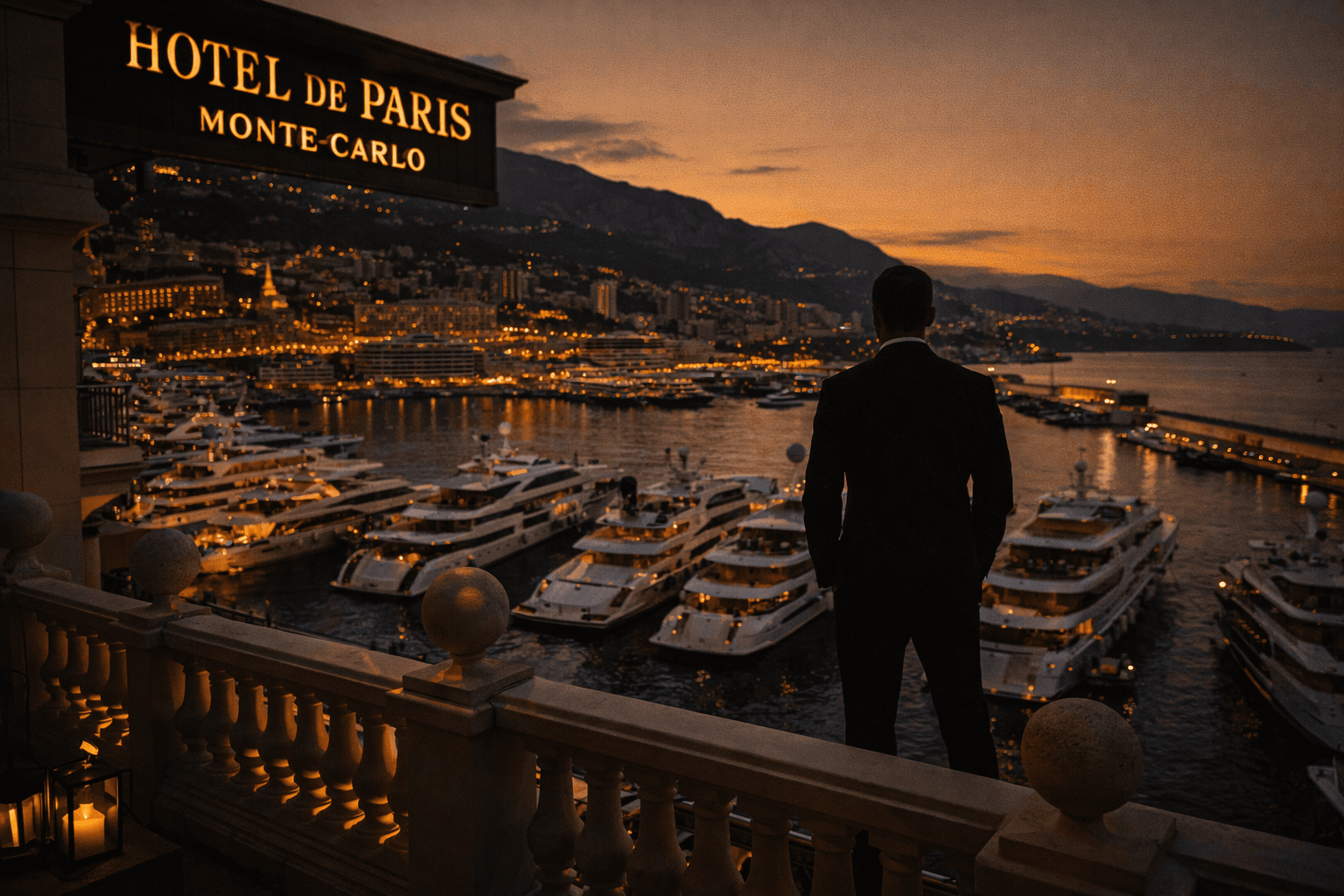
The journey from a Paris hotel to the gangway of a private yacht moored in the Mediterranean involves a minimum of four distinct logistical segments: ground transfer from the hotel to the departure airport, the flight segment to the relevant coastal airport, the landside transfer from arrival airport to the port, and the embarkation sequence at the yacht itself. For clients chartering or owning superyachts on the Côte d'Azur, the Italian Riviera, or the Western Mediterranean islands, FFGR Paris manages every ground segment of this pipeline, from the moment the vehicle arrives at the Paris hotel to the moment the client steps aboard. Our Mediterranean ground network extends to Monaco, Nice, Cannes, Saint-Tropez, Marseille, Genoa, and the principal Balearic and Croatian ports.
The Paris-to-yacht pipeline: airports, timing, and the embarkation sequence
The Paris departure point for Mediterranean yacht transfers is almost always Le Bourget (LBG), the primary private aviation terminal north of Paris, or Orly (ORY) for clients using scheduled charter services. Charles de Gaulle (CDG) is occasionally used for transatlantic connections arriving directly, with a subsequent positioning flight or ground transfer to the yacht port. Le Bourget to Nice Côte d'Azur (NCE) by private jet is approximately 90 minutes block time; Le Bourget to Cannes-Mandelieu (CEQ) approximately 90 minutes; Le Bourget to Toulon-Hyères (TLN) approximately 100 minutes for clients bound for the Var and Porquerolles.
At the destination airport, FFGR's Mediterranean network partner has a vehicle pre-positioned on the apron or at the FBO exit. The transfer time from NCE to Monaco Port Hercule is 25 minutes in normal traffic; NCE to Cannes Port Pierre Canto is 35 minutes; NCE to Saint-Tropez Nouveau Port is 1 hour 20 minutes (extending to 2 hours in July-August). Timing is critical: yacht crews operate on fixed service schedules, and embarkation is typically coordinated with the captain for a specific boarding window.
For clients travelling with substantial luggage, the norm for Mediterranean charters of two weeks or longer, FFGR coordinates luggage logistics separately from passenger logistics. A dedicated luggage van travels in tandem with the passenger vehicle, enabling direct loading from the vehicle to the yacht's tender or gangway without the delays associated with luggage trolleys and port security queues. Fragile items (wine collections, artwork, musical instruments) travel in the passenger vehicle under the client's direct supervision.
Mediterranean itineraries: from Côte d\'Azur to Croatia
The principal Mediterranean yacht itineraries accessible from the French Riviera ports divide into five main circuits, each with distinct character, port infrastructure, and ground logistics requirements.
The Côte d'Azur circuit, Monaco to Cannes to Saint-Tropez to Porquerolles, is the most socially intense and logistically demanding of the Mediterranean itineraries. Monaco's Port Hercule, the principality's inner harbour at the foot of the old town, accommodates yachts up to approximately 100 metres and charges berthing fees of approximately €3,000 per night for a 50-metre vessel, rising to €12,000+ for vessels above 80 metres during the Formula 1 Grand Prix weekend. Port Pierre Canto in Cannes accommodates up to 160 vessels and is the preferred berth for the Cannes Film Festival period. Saint-Tropez's Nouveau Port, directly adjacent to the old town's Place des Lices, is the most accessible for day excursions ashore.
Corsica, Porto-Vecchio, Bonifacio, and the Girolata marine reserve, offers a contrast of dramatic granite landscapes, crystalline water, and near-zero commercial development. The Scandola nature reserve north of Porto, accessible only by sea or helicopter, is among the most spectacular anchorages in the western Mediterranean. Bonifacio, perched on white limestone cliffs above the Strait of Bonifacio, requires careful navigation at the harbour entrance and is subject to mistral wind restrictions.
The Italian Riviera circuit, Portofino, Cinque Terre, Porto Venere, Elba, is accessible from the French Riviera in one sailing day. Portofino's inner harbour (maximum vessel length approximately 50 metres) is one of the most sought-after berths in the Mediterranean; reservations at the Capitaneria di Porto Portofino should be made months in advance for July-August. The Balearics (Ibiza, Formentera) and Croatia (Hvar, Dubrovnik, Kornati islands) require either a positioning flight from the French Riviera or a longer sailing programme of 5-7 days.
Superyacht specifications: LOA classifications, crew ratios, and charter costs
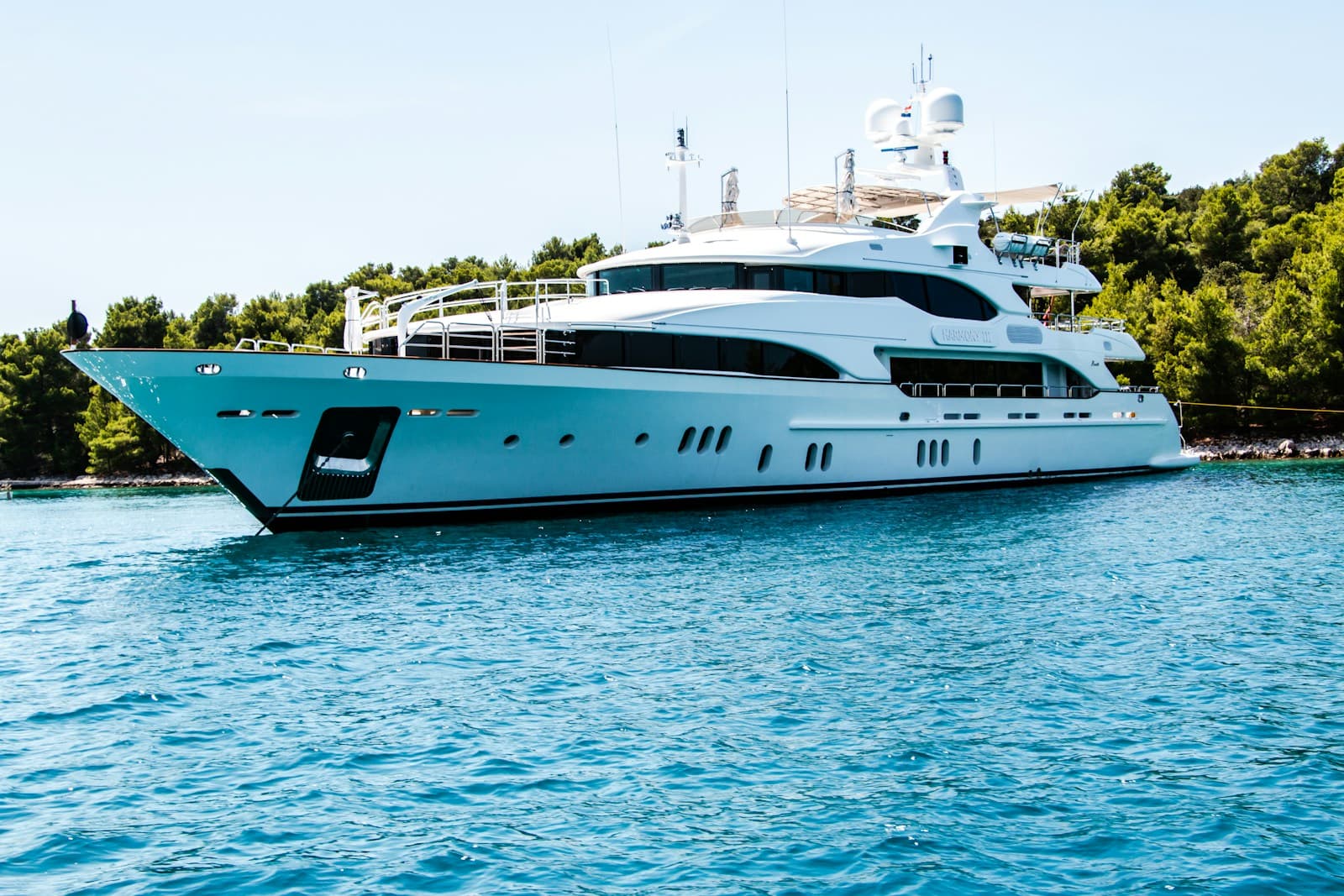
Understanding superyacht classifications is essential for matching the charter product to the client's expectations. The industry convention divides private yachts by length overall (LOA): vessels between 24 and 30 metres are classified as large yachts; 30 to 50 metres as small superyachts; 50 to 100 metres as superyachts; and vessels above 100 metres as gigayachts. The experiential difference between a 35-metre and a 55-metre yacht is not merely one of scale, a 55-metre vessel typically has a crew of 10-12 (compared to 5-6 on a 35-metre), stabilisers that make extended offshore passages comfortable, and interior volumes that allow genuine separation of guest and crew zones.
Crew ratio is a practical indicator of service quality: the Maritime Labour Convention 2006 specifies minimum crew requirements for safety, but luxury charter clients should look for a guest-to-crew ratio of approximately 1:1 for the highest service standard. A 55-metre yacht carrying 10 guests with a crew of 12, captain, chief officer, engineer, chef, first mate, bosun, two deck hands, steward, sous-chef, masseuse, and dive master, provides a service standard comparable to a five-star hotel ashore.
Mediterranean charter fees (MYBA terms) for the July-August peak season run approximately €30,000-€50,000 per week for a quality 30-metre vessel, €80,000-€150,000 per week for a 50-metre, and €200,000-€500,000+ per week for the largest and most prestigious superyachts. These figures are exclusive of APA (Advance Provisioning Allowance, typically 30-35% of the charter fee) covering fuel, provisions, port fees, and crew gratuity.
Charter brokers, provisioning, and the FFGR logistics role
The principal international charter brokers operating in the Mediterranean, Burgess Yachts (8 Place du Palais, Monaco; 22 Upper Ground, London), Fraser Yachts (7-9 Boulevard de la Croisette, Cannes; 2 Place du Casino, Monaco), and Y.CO (85 Sloane Street, London), handle the charter contract, vessel selection, and MYBA agreement. FFGR Paris's role in the charter programme is complementary to the broker's: we manage every ground logistics element that the broker does not.
Yacht provisioning runs, the transport of provisions, wine, and specialty items from Paris suppliers to the boat, represent a significant logistical operation for extended charters. A 55-metre yacht provisioned for a two-week charter with 10 guests carries approximately 800-1,200 bottles of wine and Champagne, sourced from Paris negociants and Champagne houses, in addition to the non-perishable stores. FFGR Paris coordinates the transport of provisioning orders from the supplier to the FBO at Le Bourget for loading into the cargo hold of the positioning flight, or by dedicated refrigerated vehicle to the port if the yacht is already in situ.
For clients whose yacht programme requires day excursions ashore, a Michelin-starred dinner in Monaco, a private art gallery visit in Saint-Tropez, a vineyard visit in the Var, FFGR's Mediterranean ground network provides the ashore logistics: vehicle at the port, restaurant reservations coordinated in advance, and return transport to the gangway. This service runs seamlessly from the yacht captain's shore schedule, with driver availability communicated the day before each port call.
Port logistics in Monaco, Cannes, and Saint-Tropez
Each of the principal Mediterranean yacht ports has specific operational characteristics that affect ground logistics.
Monaco's Port Hercule is a commercial working port as well as the principality's primary yacht harbour. The single access road, Avenue Kennedy, is managed by the Capitainerie de Monaco and is subject to access restrictions during the Formula 1 Grand Prix (May) and other major events. Vehicles delivering provisions or passengers to yachts in Port Hercule must obtain a port access pass from the Capitainerie, FFGR's Monaco network partner holds standing pass authorisation for the principal berths. The port's physical layout, vehicles must reverse to the quayside in several of the principal berth positions, requires drivers with specific port experience.
Cannes Port Pierre Canto, east of the Croisette, is a purpose-built private yacht basin with better vehicle access than Port Hercule but substantially higher demand during the Cannes Film Festival period. The port's management office (on Boulevard du Midi) coordinates vehicle access; FFGR holds the port contact for all major berth positions. Port de Saint-Tropez Nouveau Port, managed by the Chambre de Commerce et d'Industrie du Var, operates a simplified access system: vehicles drop off and collect passengers at the quayside north of the port office, with no advance pass requirement for standard drop-off and collection.
For clients whose itinerary includes Italian ports, Portofino, Sanremo, Santa Margherita Ligure, FFGR coordinates with our Italian network partners for landside logistics. The specific challenge of Portofino is the one-way approach road from Santa Margherita that restricts vehicle access to the inner harbour; provisions and passengers transfer by water taxi from the public dock.
预订
The Paris-to-yacht pipeline is among the most complex single-client logistics operations in the luxury travel category: multiple transport modes, multiple jurisdictions, and the unforgiving timeline of a vessel operating on a fixed departure schedule. FFGR Paris manages this complexity from a single point of contact, coordinating the ground, air, and port elements into a seamless sequence that the client experiences as effortless. Contact reservation@ffgrparis.com or WhatsApp +33 7 43 46 14 91 to plan your yacht embarkation programme.
立即预订相关文章
 cruise
Paris Seine River Boat Hire | Private Charter & Chauffeur Ground Coordination
How FFGR Paris coordinates private boat hire on the Seine: the main charter operators, embarkation point logistics at Port de la Conférence and Port Henri IV, combining a Seine evening charter with a dinner programme, and the ground transport that connects the river to the rest of the Paris day.
8 min
 cruise
Paris Cruise Terminal Chauffeur | Le Havre Transfer, River Cruise Embarkation and Port Logistics
Ground transport for Paris cruise connections: the Le Havre to Paris transfer (200km via the A13 autoroute), the Paris river cruise terminals on the Seine (Port de Grenelle, Port de la Bourdonnais, Port de l'Arsenal), the Port de Gennevilliers for ocean cruise connections, disembarkation to palace hotel logistics, and FFGR's approach to coordinating ground transport with cruise terminal times for UHNW ocean and river cruise clients.
10 min
 cruise
Paris Salon Nautique Chauffeur | VIP Transport for the Paris International Boat Show
FFGR chauffeur service for the Paris Salon Nautique International (Paris Expo Porte de Versailles, 1 Place de la Porte de Versailles, 75015, held each December, the world's largest indoor boat show): private vehicle transfers for yacht owners, superyacht brokers, naval architects, and UHNW buyers attending the premier European nautical trade and consumer fair.
8 min