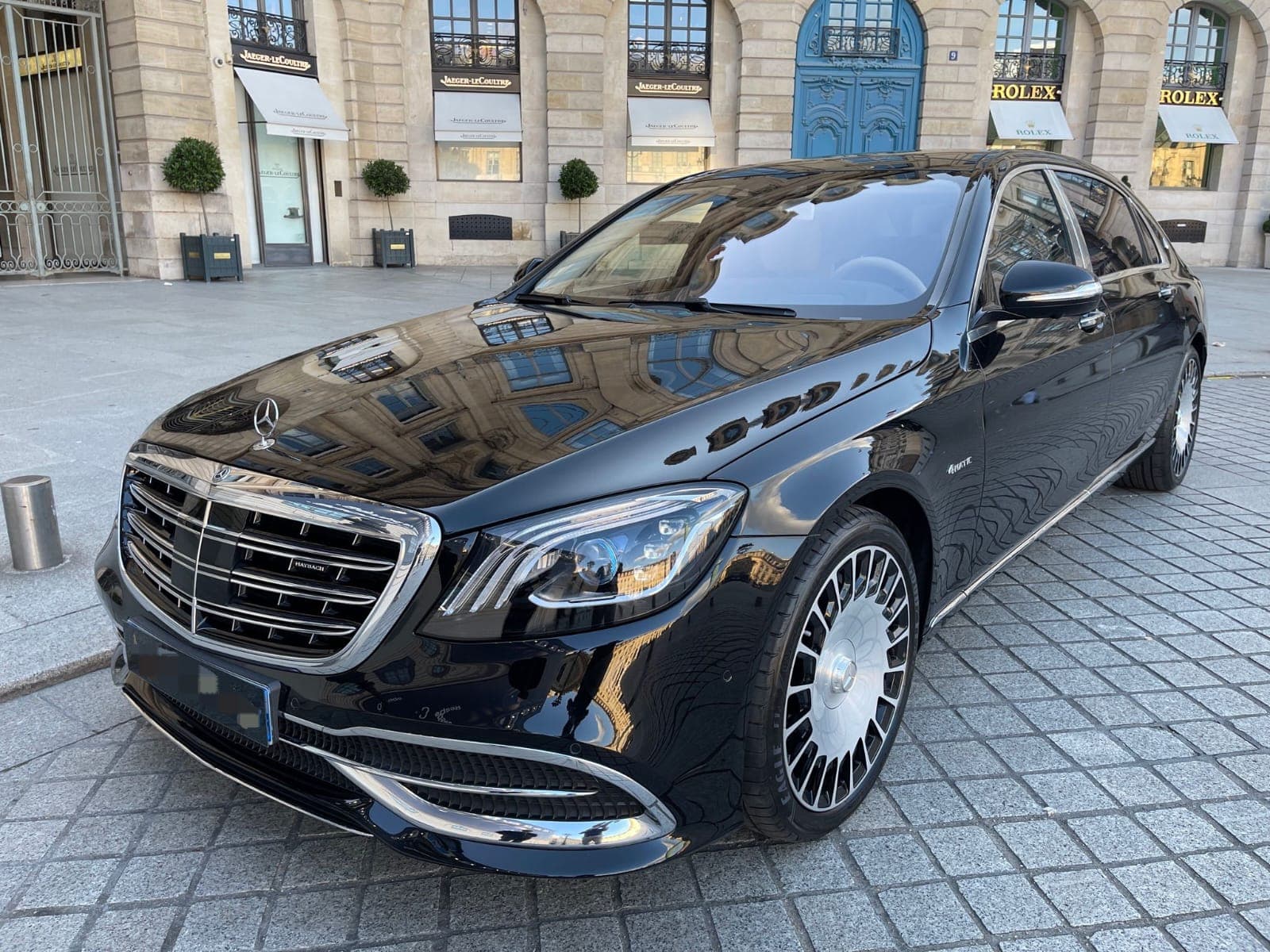
Biarritz, the Pyrénées-Atlantiques resort on the Bay of Biscay, occupies a singular position in the French luxury travel landscape: it is the only French resort of the first rank to have been created by imperial patronage rather than aristocratic drift. Napoleon III and Empress Eugénie first visited in 1854 and returned annually for decades, constructing the Villa Eugénie, now the Hôtel du Palais, directly on the cliff above the Grande Plage. The resort's character is defined by this imperial origin: grander than Saint-Jean-de-Luz, more austere than Deauville, and more authentic than the Côte d'Azur's summer season. The Paris-Biarritz corridor is 755 kilometres via the A10 and A63, a six-and-a-half-hour drive in a chauffeured S-Class Mercedes, or 1 hour 20 minutes from CDG to BIQ (Biarritz Pays Basque Airport) by private jet.
The Biarritz of Napoleon III: Grande Plage, Villa Belza, and the Rocher de la Vierge
The physical geography of Biarritz is what sets it apart from every other French Atlantic resort. The town is built on a series of dramatic volcanic rock outcroppings, the Grande Plage headland, the Rocher de la Vierge, the Pointe Saint-Martin, that divide the Atlantic coastline into a sequence of distinct beaches and coves, each with its own character and exposure. The Grande Plage, the kilometre-long main beach below the Casino Municipal, faces due west and receives the full force of the Atlantic swell, it has been a surf destination since the 1950s, when Hollywood celebrities including Gary Cooper and Peter Viertel first rode its waves.
The Rocher de la Vierge, a sea-stack crowned by a white statue of the Virgin, connected to the mainland by a narrow iron footbridge originally designed by Gustave Eiffel, is the iconic image of Biarritz. The rock is accessible on foot from the Boulevard du Général de Gaulle and offers an unimpeded view of the Atlantic horizon in three directions, with the Pyrenees visible to the south on clear days.
The Villa Belza, perched on the Pointe Atalaye above the Port des Pêcheurs, is one of the most dramatic private residences on the French Atlantic coast: a neo-Gothic turreted structure built in 1895 for a Belgian baroness, it remains a private residence but is a landmark of every Biarritz itinerary. The walk from the Villa Belza headland to the Rocher de la Vierge, along the Plateau de l'Atalaye, takes approximately 15 minutes and passes above the old fishermen's port, one of the few working ports on the Basque coast still active with traditional fishing vessels.
The Hôtel du Palais: Napoleon\'s villa becomes a palace hotel
The Hôtel du Palais at 1 Avenue de l'Impératrice occupies the site of the Villa Eugénie, the summer residence that Napoleon III commissioned for Empress Eugénie in 1855. The original villa : a modest by imperial standards but strategically sited building on the cliff above the Grande Plage : was reconstructed in its present neo-Baroque form after a fire in 1903. The hotel has since hosted every significant European royal family and a substantial portion of the world's UHNW travellers who visit the Basque coast.
The hotel's ocean-facing suites : the Eugénie Suite on the top floor, the Atlantic Suite with its private terrace directly above the breaking waves : represent the finest accommodation on the Atlantic coast of France. The Villa Eugénie restaurant (one Michelin star) serves a menu built on Basque and Landais ingredients : Pauillac lamb, Basque black-foot pig, Landes duck foie gras : in the original dining room of the imperial villa, with direct views over the Grande Plage. For clients arriving by chauffeured vehicle from Paris, the hotel's main entrance on the Avenue de l'Impératrice provides covered arrival; the concierge desk manages vehicle positioning in the hotel's private forecourt.
Beyond the Hôtel du Palais, the Basque coast luxury accommodation offer extends to the Villa Koenigsbrunn in Bidart (a private villa rental sleeping 14, with pool and direct Atlantic views), the boutique Hôtel des Bains in Guéthary (a converted Belle Epoque villa on a quiet Basque village square), and the Relais & Châteaux property La Réserve at Saint-Jean-de-Luz (17 kilometres south of Biarritz, facing the bay of Saint-Jean-de-Luz).
Saint-Jean-de-Luz: Louis XIV\'s wedding city and Basque gastronomy
Saint-Jean-de-Luz, 17 kilometres south of Biarritz on the N10, is the most beautifully preserved Basque port town on the French Atlantic coast. Its moment of historical peak was the wedding of Louis XIV and the Spanish Infanta Maria Theresa on 9 June 1660, the marriage that ended the Franco-Spanish War of 1635 and sealed the Peace of the Pyrenees. The ceremony took place in the Église Saint-Jean-Baptiste on the Place Louis XIV, a Basque Gothic church with a galleried interior typical of the Labourd province style. The church has been unchanged since 1660; the door through which Louis XIV and Maria Theresa exited after their wedding was walled up immediately afterward, in accordance with the Basque custom of not reopening a threshold used for the most auspicious of passages.
The Maison Louis XIV, the merchant's house on the Place Louis XIV where the Sun King lodged for five weeks before his wedding, is open for guided visits in summer. It is an intact example of 17th-century Basque maritime merchant architecture: a three-storey stone building with the characteristic wooden beam structure and the original interior fittings preserved under conservation management.
Gastronomically, Saint-Jean-de-Luz is the entry point to the pintxos circuit, the Basque equivalent of Spanish tapas, served from bar counters across the Pays Basque on bread rounds with seasonal toppings. The best pintxos bars in Saint-Jean-de-Luz are concentrated on the Rue de la République and the Rue Gambetta, within walking distance of the port. For a more formal lunch, Chez Maya (2 Rue Saint-Jacques) serves traditional Basque cuisine, ttoro (Basque fish stew), piperade, and axoa de veau, in a setting unchanged since the 1960s.
Bayonne, the Camino gateway, and the Basque inland circuit
Bayonne, the historic capital of the Pays Basque français, lies 8 kilometres east of Biarritz at the confluence of the Nive and Adour rivers. Its old town, divided into the Grand Bayonne on the left bank of the Nive and the Petit Bayonne on the right, retains one of the most intact medieval urban fabrics in southwest France, with arcaded streets, half-timbered merchant houses, and the Cathedral of Sainte-Marie (begun in the 13th century, the cloister dating from the 14th) rising above the city's sandstone roofscape.
Bayonne is the origin of two products central to French gastronomy: jambon de Bayonne (the dry-cured ham produced in the Adour basin, protected by an IGP designation since 1998) and Bayonne chocolate (the city has been a centre of chocolate production since the late 17th century, when Sephardic Jewish refugees from Spain brought chocolate-making techniques from the Iberian peninsula). The Rue du Port-Neuf in Petit Bayonne remains the city's historic chocolate-making district, with original-era chocolate workshops such as Cazenave (19 Rue du Port-Neuf, established 1854) still producing and serving.
Saint-Jean-Pied-de-Port, 50 kilometres southeast of Bayonne via the D918, is the traditional departure point for the French route of the Camino de Santiago, the pilgrimage road to Santiago de Compostela that has been walked since the 9th century. The town's medieval citadel, the fortified Porte Saint-Jacques, and the Rue de la Citadelle with its painted Camino scallop shells are among the most evocative historic townscapes in the Pyrenean foothills. For clients with an interest in the Camino, whether as a spiritual undertaking or as a cultural itinerary, Saint-Jean-Pied-de-Port provides an ideal half-day excursion from Biarritz, 90 minutes by chauffeured vehicle through the Pyrenean valleys.
Surf culture, pelote basque, and the complete Basque itinerary
Biarritz occupies an unusual position in the luxury travel category: it is simultaneously one of France's most aristocratic resorts and one of its most counterculturally vibrant. The surf culture that has developed since the 1950s, anchored at the Côte des Basques beach, where the groundswell wraps around the headland to create a long, consistent left-hand wave, coexists with the palace hotel, the casino, and the Michelin-starred dining in a way unique among French Atlantic resorts. The Musée de la Mer (Esplanade du Rocher de la Vierge), one of France's oldest aquariums, and the Musée du Chocolat (14 Avenue Beaurivage) serve as cultural anchors in the off-season programme.
Pelote basque, the traditional Basque racket sport played at the fronton (the stone court wall) in every Basque village, is best observed at the Trinquet Mauleon in the town of Mauléon-Licharre, 50 kilometres from Biarritz, where professional championships are held year-round. For a more accessible experience, the Fronton de la Grand Plage in Biarritz holds regular pelote basque demonstrations and amateur matches throughout the summer.
A complete Basque circuit from Paris, allowing five days, would sequence as follows: Day 1: Paris to Biarritz by chauffeured vehicle or private jet, hotel arrival Hôtel du Palais. Day 2: Biarritz exploration (Grande Plage, Rocher de la Vierge, Musée de la Mer), dinner at Villa Eugénie. Day 3: Saint-Jean-de-Luz (Église Saint-Jean-Baptiste, Maison Louis XIV, pintxos lunch) and Bayonne (Cathedral, chocolate district). Day 4: Saint-Jean-Pied-de-Port and Basque pyrenean valleys. Day 5: Return to Paris via chauffeured vehicle, alternatively with a stop at the Château de Pau (35 km from Biarritz), birthplace of Henri IV.
预订
The Paris-Biarritz corridor is among the most distinctive long-distance chauffeur itineraries in France: a journey through four distinct landscapes (the Loire valley, the Landes forest, the Basque coast, and the Pyrenean foothills) to one of Europe's most characterful coastal resorts. FFGR Paris provides the vehicle, the route, and the logistical support for every element of the Basque programme. Contact reservation@ffgrparis.com or WhatsApp +33 7 43 46 14 91 to plan your Biarritz itinerary.
立即预订相关文章
 destinations
Côte d\'Azur Private Yacht | The FFGR Guide to the French Riviera by Sea
How to charter a superyacht or private boat on the Côte d'Azur: Monaco to Saint-Tropez, Cannes Film Festival logistics, anchorage selection, and what separates a true yacht charter from an online booking form.
8 min
 destinations
Versailles | The Private Access Guide for UHNW Visitors
How to experience the Château de Versailles as it was intended: before the crowds, after closing, with an art historian, in a Rolls-Royce. The FFGR Paris guide to private Versailles access.
8 min
 destinations
Paris to Courchevel | Private Chauffeur for the Ski Season
The definitive guide to Paris-Courchevel private chauffeur transfers: route options, vehicle selection for alpine conditions, timing the ski season, and how FFGR Paris runs the winter mountain corridor.
9 min